

Anthony Fowler built a reputation in the ring long before he built a following online. The 35-year-old from Liverpool represented Team GB at the 2016 Rio Olympics and picked up a Commonwealth Games gold medal during a career that made him a recognizable name in British boxing.
These days, though, his most visible work happens on a phone screen, where he has been steering followers toward a product line that regulators say has no business being sold to the public.
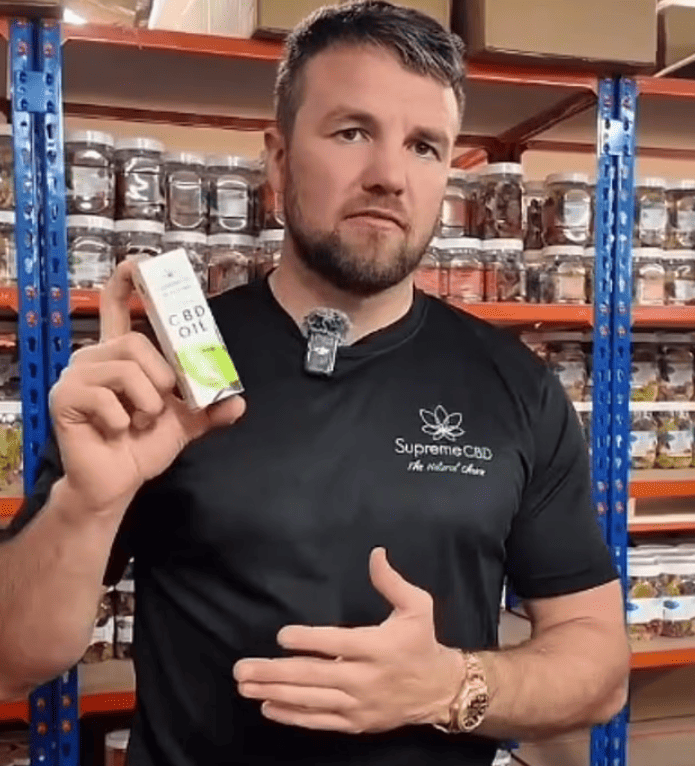
According to sources, Fowler already runs Supreme CBD, and he has now pushed into a new venture called Supreme Peptides. An undercover buyer approached the operation and was offered 40mg of a weight-loss peptide for £120.
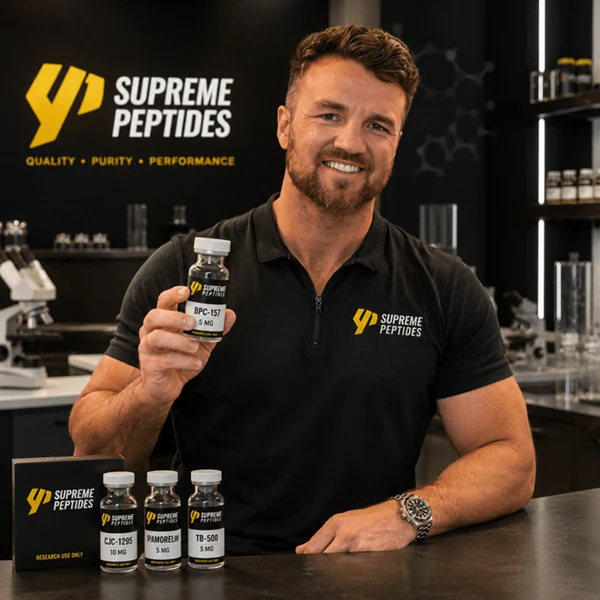
The person handling the sale claimed that it had helped Fowler’s own brother shed two stone (28 lbs / 12.7 kg), and pitched it as a rival to the licensed d*ug Mounjaro. Asked directly whether the comparison held up, the seller said: “It’s similar mate but this has no side effects.”
That claim sits awkwardly next to what is actually known about the product, which is very little. Under UK rules, any company making medical claims about what it sells needs sign-off from the Medicines and Healthcare products Regulatory Agency before it goes anywhere near a customer. The investigation turned up no indication that Supreme Peptides has anything registered with the MHRA at all. A separate compound, tesamorelin, appeared on Fowler’s website priced at £89.99 for 10mg. It is not authorized by the MHRA, and supplying it in the UK is against the law.
Professor Channa Jayasena of Imperial College London reviewed the findings and did not mince his assessment. “This could put people’s lives at risk,” he said. He explained that the chemicals involved demand an exacting production process. “These chemicals are highly toxic and they are purified under incredibly rigorous conditions and standards, that need to be kept,” he said. “My concern is that these are black market synthesised peptides, which have potential impurity and no guarantee of what is inside them,” he said.

The pattern is a familiar one. A previous Daily Mail investigation already documented peptides being pushed for at-home weight-loss injections without any medical screening or follow-up. Doctors have flagged risks ranging from organ damage to a heightened cancer risk from products made outside licensed conditions. The stakes are hardly niche either, with an estimated 2.5 million people in Britain now thought to use weight-loss injections in some form.
Fowler has not stayed quiet about the products. He has promoted the peptides publicly as a weight-loss aid and told followers he has “a lab I use in London” that tests them. He has also leaned into a narrative that positions his supply as more trustworthy than imports, repeatedly telling his audience the products are British-made and better than alternatives sourced from China.
When the undercover exchange moved forward, the seller, using the name Anthony Lloyd, described how the £120 package would arrive: a syringe or pen alongside an ice pack, with the product “lab tested” and “already mixed ready to go.”
At no point did the seller ask about the buyer’s BMI or any underlying health conditions, standard questions for anyone actually being screened for a weight-loss treatment. Instead, the advice was simply to inject 2mg once a week for three or four weeks and monitor the results. At that dosing rate, the seller said, the 40mg supply would stretch across two to three months.
Notably, the weight-loss peptide itself was not listed among the products shown on the Supreme Peptides website. Asked why, the seller explained: “All other peptides are on the website but if you wanted that one you would have to contact me.” Pressed on what set it apart, he said: “This one is a weight-loss peptide.”
When the conversation turned to what the product actually contained, the seller sidestepped and instead described it as being for “research purposes.” Professor Jayasena called that framing hard to square with what was actually happening. “I find the mention that this is ‘for research use only’ deeply worrying and completely incongruous with what I’m seeing, which is a clear solicitation of members of the public,” he said.
The MHRA indicated it does not take such labeling at face value. “If a product is classified as a medicine and is not appropriately authorised, we take regulatory compliance action,” the agency said.
Lynda Scammell, the MHRA’s Head of Borderline Products, was more pointed. “We disregard claims that products are for ‘research purposes’ if it is clear that such claims are being used as an attempt to avoid medicines regulations,” she said, adding that promotional material showing the products are intended for human use is enough to trigger enforcement. “If there is evidence within the promotional material that the products are in fact unauthorised medicines intended for human use, we will take appropriate regulatory action,” she said.
Professor Jayasena stressed just how far removed this kind of operation is from legitimate pharma production. “Any dr*g or high-quality chemical that’s made for human consumption, particularly medicine, needs to be subjected to standards, incredibly rigorous standards,” he said. He listed some of what that actually requires. “You have to show the stability of your compound. You have to show bugs growing in it. You have to show purity,” he said.
