
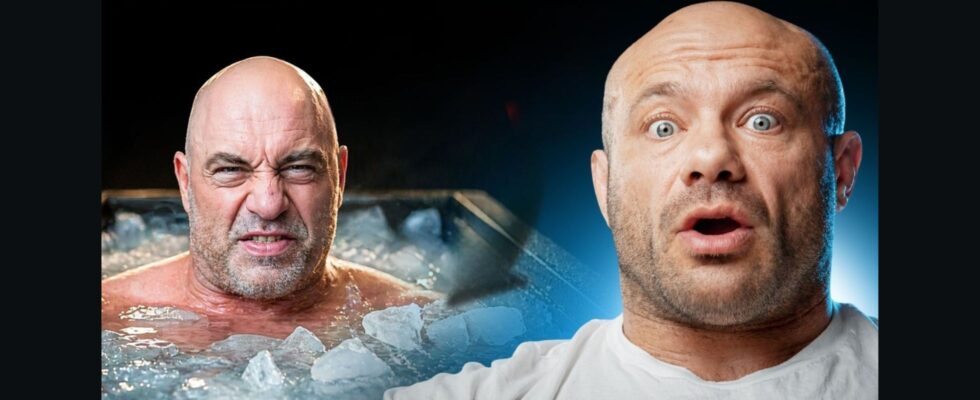
Cold water immersion has become one of the most talked-about recovery tools in fitness culture, with athletes and influencers alike swearing by morning plunges as a cure-all for soreness, fatigue, and inflammation.
But sports scientist and Renaissance Periodization co-founder Mike Israetel has been pushing back on the trend, arguing that the science behind ice baths is far weaker than the wellness industry suggests.
Israetel’s core argument centers on a fundamental contradiction: the inflammation that ice baths suppress is not your enemy. When you train hard, your muscles sustain microscopic damage, and the body responds with an inflammatory process that is essential for repair and growth.
By plunging into cold water after a workout, you are not necessarily speeding up recovery, you may be interrupting the very biological process that makes training effective in the first place.
This perspective is not fringe. A growing body of research suggests that post-exercise cold immersion can blunt anabolic signaling, meaning the molecular pathways responsible for muscle growth and adaptation may be dampened. For athletes chasing hypertrophy or strength gains, that trade-off becomes difficult to justify.
Israetel has also pointed to an issue with how cold immersion research is interpreted and promoted. Many studies cited by cold plunge advocates are conducted under tightly controlled conditions, with precise timing, water temperature, and duration. These conditions rarely match how people actually use ice baths in real life. When methodologies vary and results are mixed, drawing strong, universal conclusions becomes questionable.
Joe Rogan has been one of the most vocal proponents of cold plunges, frequently incorporating them into his daily routine. He often uses water as cold as 33–39°F (1–4°C), framing the practice as both a physical and mental training tool.
Rogan emphasizes the psychological benefits as much as the physical ones. “I can overcome it and I know the benefits. The benefits for resilience, the benefits for my mind and for inflammation for my body,” he said, describing the challenge of enduring the cold.
He also credits the practice with reducing everyday aches. “My body feels so good. All my soreness that was generally just an ordinary part of everyday life, a massive amount of that has been dissipated,” he explained.
Beyond recovery, he highlights the immediate post-plunge effect. “It just makes me feel great. I get out of here and I just feel wonderful. I feel calm and I feel loose and I feel relaxed,” Rogan said.
Still, critics like Israetel argue that subjective improvements, feeling better, less sore, more relaxed, do not necessarily translate to better long-term performance or muscle growth. That distinction is at the heart of the debate: whether cold plunges are optimizing training outcomes or simply making the process feel easier.
Others, like Renzo Gracie, have raised concerns from a cardiovascular standpoint, particularly around timing. Blood pressure is naturally elevated in the morning, and the rapid vasoconstriction caused by cold exposure can amplify that spike.
Some research has even suggested a correlation between early cold exposure and increased stroke risk in men aged 30 to 50, raising questions about the blanket recommendation of morning plunges.
What Israetel and others suggest instead are lower-risk alternatives that may offer some overlapping benefits. Sleeping in a cooler environment, for example, has shown promise for supporting metabolism and recovery without the acute stress of full-body immersion.
