
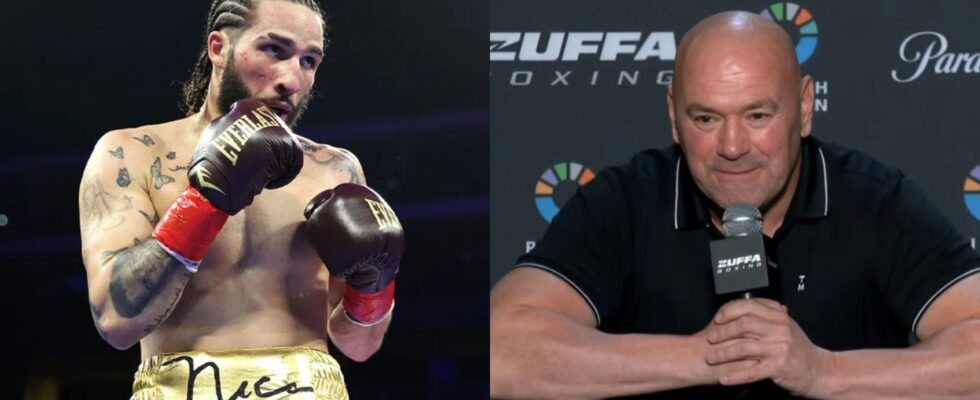
Nico Ali Walsh, the 25-year-old professional boxer and grandson of Muhammad Ali, has been making waves in Washington D.C. recently, testifying before the Senate in opposition to the Ali Act Revival Act. He believes that the legislation would hand monopolistic control of boxing to TKO Group Holdings, the parent company of the UFC and Zuffa Boxing.
Walsh, who holds a record of 13-2-1 with five knockouts, sat down with Ariel Helwani to explain why he felt compelled to speak out, despite knowing there could be professional consequences for doing so.
“The Ali Act that my grandfather put in place is an anti-monopoly act,” Walsh told Helwani. “What they’re trying to do is basically pass a monopoly, and it’s going completely against what my grandfather stood for.”
Walsh said he initially did not plan to testify, only intending to attend the hearing in support of Oscar De La Hoya. He was asked to formally testify just ten days before the hearing. He says the response from senators has been significant.
“The senators are just surprised at what me and my team are conveying, the point of what Zuffa Boxing is trying to bring to the sport and the monopolistic control that they will have over the sport if they pass the law the way it is right now,” Walsh said.
At the heart of Walsh’s concerns is the belief that TKO is attempting to import the UFC’s business model into boxing. He pointed to a $375 million settlement UFC athletes secured against the company as evidence of where things could head. He also noted the stark difference in how revenue is distributed between the two sports.
“In the UFC, the athletes make around 16% up to 20% of the revenue. In boxing, athletes make up to 80% of the revenue that is made in these boxing events,” Walsh explained. “So that alone shows you the staggering difference in pay between the UFC and boxing.”
Walsh also raised concerns about sponsorship rights, transparency, and the freedom athletes currently have to negotiate with multiple promoters, all of which he believes would be stripped away if the Revival Act passes in its current form.
Despite support from fellow boxers in private, Walsh said the public backing has been nearly nonexistent.
“On social media, on my phone, I’ve heard zero support from athletes. But then I go to events and every boxer comes up to me quietly and says, ‘Man, thank you for doing what you’re doing.’ They talk to me in private because they don’t want to do it publicly. They’re afraid of the repercussions.”
Walsh acknowledged the personal risks he is taking, including potential damage to his own career, but says his grandfather’s legacy and the welfare of boxers everywhere make it worth.
“I’m figh ting for us boxers. I’m figh ting for the sport of boxing as a whole,” he said. “But not only that, I hope things turn out well for me because I’m taking a lot, just putting myself in this dangerous position.”
