
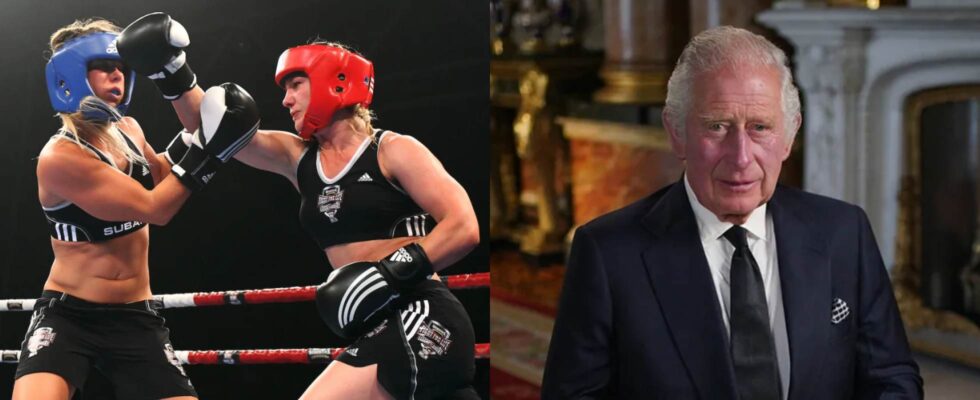
A free boxing and fitness programme designed to build confidence among disadvantaged young women has been quietly pulled by the King’s Trust. It’s not because of logistical issues or lack of interest, but because the charity found itself unable to answer a straightforward question: should biological males be allowed to participate?
According to sources, the course titled “Get Started with Boxing and Fitness for Women” was aimed at girls and young women aged 16 to 25 who are not in work, education or training. Set to run across five days in Bristol from February 23 to 27, it promised participants the chance to earn a qualification, discover their strengths and grow their confidence.
The flyer, which has since been removed from the charity’s website, stated the course was open to “female identifying/presenting” people.
That phrase caught the attention of at least one concerned parent, who reached out to the King’s Trust to raise safeguarding questions. While praising the programme as a “wonderful idea,” the parent expressed serious reservations about the eligibility criteria, pointing out that allowing biological males to participate in a contact sport alongside teenage girls carried real physical risks, as well as concerns about shared spaces such as changing rooms and toilets.
Rather than updating the course criteria to reflect biological gender, the charity took a different path entirely. A King’s Trust employee informed the parent that: “In recognition of the decision of the Supreme Court, and the specific nature of the activity that this programme offers, we have taken the decision to withdraw it as an offer to young people.”
The Supreme Court ruling in question came in April 2025, when the UK’s highest court determined that the term ‘se x’ in the Equality Act refers to biological se x, not to gender identity or the possession of a gender recognition certificate.
That decision was widely seen as clarifying the legal landscape for single-se x spaces and services. The King’s Trust, it appears, found the clarification more complicated to act on than anticipated.
The decision to cancel rather than clarify has drawn pointed criticism from women’s rights advocates. Su Wong of SEEN in Sport, which campaigns to preserve single-se x spaces in women’s athletics, said the charity “would rather deny young women the chance of participating at all than possibly offend someone.”
She urged the King’s Trust to reconsider, adding: “The King’s Trust does incredible work but it needs to ensure that everyone throughout the charity understands that you should not use ideological language and you cannot discriminate against women and girls. If it says it’s ‘for women’, that means it’s for women only. We urge the King’s Trust to reinstate this course so that young women get the opportunity to boost their self-confidence, physical and mental health.”
The programme had been launched in partnership with Nicola Adams, the Olympic gold medallist and King’s Trust champion who has herself publicly advocated for protecting women’s sports for biological females. Her involvement in a course that was ultimately cancelled over the very issue she has spoken out on has not gone unnoticed.
King Charles founded what was then the Prince’s Trust in 1976, with the goal of creating pathways for young people who had been left behind by circumstance. In the decades since, the organisation, now rebranded as the King’s Trust, has helped more than a million young people find direction, build skills and step into meaningful futures.
