

Joe Rogan has built his pocast empire on authenticity. From his humble beginnings as a paper distributor to becoming one of the most influential voices in podcasting, the UFC commentator has cultivated a reputation for speaking his mind and staying true to his principles.
But according to sources, recent changes to The Joe Rogan Experience have longtime listeners questioning whether financial success has altered those once-firm convictions.
Since January 2025, JRE episodes have featured something that Rogan himself once criticized: unskippable advertisements inserted mid-episode. Companies like ARMA Colostrum, Bon Charge, Goal Zero, and Hexclad now interrupt conversations partway through, breaking up the natural flow that made the podcast a favorite among millions of listeners worldwide.
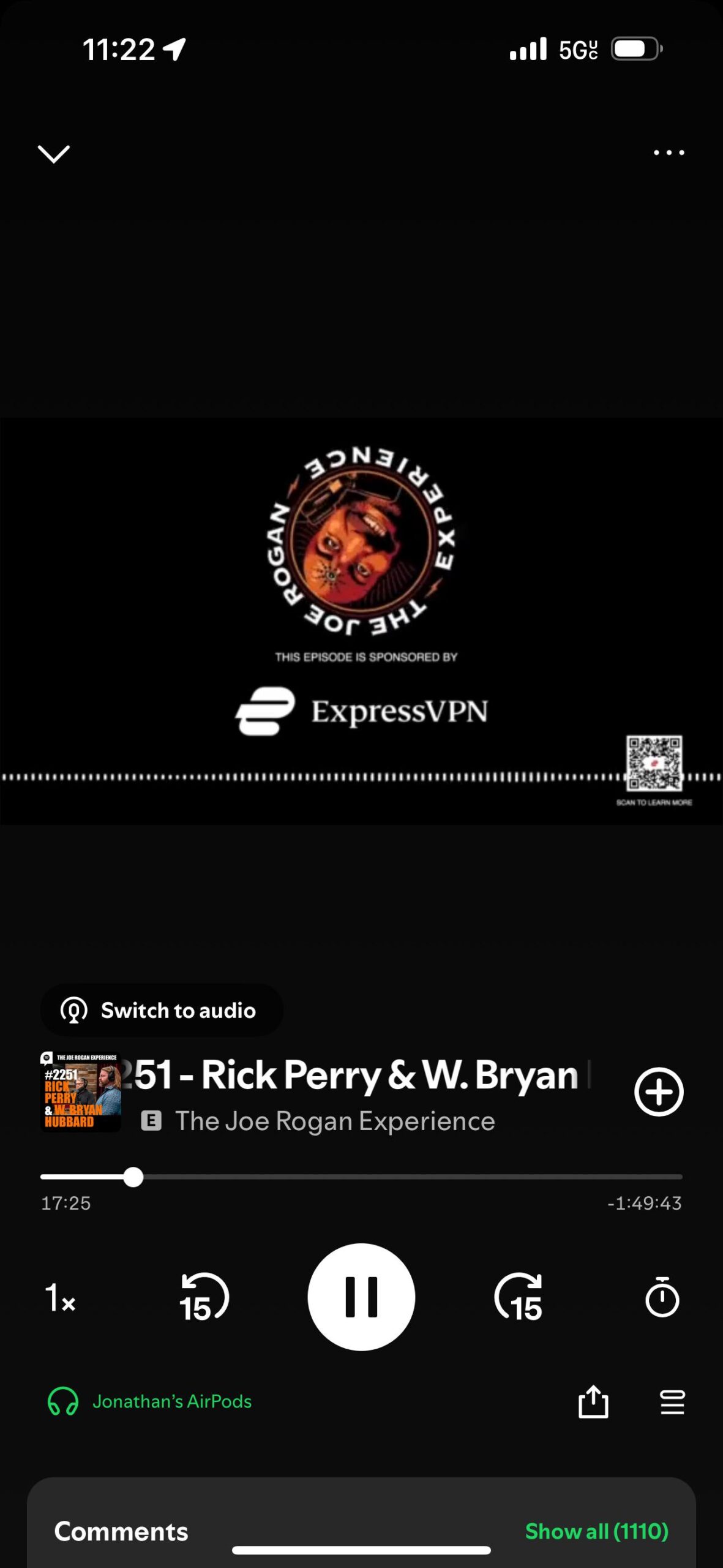
This development is confusing given Rogan’s well-documented history of opposing this exact practice. In earlier years of his show, which began in 2009 and has since produced over 2,000 episodes, the comedian regularly criticized other podcasters who interrupted their content with mid-stream sponsorships.
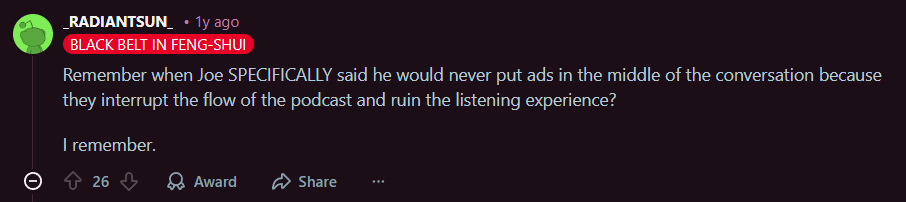
“Remember when Joe SPECIFICALLY said he would never put ads in the middle of the conversation because they interrupt the flow of the podcast and ruin the listening experience?” one frustrated listener commented on Reddit.
The changes came following Rogan’s latest deal with Spotify. In February 2024, the podcaster signed a reported $250 million agreement that marked a significant shift from his previous arrangement.
Unlike the original 2020 licensing deal worth an estimated $200 million that made JRE exclusive to Spotify, the new contract allows the podcast to appear on competing platforms including YouTube, Apple Music, and Amazon.
Spotify CEO Daniel Ek has publicly supported this approach. “That is the path we see going forward on more and more of our deals,” Ek stated, suggesting exclusivity may no longer be the company’s preferred strategy.
However, this transition appears to have come with strings attached. The podcast now includes advertisements at the beginning of episodes and one or two more during the content itself. What has particularly frustrated paying customers is that even Spotify Premium subscribers, who spend $11.99 monthly for an ad-free experience, cannot skip these sponsored segments.
According to Spotify’s policies, premium membership guarantees an ad-free music listening experience, but podcasts are permitted to include host-read advertisements and sponsorships independently of the platform’s subscription service. This means Rogan himself controls the placement and frequency of these promotional segments, not Spotify.
A Reddit user captured the growing discontent by posting a screenshot of a podcast episode with the caption: “Ads mid-episode make it pointless to pay for Spotify.”
Additionally, long-time fans have taken to social media to express their disappointment, with many highlighting the apparent contradiction between Rogan’s past statements and current practices.
“I remember when Joe would constantly talk about how stu pid it was for other podcasters to do this as it interrupts the flow of the conversation for the listener,” another Reddit commenter noted.
One fan offered a sardonic take: “Joe Rogan with $100 million: ‘Hey guys, let me take a quick break to tell you how much I am enjoying AG1.'”

Others have drawn comparisons to Rogan’s earlier persona, when he often spoke about having “f**k you money” and the freedom it supposedly provided. “So much for that ‘f**k you money’ he used to brag about. Dude still freaks out if a video might get demonetized,” one listener observed.

Rogan built his audience on the premise of unfiltered, uninterrupted conversations. The format distinguished JRE from traditional media.
“Well before Spotify, he used to do ads at the beginning and then talk negatively about other podcasts that had ads midway,” one fan recalled, highlighting the contrast between Rogan’s former stance and current practice.
Another commenter captured the sentiment more bluntly: “His greed is stronger than his convictions.”
