
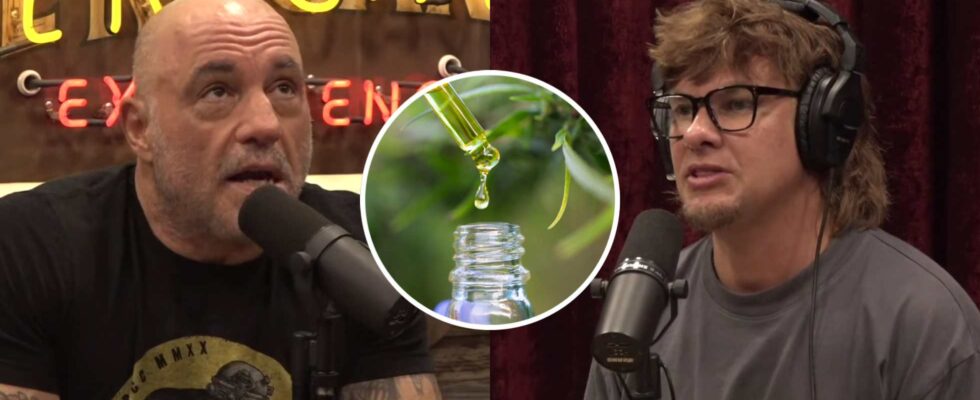
Joe Rogan and comedian Theo Von dedicated significant discussion time on a recent episode of The Joe Rogan Experience to expose a concerning provision quietly inserted into Congress’ latest funding bill. It threatens to effectively ban nearly all hemp-derived CBD products containing THC.
The conversation began when Rogan referenced a legislative maneuver he attributed to Senate Minority Leader Mitch McConnell. “They slipped something into this last bill that Mitch McConnell guy did, I believe,” Rogan explained. “The hemp thing. They slipped this thing in where you can no longer buy CBD with, like it has to be like the lowest trace amount of THC in it.”
The new rule establishes a cap of just 0.4 mg of total THC per container—drastically lower than the 2.5 to 10 mg typically found in consumer gummies and oils. Industry experts warn this restriction would eliminate approximately 95% of current hemp products within a year, devastating a $28 billion market that employs more than 300,000 Americans.
Rogan’s concern stems from real-world experience with CBD’s therapeutic benefits. He cited his mother-in-law as an example: “My wife’s mom, you know she’s an older lady and she takes CBD for pain for joints and stuff like that.” When Von asked about the delivery method, Rogan clarified: “She takes oil, like CBD oil.”
The podcast host emphasized a critical misunderstanding about these products: “This stuff’s not going to get you high, but what it will do is it helps with anxiety for a lot of people. It definitely reduces inflammation for people that have like joint pain.”
Rogan highlighted the synergistic relationship between CBD and trace THC amounts: “There’s something about how CBD and THC work in a synergistic way for people that are in a lot of pain… the stuff with the THC in it works better and it’s not getting her high.”
To illustrate CBD’s effectiveness, Rogan shared the experience of actor and comedian Dave Foley. “Dave had like pretty severe arthritis in his hands like where, you know, he was really having a hard time opening his hands. Started taking CBD oil,”
Rogan recounted. When Von asked about the severity, Rogan confirmed: “He was in pain, man. It was bad. But now it’s gone and it’s gone because of CBD.”
Both hosts identified the economic forces behind the restriction. “It’s the alcohol lobby,” Rogan stated definitively. “It’s the same people that are trying to keep m**ijuana illegal in Texas. It’s the alcohol lobby. This is the fact. The fact is when people start smoking w**d, they drink less.”
Rogan explained the dual threat alcohol companies face: “It could be because they just decided to get high and not get drunk, or it could be that they smoke pot and they get a little paranoid and they go, ‘Oh my god, why am I poisoning myself 5 days a week?'”
The financial implications extend far beyond individual consumers. States with substantial hemp industries—including Kentucky, Texas, and Utah—face severe economic consequences if the provision becomes law. Industry leaders from major cannabis companies including Cronos and Curaleaf, along with representatives from the U.S. Hemp Roundtable, have issued urgent warnings about the regulation’s impact.
Rather than de facto prohibition through impossible THC limits, hemp industry leaders advocate for comprehensive federal regulation addressing legitimate concerns. Their proposal focuses on three key areas: standardized testing protocols to ensure product consistency and safety, clear labeling requirements so consumers understand exactly what they’re purchasing, and age restrictions to prevent youth access.
This regulatory framework would maintain the legitimate hemp market while addressing valid concerns about product safety and appropriate use.
When pressed on why the restriction is problematic, Rogan explained: “For people that are getting benefits from CBD, the the THC along with the CBD… we’re talking super super low amounts. But there’s something about how CBD and THC work in a synergistic way for people that are in a lot of pain.”
The hemp industry provision represents exactly the kind of special interest-driven policymaking that millions of Americans find increasingly unacceptable.
