

When Venezuelan President Nicolás Maduro appeared in U.S. custody wearing Nike Tech Fleece, the internet didn’t just notice, it created a marketing phenomenon.
Search queries for “Nike Tech” climbed dramatically, social media mentions increased more than fifteen-fold, and within days, several sizes of the gray fleece jacket had disappeared from Nike’s website.
The moment wasn’t lost on retired Navy SEAL commander Jocko Willink, whose business ventures span from podcasting to supplements to his American-made apparel line, Origin. When Maduro appeared in a second photo wearing a baby blue Origin hoodie, Willink seized the opportunity to celebrate on social media.
“We’ve got supporters of @originusa American Made Gear in every branch of service and every agency of the government,” Willink posted on Instagram. “I’m looking forward to meeting the PATRIOT that put this Origin Built By Freedom Hoodie on Maduro for his arrival to AMERICA and hearing the stories behind this incredible operation… Thanks for your service and Bravo Zulu.”
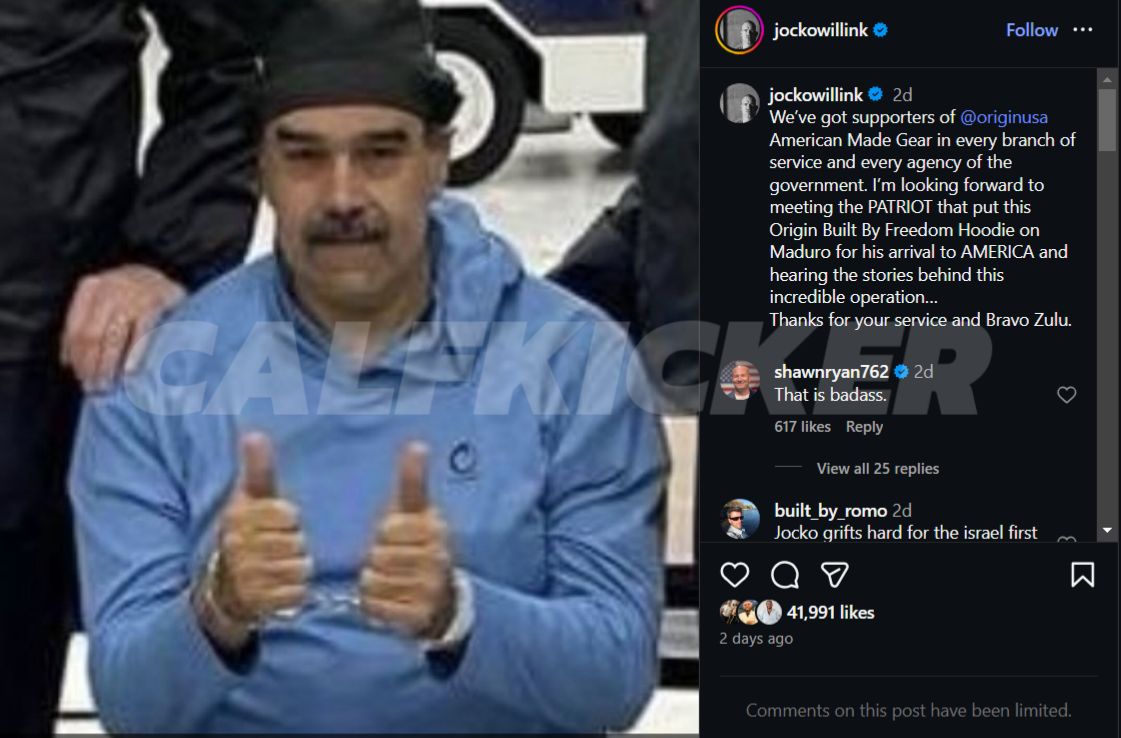
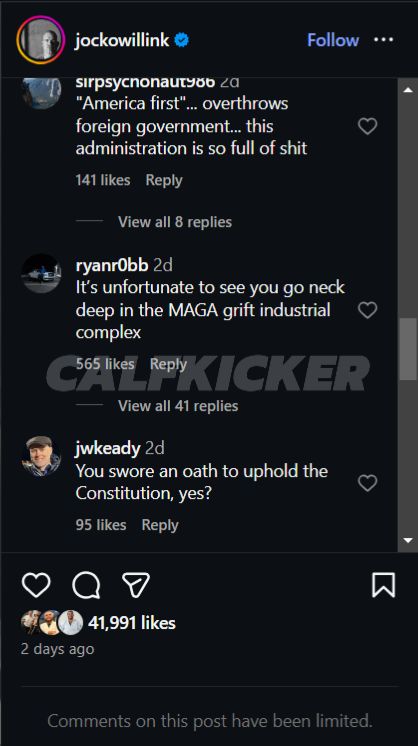
The timing suggests an awareness that his brand could benefit from the same cultural momentum that sent Nike’s product flying off digital shelves. Whether by design or fortune, someone in the operation decided to outfit Maduro in Origin gear for his second appearance, and Willink’s enthusiastic response amplified the connection between his company and a high-profile government operation.
The post represents a strategic move for a brand that could use positive attention. Recent independent laboratory testing by Consumer Reports placed Jocko Fuel protein products among those with the highest heavy metal contamination levels in a comprehensive study of 23 protein powders and ready-to-drink shakes.
The Consumer Reports investigation revealed that more than two-thirds of tested products contained lead levels in a single serving that exceeded the 0.5 microgram daily safety threshold established by the organization’s food safety experts. Some products surpassed this benchmark by more than ten times.
“It’s concerning that these results are even worse than the last time we tested,” said Tunde Akinleye, the Consumer Reports food safety researcher who led the testing project. The comparison to testing conducted 15 years earlier revealed not just isolated contamination issues but an industry-wide deterioration in product safety.
Plant-based products showed particularly troubling results, averaging nine times more lead than dairy-based formulations and double the amount found in beef alternatives. Nearly every plant-based supplement tested showed elevated lead levels, with the most hazardous products containing between 1,200 and 1,600 percent of the daily safety threshold in a single serving.
For Willink, whose entire public persona revolves around discipline, excellence, and uncompromising standards, the findings present a credibility challenge.
The contamination appears inherent to the source materials rather than manufacturing deficiencies specific to any particular company. Yet this scientific reality offers little reassurance to consumers who selected Jocko products specifically because of the brand’s association with military precision and rigorous standards.
The regulatory landscape amplifies these concerns. Supplements don’t undergo FDA review, approval, or testing before reaching store shelves. Federal regulations don’t mandate that manufacturers prove their products are safe, and no federal limits exist for heavy metal content in supplements.
“Consumers often assume supplements deliver health benefits without risks,” says Pieter Cohen, MD, an associate professor of medicine at Harvard Medical School. “But that’s not true.”
This framework places the burden entirely on consumers to navigate product safety, yet few possess the resources or expertise to conduct independent testing. They rely instead on brand reputation and trust in the companies and personalities promoting these products.
“We advise against daily use for most protein powders, since many have high levels of heavy metals and none are necessary to hit your protein goals,” Akinleye stated. Nutrition experts consistently point out that the average American diet already provides adequate protein without supplementation.
“For many people, there’s more to lose than you’re gaining,” says Akinleye, who suggests that regular users of protein supplements consider reducing their consumption.
Against this backdrop, Willink’s enthusiastic embrace of the Maduro apparel moment reads as an attempt to redirect attention toward a different product line, one that doesn’t face uncomfortable questions about contamination and safety standards. The Origin brand, which emphasizes American manufacturing and quality craftsmanship, offers a cleaner narrative than the supplement business currently allows.
The strategy may work. Nike’s experience with the first Maduro photo demonstrated how geopolitical moments can translate into commercial opportunity. Within days of President Trump sharing the image on January 3, mentions of Nike Tech on X climbed from roughly 300 daily posts to more than 5,000 between January 3 and January 5, according to analytics firm PeakMetrics.
Whether Origin will experience similar commercial benefits remains uncertain. The circumstances differ significantly. Nike gained attention organically through the first custody photo, while Origin’s appearance in the second photo suggests deliberate placement by someone aware of the brand’s marketing potential.
