
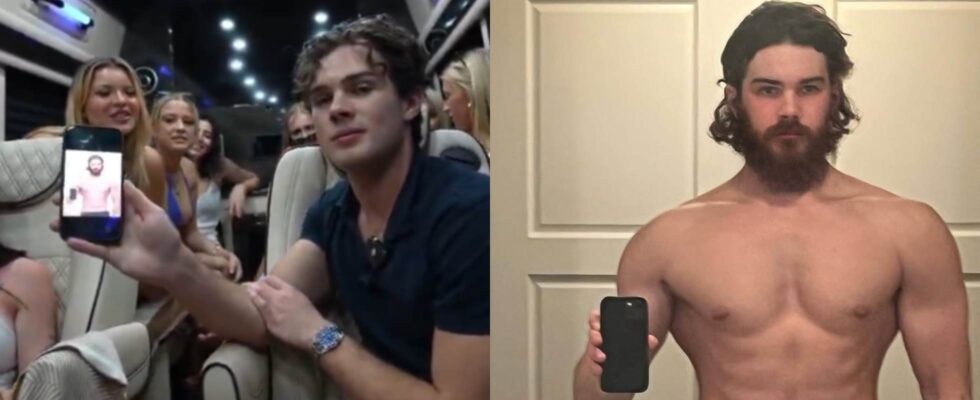
Recently, SNL aired a sketch mocking the online looksmaxxing subculture, which is the internet movement focused on maximizing physical appearance. Looksmaxxing influencer Clavicular reacted to the skit during his broadcast, making it clear he didn’t appreciate the portrayal..
“Dude, f**king millennials are such f**king retards because they have no culture of their own,” he said. Moments later, he doubled down on his frustration. “This is the worst thing I have ever seen,” he added.
Additionally, Clavicular faced quite some controversy when viewers tracked down what appeared to be one of his earliest social media profiles. The discovery happened during a live session, with thousands watching in real time as he tried to process it on the spot.
He said, “That’s not that, no, that’s not. That’s old, that’s old, look.” Rather than trying to bury it, he leaned in and pulled up the account himself.
He continued: “They found my old IG. You guys can look that up. Look, I’ll show you, just so that you can see. It’s on my account. This is my old, from my old Instagram, creatine being, I think it’s called. This is my old account on Instagram.”
The page was seemingly built around fitness content from an earlier phase of his life. Clavicular confirmed what everyone was already seeing.
He said, “So like, you guys can literally see, that’s actually me. That’s actually me back in the day when I was like taking masteron.”
The photos showed a younger version of Clavicular with long hair and a full beard, making him nearly unrecognizable compared to the image most viewers know today.
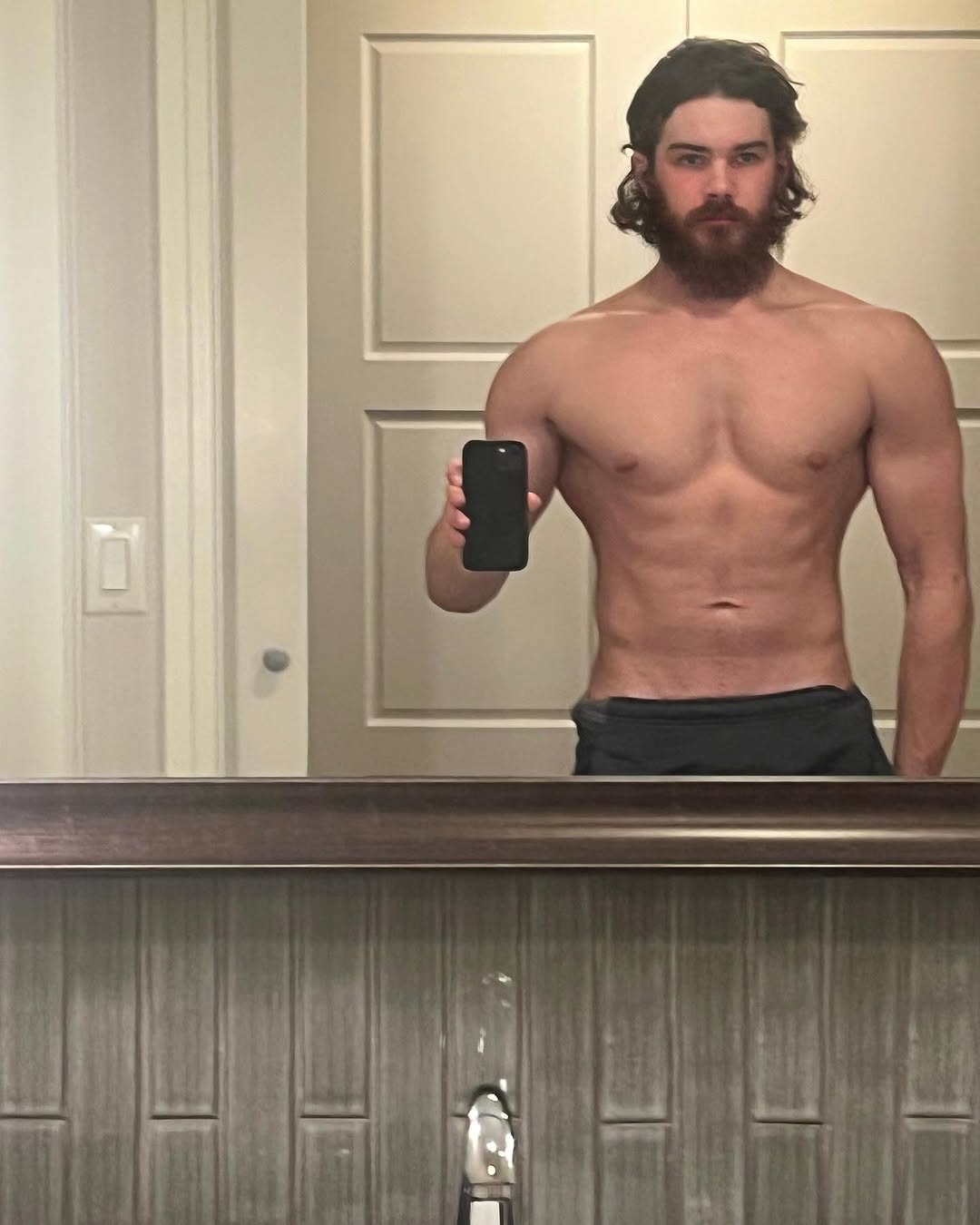
Someone pressed him on the look, asking: “Would you grow that out like that, dude?”
Clavicular had no real explanation. He replied, ” I don’t know. I was a long time, like a girl. Yeah, and I didn’t cut my hair either. I don’t even remember.”
Clavicular dated the account to roughly three years prior. “This, this 2023, I think. Yeah, old-a*s picture.”
Unlike his current content, the page didn’t look like a professional creator account. It resembled a personal fitness log from a period when he was deeply focused on training but hadn’t yet developed a public identity.
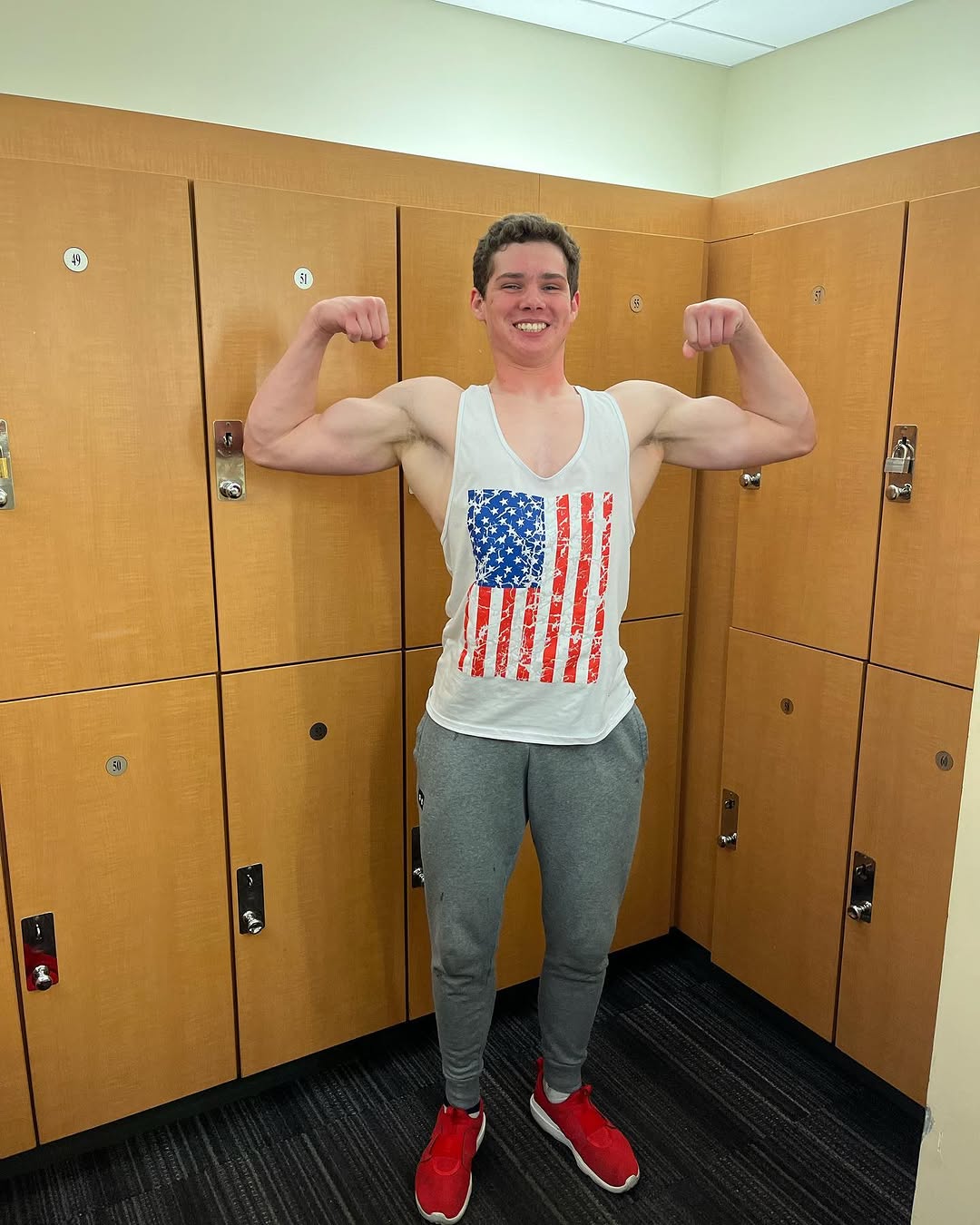
“So yeah, DHT derivatives are crazy,” he said while scrolling through the posts. “This was my gymcel page, when I was just gym maxxing. My physique wasn’t great, but I was young, so it was fine.”
As Clavicular’s audience has expanded, so did speculation about how quickly his popularity seemed to rise. Some critics suggested his growth was artificially engineered, an accusation he addressed during an appearance on the Jack Neel podcast.
Rather than dismissing the idea outright, he reframed it. “I wouldn’t necessarily call people industry plants,” he said. “But sometimes creators push each other artificially.”
He pointed to collaborations as a common example, referencing influencers like Kai Cenat.
“You see a big creator like Kai Cenat with a content house,” he explained. “They bring their friends on broadcasts, and that’s slightly inorganic growth. But they’re still being exposed to a new audience. And if they perform well, the views convert.”
From his perspective, the concept has practical limits.
“Even if you had an unlimited ten-million-dollar-a-month clipping budget, if you’re not interesting, those views won’t convert,” he said. “You’d just be paying for nothing. So it’s not as possible as people think to be an industry plant.”
When asked directly why people suspect him of being an industry plant, Clavicular pointed to the speed and visibility of his rise. “I’d say it’s because of how quick the growth looks,” he said. “But I just have a unique strategy, doing a lot of different forms of media to reach as many audiences as possible.”
That strategy included appearances beyond traditional streaming spaces, including interviews with figures like Piers Morgan.
“You don’t really see streamers doing that,” he said. “Going on talk shows, doing interviews, it’s just not something that’s been done before.”
He also credited platform mechanics for amplifying his reach, particularly the clipping incentives on Kick.
“I’m incentivized by Kick clipping,” he said. “If I wasn’t putting out viral moments, I wouldn’t have these numbers. Everyone has the same opportunity, people just choose to post my clips because they perform.”
According to Clavicular, his rise wasn’t as sudden as it might appear from the outside. There was one notable spike, he said, during a controversy tied to an event in Santa Cruz.
“That whole cancel thing put my name out there,” he explained. “But after that, it died down again. I was just a normal creator on YouTube and TikTok.”
The turning point came when he shifted to long-form broadcasting.
“Then I started doing long-form broadcasts, and that really took off,” he said. “The clips got pushed out to X, which has an older, more political audience. That brought a lot more eyes, and it converted well.”
