

Motivational speaker Mel Robbins has built an empire on simplified self-help concepts, but her recent venture into the supplement industry has raised questions about transparency and product origins.
The launch of Pure Genius Protein appears to follow a pattern of unclear timelines and missing information that consumers deserve to understand before making purchasing decisions.
Robbins, who has no nutrition credentials or supplement formulation background, publicly identifies as co-founder of Pure Genius Protein. She announced in January 2026 that she had been working on the product for a year, presenting it as a brand new creation.
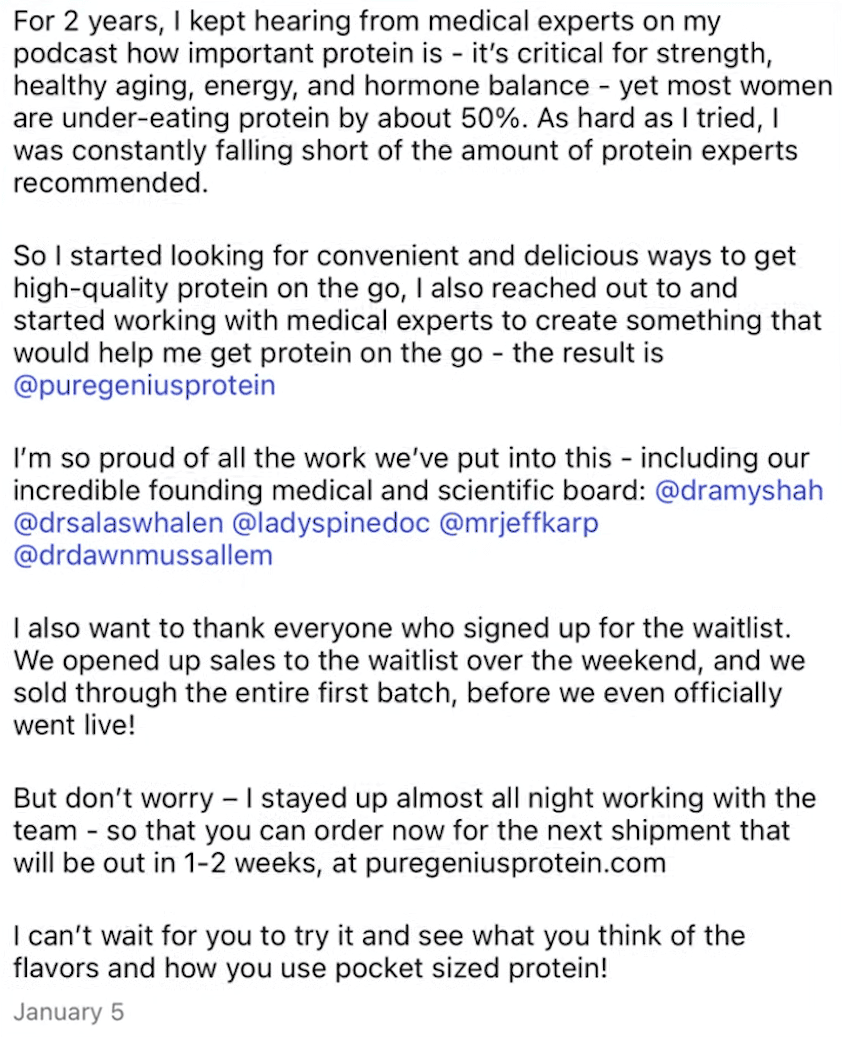
However, digital evidence suggests the product already existed under a different name with different public figures attached to it.
Before Pure Genius Protein appeared, a nearly identical product called Genius Shot was actively promoted on social media.
According to archived content and industry reporting, Dr. Mike of Renaissance Periodization was connected to Genius Shot, which featured the same concentrated protein format, identical serving size of 3 ounces, and the same 23 grams of protein per bottle. The flavor profiles, packaging style, and product format match closely between the two products.
The timeline presents notable inconsistencies. Dr. Mike posted about Genius Shot in March 2025, discussing the product’s formulation and purpose.
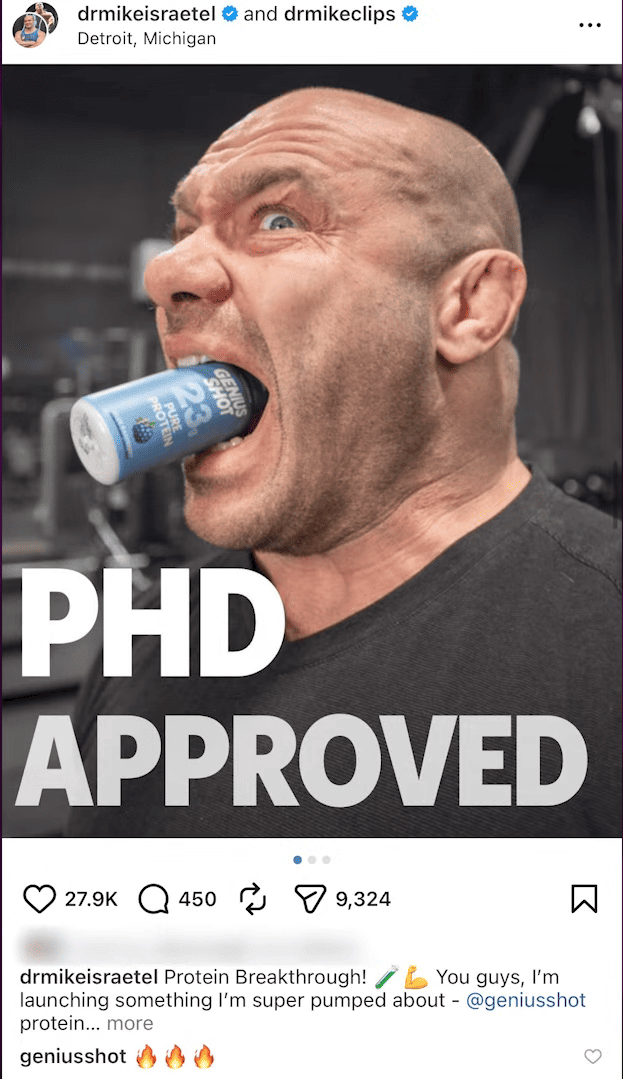
Nearly a year later, Robbins announced Pure Genius Protein as if it were a completely new concept she helped develop from the beginning.

The connection between the two products extends beyond similarities. The original geniusshot.com domain now forwards directly to Pure Genius Protein’s website. The Genius Shot Instagram account has been redirected to point to the new brand. These digital footprints indicate a transition from one product identity to another, rather than two separate ventures.
A federal trademark lawsuit filed in April 2025 confirms Genius Shot operated as a fully functioning business before Robbins announced her involvement with Pure Genius Protein.
Worldwide Sport Nutritional Supplements, Inc. filed the case against Genius Shot Opco LLC and its founders. The lawsuit was voluntarily dismissed in July 2025, but its existence establishes that Genius Shot had formal business operations, ownership structure, and trademark activity months before the Pure Genius launch.
This legal documentation anchors the product’s existence in a verifiable timeline that contradicts the narrative of a brand new creation.
Pure Genius Protein contains both whey protein and collagen, which raises questions about formulation choices. Clinical research on collagen typically examines doses of 10 to 20 grams daily over 8 to 12 weeks for potential benefits to skin, joints, and connective tissue. Pure Genius Protein contains approximately 2.5 grams of collagen per serving, far below clinically studied amounts.
The addition of collagen appears targeted toward Robbins’ primary demographic. Public data shows her audience consists overwhelmingly of women aged 25 to 45, and collagen marketing typically focuses on beauty and wellness claims directed at female consumers. Including a sub-clinical dose of a trendy ingredient while maintaining the total protein count of 23 grams means less of the complete whey protein that actually supports muscle synthesis.
The marketing language hints at blood sugar support, hunger regulation, and energy benefits. While protein consumption generally supports satiety, these broader health claims come from someone without nutrition training or credentials. The benefits described apply to protein consumption in general, not to this specific formulation.
Pure Genius Protein promotes having a panel of doctors providing oversight. However, no public documentation from the Genius Shot period mentions a formal medical advisory board or physician panel. Articles and archived pages from that timeframe only reference Dr. Mike and his co-founder.
The doctor panel appears to have been introduced during the rebrand to Pure Genius Protein, not during the original product development. In the supplement industry, scientific advisory boards often serve marketing purposes rather than indicating active involvement in formula design or clinical testing. If the core product formulation already existed, the role of the advisory board relates more to the new branding than to scientific innovation.
This product launch follows previous controversy around Robbins’ book “Let Them.” Cassie Phillips wrote a poem titled “Let Them” in 2019 that went viral across social media platforms by 2022.

In May 2023, Robbins posted a video saying she had just heard about something called the “let them theory,” acknowledging she did not create it.
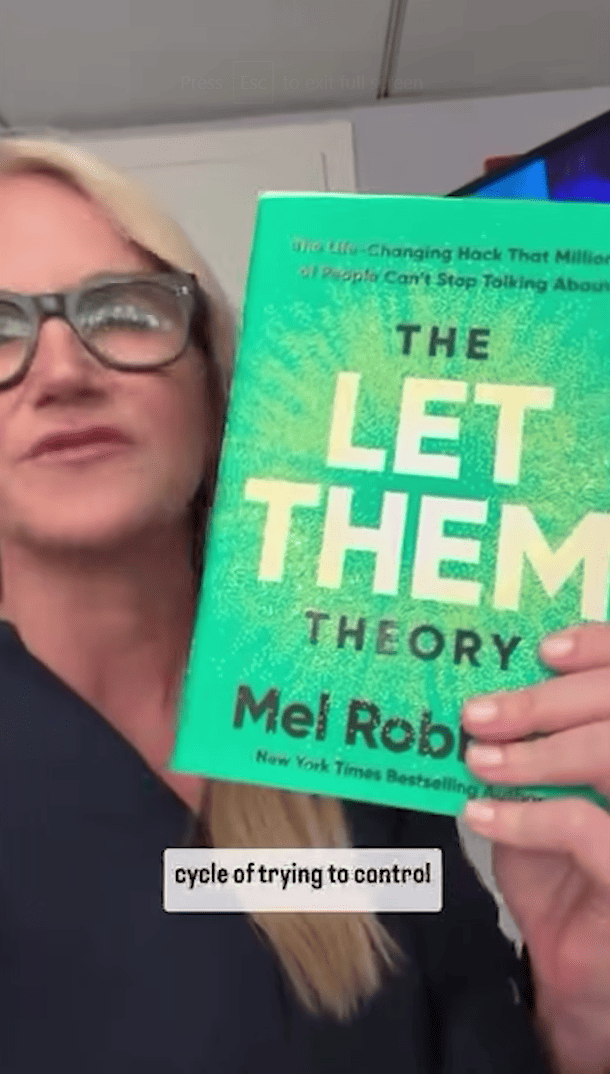
However, her book presents a different origin story, claiming the concept came from an emotional moment during her son’s prom night in 2023. When questioned by the New York Post, Robbins stated she had never seen Phillips’ poem and that her writing was not inspired by it. This presents conflicting accounts about how a monetized concept developed.
The pattern involves concepts that already existed publicly being repackaged with new origin stories that center Robbins’ personal involvement. Whether intentional or not, this approach leaves audiences questioning which version of events is accurate.
Rebrands, acquisitions, and new partnerships happen regularly in the supplement industry. None of these business activities are inherently problematic. The concern arises when a product transition is presented as a brand new creation without acknowledging its previous existence.
If Robbins joined an existing company as a partner, invested in a rebrand, or helped redirect the marketing strategy, stating that clearly would establish appropriate expectations. Consumers making daily purchasing decisions about products they consume deserve complete information about what they’re buying and who is behind it.
The wellness industry has a documented history of influencers leveraging their platforms to promote products outside their areas of expertise. When someone with millions of followers and no nutrition background enters the supplement space, transparency becomes necessary rather than optional.
