
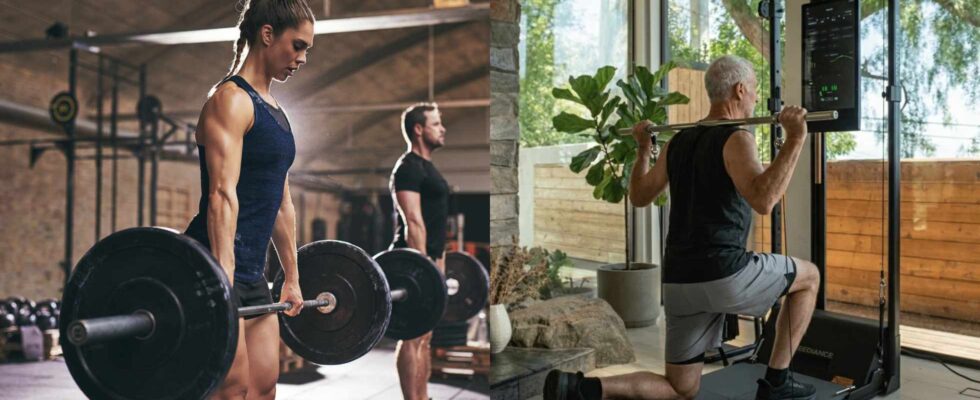
A leading voice in home gym equipment review says the shift away from traditional weights in commercial gyms won’t be driven by trend or preference. It will be driven by insurance math.
Cooper Mitchell, known to his audience as Coop from Garage Gym Reviews, laid out his prediction during an appearance on the Shaw Strength Podcast with host Brian Shaw. Asked directly about the future of digital and electronic resistance equipment compared to traditional free weights, Mitchell said he believes the technology is going to take over most commercial gym floors, but not because gym owners or members are asking for it.
“The reason that I think it’s going to consume most commercial gyms is not because commercial gyms want them or users want them, but because insurance companies will want them,” Mitchell said.
He compared the dynamic to the argument some make about self-driving cars overtaking traditional driving.
“A lot of people are arguing that self-driving cars will kind of take over a lot of traditional driving because insurance companies can show, as soon as the wrecks that happen decrease, the collisions happen due to a self-driving car, therefore they’ll spike insurance rates for people that want to drive themselves, forcing most people to have a self-driving car, whether they want it or not,” he said. “This isn’t an argument for why I think it should or not. I’m just saying this is what I think could happen.”
Mitchell said the same logic applies to gym equipment. Devices like the Beyond Power Vaultra and Tonal already build in safety features such as automatic stops if a handle slips from a user’s grip, or spotter modes that catch a lifter before a bar can fall. If insurers can point to data showing fewer injuries on that kind of equipment, he said, the financial pressure on traditional gyms would follow.
“If an insurance company can show that it decreases injuries, then suddenly they spike insurance rates for free weight gyms, and suddenly I think they become more boutique,” Mitchell said. “Now, I don’t want that to happen. I hope that doesn’t happen, but I could foresee that happening.”
Shaw, a four-time World’s Strongest Man winner, pushed back on the idea, though he agreed the underlying logic made sense from a liability standpoint.
“I can understand the argument from an insurance standpoint, and I don’t like it. I really don’t like that at all,” Shaw said, comparing it to his resistance to electric vehicles and digital currency replacing physical cash. “I’m not a big fan of control. People should have the freedom.”
Mitchell added that he expects home gyms to remain one of the last strongholds for traditional free weights, since individual owners control their own equipment choices without an insurer dictating terms. But on the commercial side, he said the numbers may eventually do the deciding for gym owners, regardless of what lifters prefer.
