
When fitness YouTuber and PhD holder Mike Israetel published “The Aesthetic Revolution: Embracing Vanity and the Future of Fitness to Unlock Your Healthiest Self,” critics expected it might be mediocre. Nobody anticipated it would be riddled with obvious signs of artificial intelligence generation, including literal watermarks from Google’s Gemini AI image generator.
Content creator Solomon Nelson recently released a detailed analysis video exposing the extensive evidence of generative AI use throughout Israetel’s book, published by Hachette Book Group. The investigation reveals a pattern of lazy authorship that raises questions about intellectual property rights, publishing standards, and academic integrity.
The most serious evidence comes from multiple illustrations containing unmistakable Gemini watermarks in the bottom right corners. These AI-generated images display errors: a woman with four arms, anatomical labels pointing to incorrect body parts, and duplicated text describing the same features.
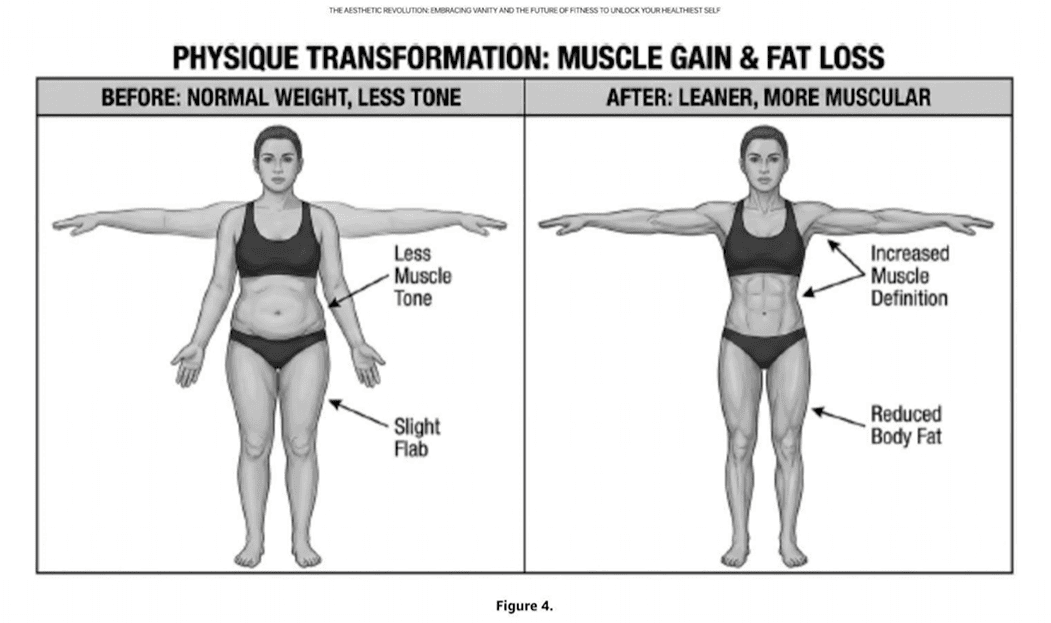
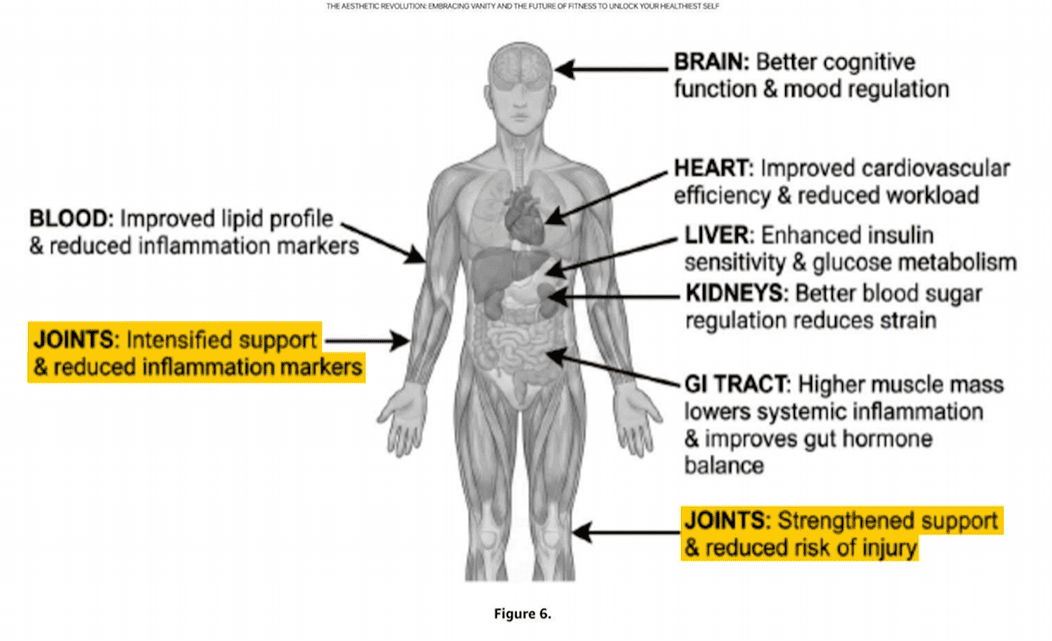
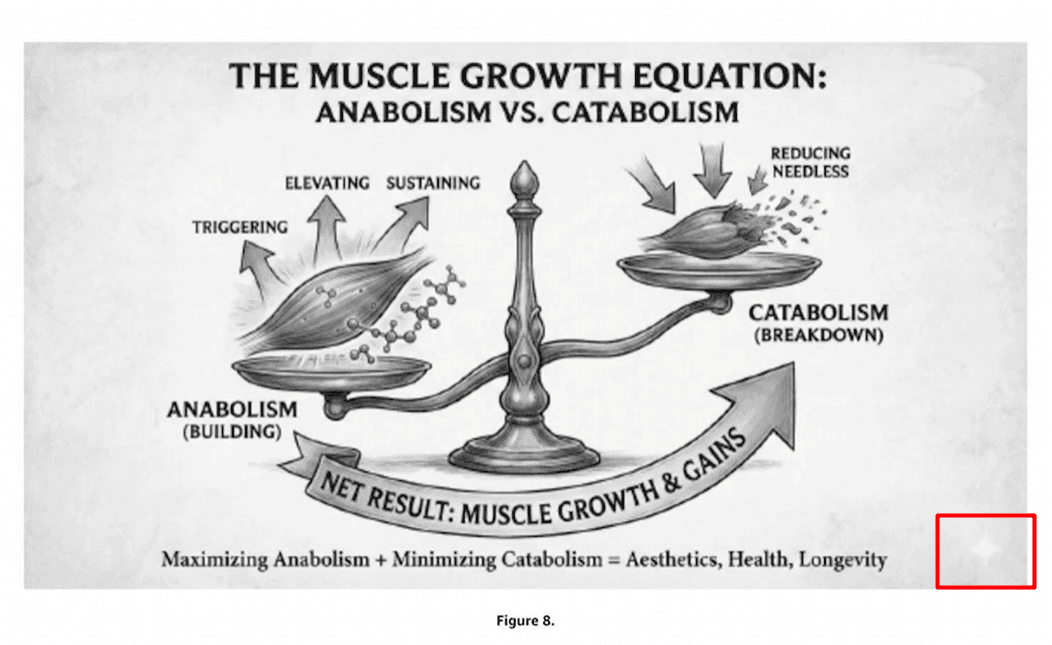
The copyright page credits “RP Strength” (Israetel’s company) as the proprietary source, when in reality they simply generated unvetted AI outputs.
Beyond the watermarked images, Nelson identified hundreds of textual markers consistent with large language model output. The book contains over 600 em-dashes, a punctuation mark that AI frequently overuses but which appears zero times in Israetel’s 2013 PhD thesis and only twice in his 2019 book. The writing style shifted dramatically from his previous publications to match the cadence of algorithmic text generation.
Additionally, Nelson documented numerous telltale signs of AI authorship. The phrase “think of it like” appears nearly 50 times, along with excessive use of negative parallelisms such as “it’s not X, it’s Y” and “not just X, but also Y.”
The book deploys the rule of three obsessively, grouping adjectives and phrases in threes even when redundant: “energetic, active, and effortlessly in control” or “youthful, fresh, and vibrant.”
Certain words appear with suspicious frequency: “transform” appears 128 times, “significant” 148 times, and “enhance” 190 times. This concentration of AI-favored vocabulary, combined with tourism brochure-style enthusiasm (“Welcome to the next frontier in aesthetic evolution”), creates prose that reads more like marketing copy than human authorship.
One paragraph appears twice, duplicated word-for-word on consecutive pages, suggesting Israetel clumsily copied and pasted AI outputs without proper review.
The discovery creates a serious problem for Hachette Book Group, which previously cancelled Mia Ballard’s horror novel “Shy Girl” after detecting AI-generated content. Hachette publicly cited their commitment to protecting original creative expression when pulling that book from publication.
Under US copyright law, wholly AI-generated content cannot be copyrighted. Publishers cannot claim exclusive intellectual property rights over algorithmic outputs, meaning competitors could legally copy and distribute AI-generated portions without penalty. Standard publishing contracts require authors to warrant that manuscripts are original human creations, making undisclosed AI use potentially a breach of contract.
If Hachette applies the same standard to Israetel’s book that they used for “Shy Girl,” they should discontinue “The Aesthetic Revolution.” The evidence of AI use is far more conspicuous here than in the fiction case that prompted action.
Even setting aside the AI question, the book fails on its own merits. Israetel’s philosophical framework is superficial, treating body dissatisfaction as purely a physical problem requiring physical solutions. He dismisses psychological interventions, insisting people should “simply get yourself a body that you like. Period.”
This reductive view ignores body dysmorphia and neurotic perception. For many people, there is no objective defect requiring correction, only warped self-image. Physical modifications do not address the underlying psychological pathology. Israetel himself underwent liposuction for perceived love handles that were barely visible in his competition photographs, exemplifying how distorted perception persists regardless of surgical intervention.
The fitness advice contradicts established research. Israetel dogmatically condemns rapid weight loss, claiming it inevitably causes failure and weight regain. However, clinical studies demonstrate the opposite. Research by Purcell and colleagues found that 81% of participants in a rapid weight loss program achieved target goals, compared to only 50% in a gradual program. Studies by Nackers and colleagues showed that fast dieters were 5.1 times more likely to maintain long-term weight loss than slow dieters.
His training prescriptions are mathematically impossible. He claims a 24-set full body workout can be completed in 30 minutes using supersets, but the arithmetic does not work. Twenty-four sets of 15 reps at a controlled tempo require 24 minutes of lifting alone, leaving only 6 minutes for 23 rest intervals, equipment setup, and transitions between six exercises.
For someone holding a PhD, the highest form of research training, this book represents a profound failure of scholarly standards. Israetel demonstrated no understanding of research integrity, evidence-based argumentation, or intellectual rigor.
