

The fitness industry’s embrace of artificial intelligence has taken an unexpected legal turn. Prominent fitness influencer Dr. Mike Israetel may have inadvertently complicated a major copyright lawsuit after publicly discussing his use of AI tools in creating published content.
According to sources, Israetel’s publisher Hachette Book Group is currently engaged in a significant legal battle against Google over copyright infringement. The publishing giant alleges that Google has been using copyrighted material from its catalog to train AI models without proper authorization or compensation. This lawsuit represents one of several high-profile cases pitting traditional publishers against tech companies over the use of copyrighted works in AI development.
The complication arose when Israetel openly discussed using AI assistance in writing his book. In various social media posts and interviews, the influencer appeared enthusiastic about incorporating AI technology into his creative process. He described it as a useful tool for research and content generation.
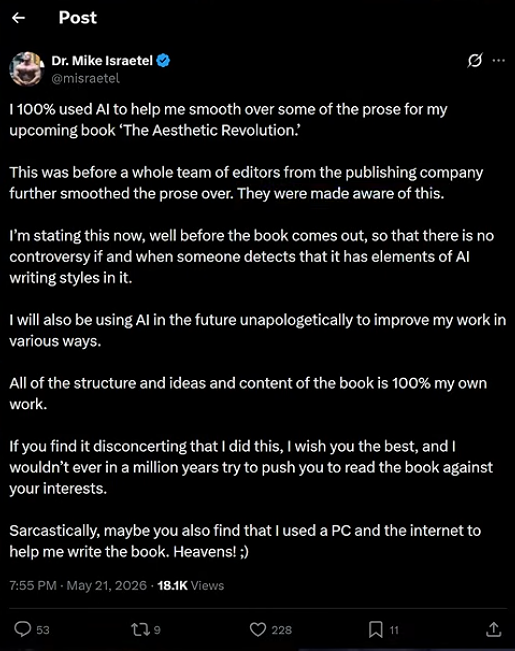
While many authors quietly experiment with AI assistance, Israetel’s public enthusiasm may have created an unintended problem for his publisher’s legal strategy.
The timing couldn’t be more challenging for Hachette. The publisher’s lawsuit hinges partly on the argument that AI companies are using copyrighted material without permission to train their systems, potentially devaluing original works and replacing human creativity. However, if one of their own published authors openly acknowledges using similar AI tools to create content, it could undermine the publisher’s position on the threat AI poses to traditional publishing and creative work.
Legal experts suggest this disclosure could complicate several aspects of the case. Defense attorneys for Google might argue that publishers themselves are benefiting from AI technology while simultaneously trying to restrict others from using it. This apparent contradiction could weaken claims about the harm AI poses to the publishing industry.
Furthermore, questions may arise about the originality and copyright status of Israetel’s work if AI played a substantial role in its creation. Current copyright law holds that works must contain human authorship to be eligible for protection, and significant AI involvement could potentially compromise those protections.
Israetel has built a substantial following in the fitness community through his evidence-based approach to training and nutrition. His Renaissance Periodization company has become influential in the bodybuilding and strength training worlds. However, his approach to discussing his creative process may now have legal ramifications beyond what he anticipated.
