
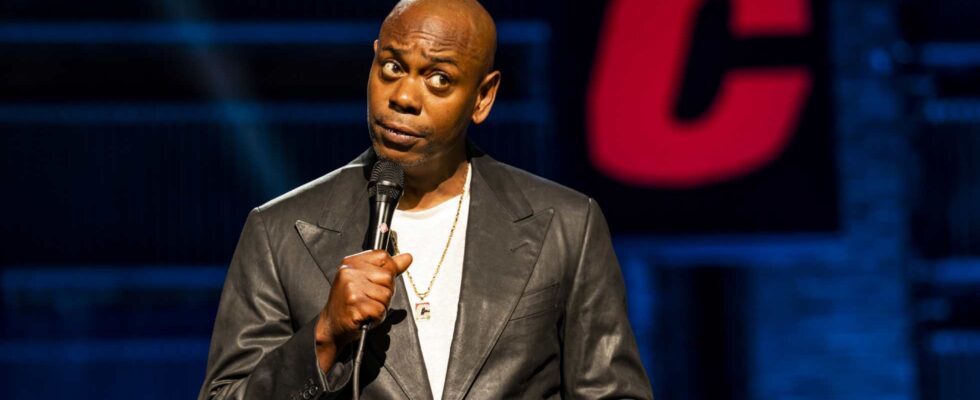
In his latest Netflix special “The Unstoppable,” Dave Chappelle directly addresses the controversy surrounding his performance at Saudi Arabia’s Riyadh Comedy Festival. According to sources, he delivered an unapologetic defense of his decision while taking aim at critics including Bill Maher.
“America’s whites, they’re furious,” he observes, while acknowledging support from other demographics. Chappelle makes clear his stance from the outset: he feels no guilt about accepting the lucrative Middle Eastern engagement.
His primary target is fellow comedian Bill Maher, whom Chappelle has known since his late teens. Referring to Maher’s public criticism of performers who worked the Saudi festival, Chappelle said: “I’ve never said this publicly but f**k that guy. I’m so f**king tired of his little smug, cracker-ass commentary.”
Chappelle tries to dismantle the arguments leveled against him. He stated: “I don’t feel guilty at all. These motherfuckers act like because I did a comedy festival in Saudi Arabia I somehow betrayed my principles… ”
When critics cite Saudi Arabia’s involvement in journalist Jamal Khashoggi’s demise, he acknowledges the tragedy but points out what he sees as selective outrage, noting that Israel has been responsible for 240 journalist casualties in recent months.
Chappelle said during the special: “They said, ‘Well, Saudi Arabia killed a journalist’, and rest in peace Jamal Khashoggi. I’m sorry that he got murdered in such a heinous fashion. And also, look bro, Israel’s killed 240 journalists in the last three months so I didn’t know y’all were still counting.”
The comedian challenges accusations that performers “whored themselves out to a dictator,” pointing out that most articles critical of the festival prominently featured his image. He admits without shame that he earned more than his fellow comedians, joking that his new career strategy involves waiting for calls from Middle Eastern promoters.
Perhaps his most pointed defense centers on creative freedom. Chappelle argues that performing in Saudi Arabia actually felt less restrictive than working in America, where he faced cancellation attempts over transgender material just two years prior. He claims those same jokes “went over very well” with Saudi audiences, describing himself as being “in the pocket” creatively.
Chappelle stated during the special: “I’ll take money from Saudi Arabia any day just so I can say no over here. It feels good to be free. And I know that the people in Saudi Arabia can’t say all the things that I was allowed to say. But a deal’s a deal, and the king said that I could say these things. So I looked at it like I was on a diplomatic mission: I’ve gotta bring p**sy jokes to the Middle East.”
The comedian also shares his fascination with Middle Eastern culture, recounting experiences at an Abu Dhabi festival where he encountered falconry traditions. He weaves this into an extended comedic bit that serves dual purposes: entertaining his audience while illustrating cultural differences without passing judgment.
Throughout his defense, Chappelle positions his Saudi performances within a framework about artistic freedom and economic independence. He suggests that accepting well-paid international work allows him to maintain independence from American corporate and political pressures. The financial freedom, he implies, enables him to speak more freely rather than less.
The comedian’s approach contrasts sharply with how other performers handled similar criticism. While some comedians faced accusations of hypocrisy based on previous statements about wealth inequality or performing in controversial locations, Chappelle’s defense rests on consistency: he’s always prioritized artistic freedom and financial independence over political considerations.
His closing statement on the matter references Bill Maher again, expressing exhaustion with what he characterizes as sanctimonious criticism from someone within the entertainment industry.
For Chappelle, the Saudi performances represent not a betrayal of principles but an affirmation of them. He advocates the right to perform wherever audiences exist, regardless of their government’s policies.
