

UFC superstar Conor McGregor is facing intense backlash after announcing his entry into cryptocurrency with his new token called $REAL. The Irish star, known for his ventures in whiskey and stout, boldly claimed he was about to “change the CRYPTO game” in a social media post that’s now drawing criticism from crypto experts and fans alike.
McGregor declared: “Now it’s time to change the CRYPTO game. This is just the beginning. This is $REAL. #GetReal.”
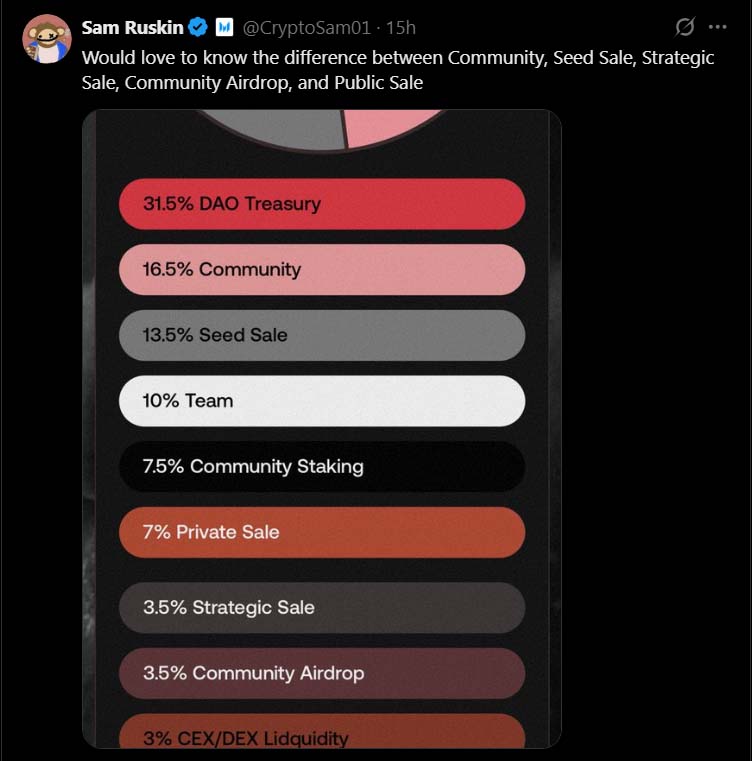
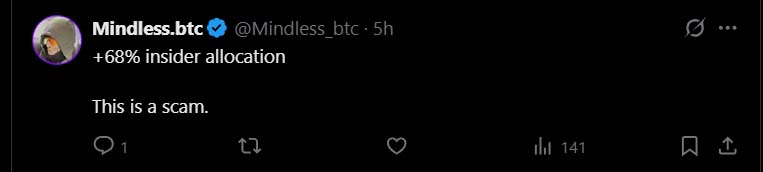
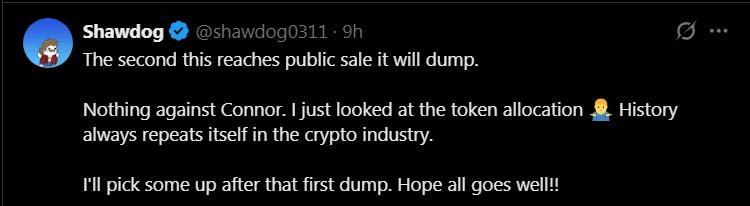
However, crypto analysts have quickly pointed out troubling aspects of the token’s distribution structure. Notably, a lot of the total supply appears to be allocated to insiders through various categories including:
- Team (10%)
- Seed sale (13.5%)
- Strategic sale (3.5%)
- Private sale (7%)
- DAO Treasury (31.5%)
- Advisers (1%)
- CEX/DEX Liquidity (3%)
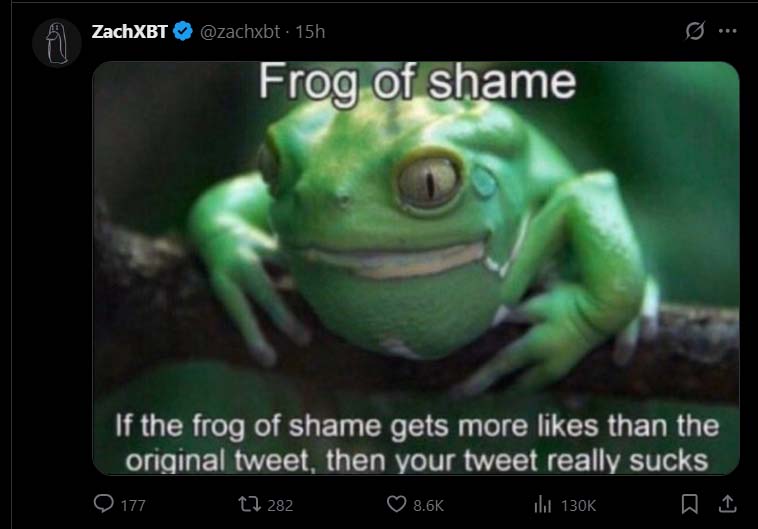
Crypto scam investigator Zach XBT responded with a “frog of shame” meme that garnered 8,600 likes, significantly outperforming McGregor’s announcement tweet which received just over 2,000 likes. Meanwhile, McGregor has limited comments on some platforms as criticism mounts.
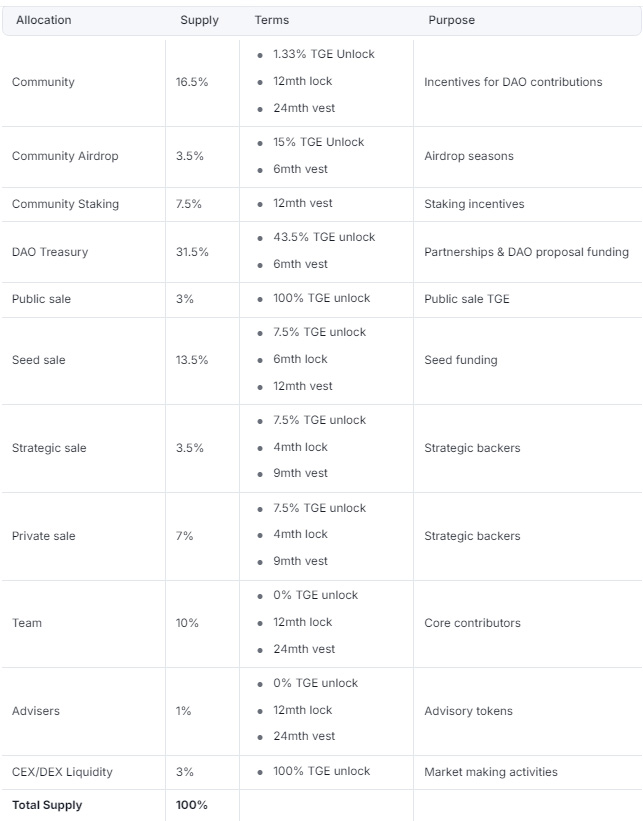
Looking at the tokenomics on their website, approximately 42.5% of the total supply is allocated to what could be considered “insiders.” This includes:
DAO Treasury: 31.5%
Team: 10%
Advisers: 1%
These groups typically have the most direct influence over the project and could potentially coordinate their actions. What’s particularly concerning is that the DAO Treasury has 43.5% of its tokens unlocked at the Token Generation Event (TGE), which means about 13.7% of the total supply is immediately available to insiders through just that allocation.
Crypto analyst Albert Renshaw calculated that the tokenomics appear designed to limit potential returns for average investors. “I just did the math and tbh the tokenomics here are extremely lame — realistically the most anyone can see is less than 2x ROI the way it’s done,” Renshaw tweeted.
He added, “Honestly, this is a total grift. They’ve completely restricted any chance fans can make money, the only one making money here is Conor.”
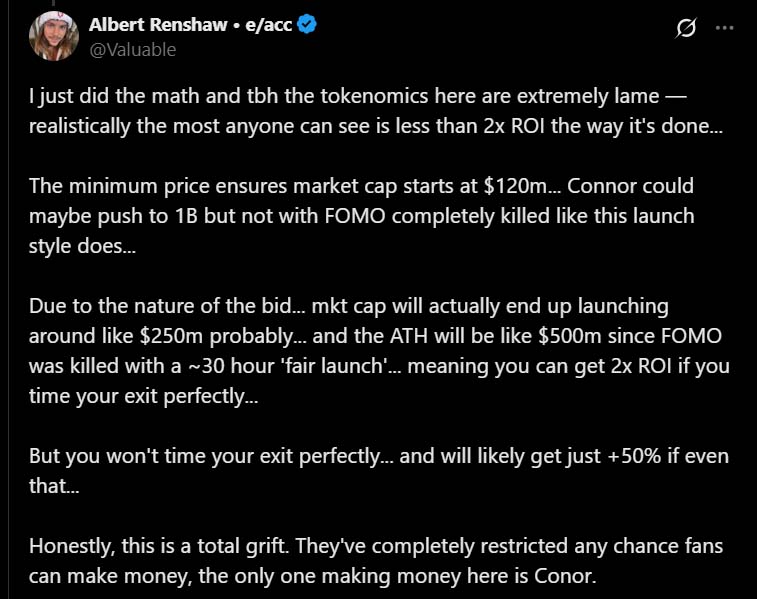
When challenged by a member of the $REAL team who defended the project’s structure, pointing to token lockups and the platform’s casino utility, Renshaw doubled down: “It’s not that it feels like a scam, it’s that with the bid structure you’re forcing people to buy in at what’s going to be like a $250m market cap… There’s just no room for anyone to try to make profit.”

According to the project’s whitepaper, $REAL is meant to power “Real World Gaming” (RWG), a platform focused on crypto gambling that connects to real-world data. The platform promises a rewards system where players can receive rakeback of the house edge based on their token holdings.
Looking at this token setup, there are some real red flags if you’re worried about losing money. The biggest concern is that insiders have access to a huge chunk of tokens right from the start. The “DAO Treasury” controls over 31% of all tokens, and almost half of those are available immediately. Combined with the 100% unlocked tokens for public sale and exchange liquidity, this means a lot of tokens can be dumped on the market right away. The team and advisors hold another 11% with long lockups, but that’s still a lot of control in few hands. Private investors got way better deals than regular folks (24% allocation vs just 3% for public). All this points to a possible “pump and dump” scenario where early insiders could sell quickly, leaving regular investors holding worthless tokens.
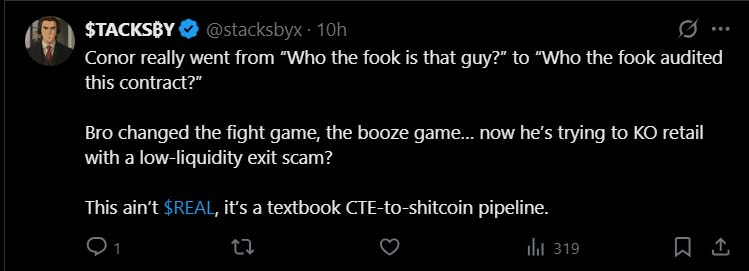
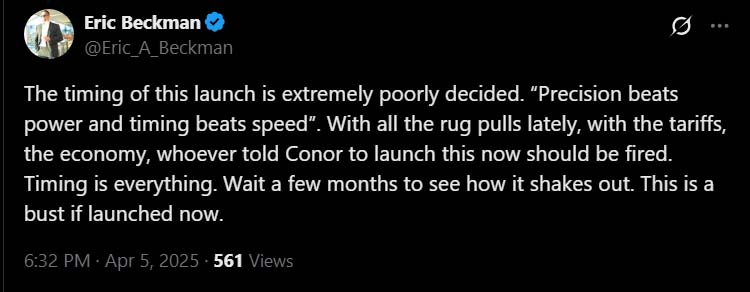
Despite claims of bringing innovation to the crypto gambling space, critics argue the token distribution heavily favors insiders while offering limited upside potential to retail investors who support McGregor’s newest venture.





McGregor’s entry into the cryptocurrency space comes at a time when several high-profile athletes have faced scrutiny for their involvement with digital assets. Former UFC champion Khabib Nurmagomedov faced backlash from fans for promoting a sports-based metaverse called Gameplan, with some accusing him of promoting questionable investments. Nurmagomedov had previously endorsed GMT token, which has since been described by critics as unsustainable.
Similarly, UFC middleweight contender Khamzat Chimaev became embroiled in controversy after promoting a cryptocurrency called “Smash” that reportedly crashed by over 90% shortly after his endorsement. Blockchain analysts suggested the token may have been part of a pump-and-dump scheme, leading to alleged changes in Chimaev’s management team.
The UFC experienced a security breach when its official Instagram account was taken over to promote a fraudulent cryptocurrency scheme. Perpatrators used both posts and Instagram Stories to drive users toward a suspicious website featuring a crypto wallet address tied to the scam. The unauthorized content stayed up for several hours before being taken down. This breach is especially significant given UFC’s legitimate crypto partnerships with companies like VeChain and Crypto.com—partnerships that have already sparked controversy, such as when Francis Ngannou claimed the exclusivity deal cost him a $1 million opportunity with Coinbase. Analysts estimate the scammers may have walked away with as much as $500,000, with certain insider wallets turning $470 into up to $115,000. The incident underscores the persistent cybersecurity vulnerabilities facing high-profile sports brands online. UFC has since regained control of its account and removed the malicious content.
