
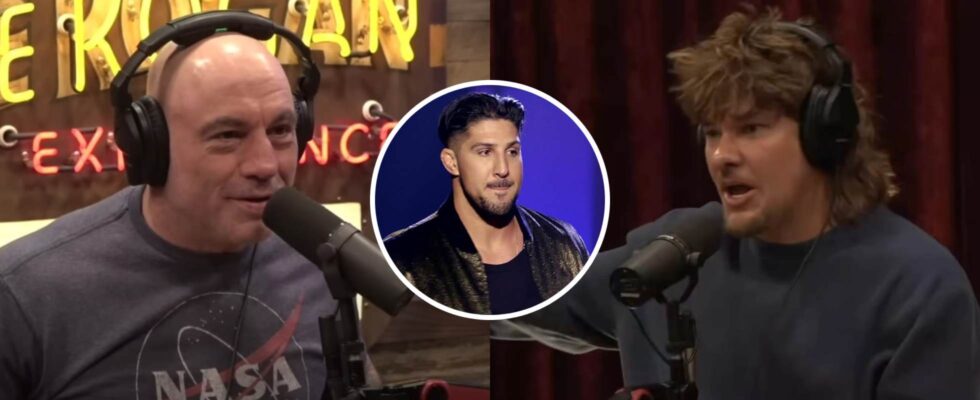
The ongoing tension between Joe Rogan and Theo Von has attracted commentary from nearly every corner of the podcasting world, and Brendan Schaub is no different.
Schaub is now positioning himself as a voice of reason in this situation while having previously used Theo’s personal struggles as talking points on his own platform.
The conflict traces back several months, beginning when Theo Von’s Netflix special drew negative attention after an uncomfortable moment with an audience member. Theo maintained it was blown out of proportion.
Things escalated when Theo appeared on the Joe Rogan Experience and raised concerns about real-world topics including Israel, Palantir, and related issues. Many viewers felt Rogan repeatedly brushed off Theo’s questions, responding with suggestions that Theo’s antidepressants were affecting his judgment rather than engaging with what Theo was actually saying.
Rogan compounded the situation by referencing Theo’s mental health across multiple episodes, including a conversation with Marcus King where he said, “Theo Von’s going through the exact same thing.”
After that episode circulated online, Theo responded publicly, writing, “This is mostly cap. Sad to see this kind of stuff. I’m doing great.”
Rogan eventually issued an on-air apology, acknowledging, “I certainly shouldn’t have brought that up in that context, and I probably shouldn’t have brought it up.” He also noted that he had spoken with Theo directly and that the two ended up laughing together during their conversation.
That’s where Schaub enters the picture. After Rogan’s apology, Schaub weighed in, saying, “Why is Rogan getting backlash? I am little concerned. Joe can call Theo. Theo would answer so you could talk to him direct. That’s probably the best move and not say it on the biggest podcast in the world.”
The advice sounds reasonable enough on its surface. The problem is that Schaub had already done the very thing he was criticizing. When the Marcus King clip first spread online, Schaub and Bryan Callen rushed to defend Rogan publicly.
Schaub framed Theo’s public commentary on his own wellbeing as justification for Rogan discussing it, pointing out that Theo had talked about these things openly before. That reasoning, while partially valid, ignored the significant difference between someone sharing their own story and someone else repeatedly broadcasting it to millions of listeners without the person present to represent themselves.
Schaub also used the situation as content for his own audience before pivoting to present himself as someone who simply wants peace between the two parties.
Rogan was criticized for making Theo a recurring example in conversations about mental health. Schaub contributed to the same cycle by turning the situation into material for his platform and then suggesting he could step in as a mediator.
Additionally, the real conversation about why Rogan responds to Theo’s questions so differently than he does with guests like Dave Smith or Tim Dillon has largely been buried under the weight of podcaster drama.
