
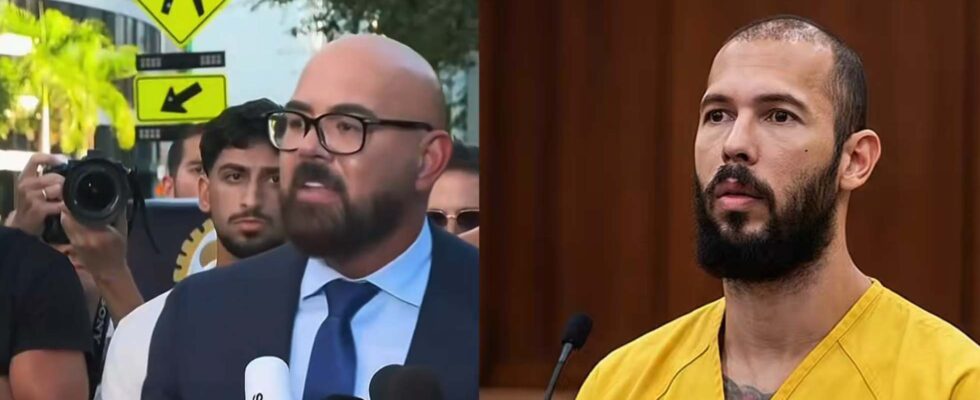
Andrew Tate and Tristan Tate made a rare and risky move on the first day of their bail hearing, taking the witness stand under oath while cases remain pending against them in Romania and the UK.
The hearing had already been delayed once after the brothers’ legal team requested more time to prepare, reportedly caught off guard by how aggressively the government pursued the case. Attorney Joseph McBride criticized prosecutors outside the courthouse following the hearing, saying:
“I heard some of the most inhumane, smug, condescending, inconsiderate comments from the government that I ever heard about a fellow American citizen in my life.”
The core of the brothers’ defense involved distancing themselves from their own public personas. When confronted by Assistant U.S. Attorney Abby Waxman with their own statements and videos regarding violence against women, human trafficking allegations and witness intimidation, the brothers’ response was that it was all performance. As Aronberg put it:
“They admitted under oath that the top G persona, the invincible multi-millionaire puppet master, is completely fake.”
Tristan Tate reportedly spent much of his nearly two hours on the stand describing conditions at the Miami federal detention center, including complaints about ants, a lack of privacy at the toilet in his cell and having lost 14 lbs (6.35 kg) living on jail food, which he compared to having scurvy.
McBride added:
“Not everything he says is true. If you believe everything Top G says, there’s something wrong with you.”
“He’s saying it creates a conversation and to get you subscribed to his school.”
Because this is an international extradition matter rather than a standard domestic case, the legal presumption works against the brothers. Under the relevant framework, the defense must prove by clear and convincing evidence that they pose neither a flight risk nor a danger to the community and must also demonstrate “special circumstances,” a standard the 11th Circuit interprets narrowly.
McBride argued the special circumstance in this case is that Romania could try the brothers in absentia and sentence them to life if they aren’t released to return and face trial there. Circumstances like ongoing foreign proceedings or the need to prepare a defense typically don’t meet the threshold and Judge Lauren Lewis has rarely granted bail in extradition cases of this nature.
Legal experts predict the brothers will remain in custody and eventually face extradition to the UK, a process he estimated could take another nine months or longer given the likelihood of continued appeals.
