

When Justin Gaethje recently complained about receiving 14 bonuses throughout his UFC career without reaching a million dollars, former UFC lightweight Al Iaquinta had a pointed response.
Iaquinta’s message was simple: “Gaethje can’t talk fighter pay now. Should have been making more the whole time.”
To prove his point, Iaquinta leaked direct messages from 2018 when the UFC attempted to arrange a match between the two lightweights.
In the leaked messages, Iaquinta proposed a united front. “They need us to headline this card. I want 150 and 50 to fight you. That’s not unreasonable,” he wrote.
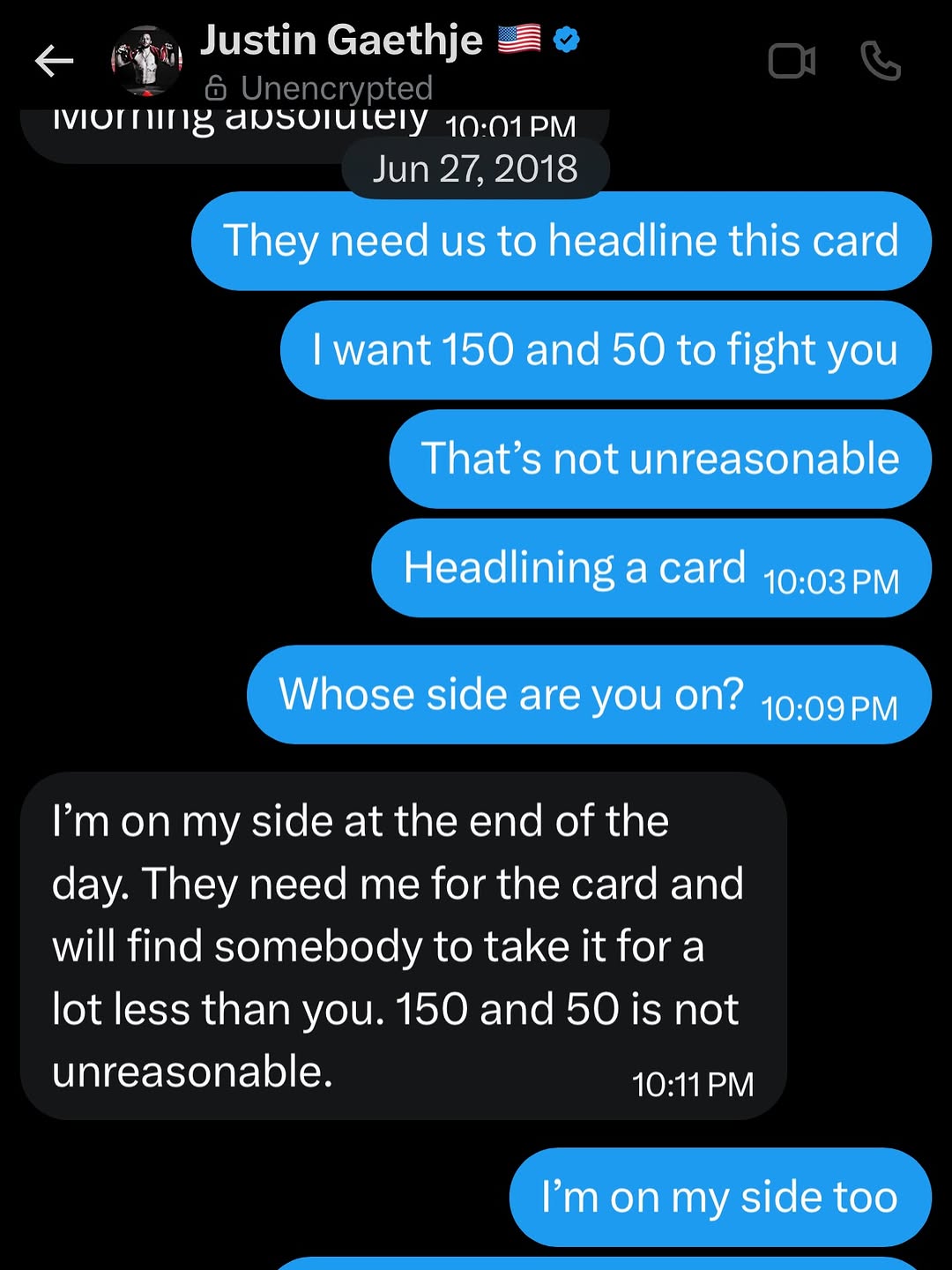
When questioned about whose side he was on, Gaethje responded pragmatically: “I’m on my side at the end of the day. They need me for a card and we’ll find somebody to take it for a lot less than you.”
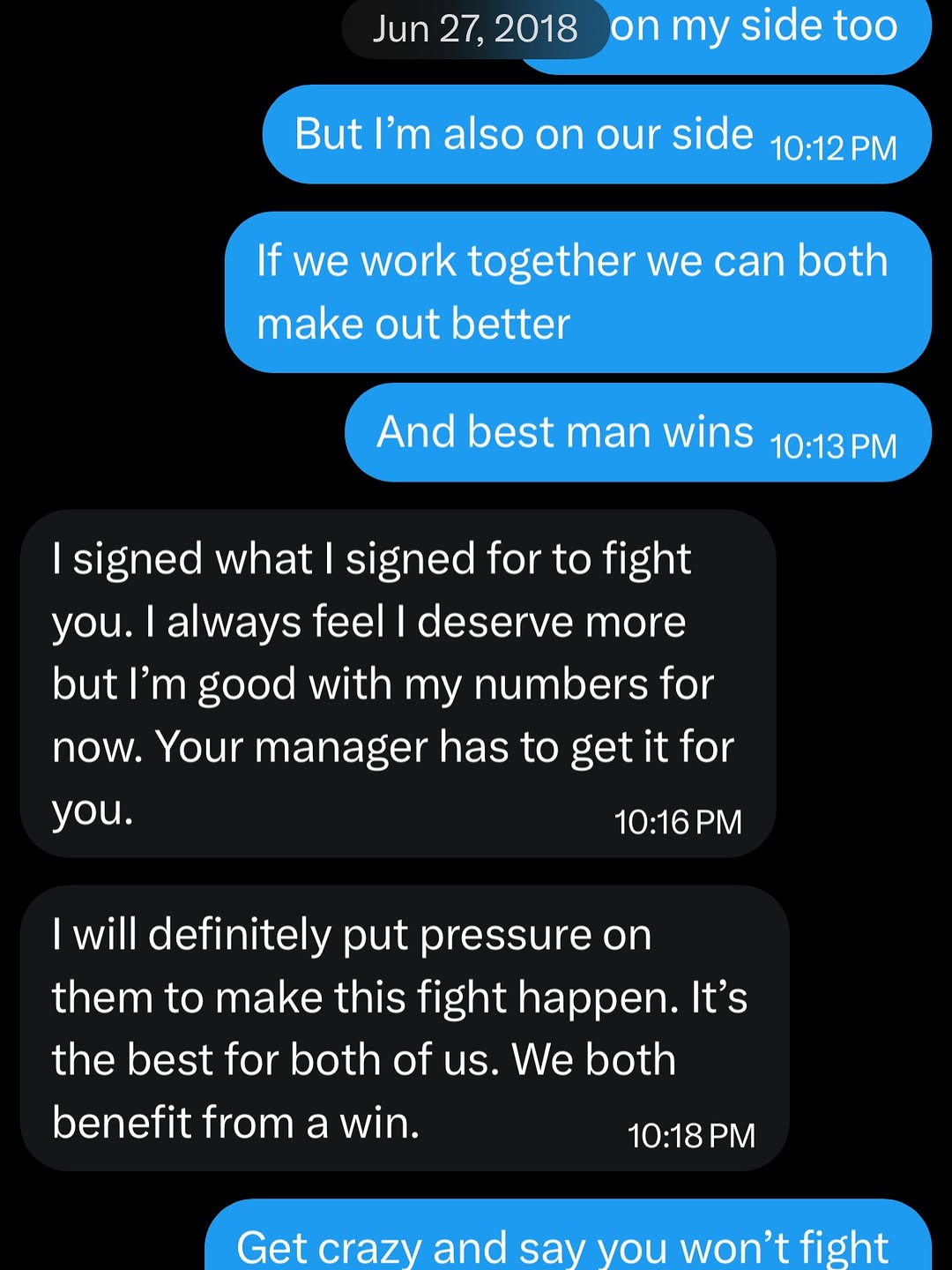
Iaquinta pushed back, arguing for solidarity: “I’m on my side, too, but I’m also on our side. If we work together, we can both make out better and the best man wins.”
Gaethje acknowledged his position: “I signed for what I signed to fight you. I always feel I deserve more, but I’m good with my numbers for now. Your manager has to get it for you. I’ll definitely put pressure on them to make this fight happen. It’s the best for both of us. We both benefit from a win.”
The exchange grew more intense as Iaquinta urged Gaethje to take a stand. “Get crazy and say you won’t fight anyone but me. Then it’ll happen. We’ll get what we want. If you take any other fight but me, I’ll have no respect for you. I have all the respect in the world for you, if you think you’re looking out for yourself, but you really aren’t. You’re looking out for them. Let’s take a stand and take this thing back.”
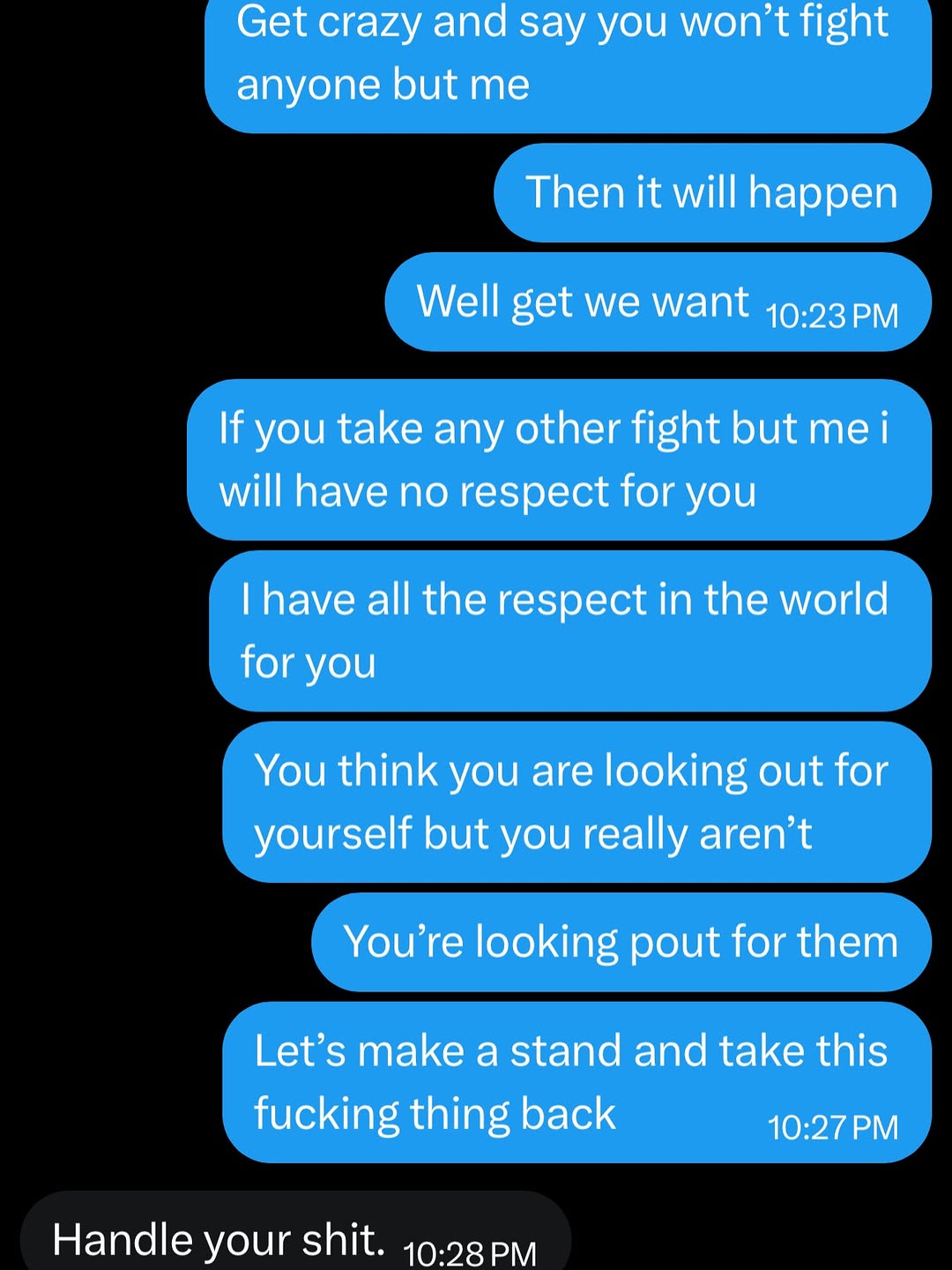
Gaethje simply replied: “Handle your s**t.”
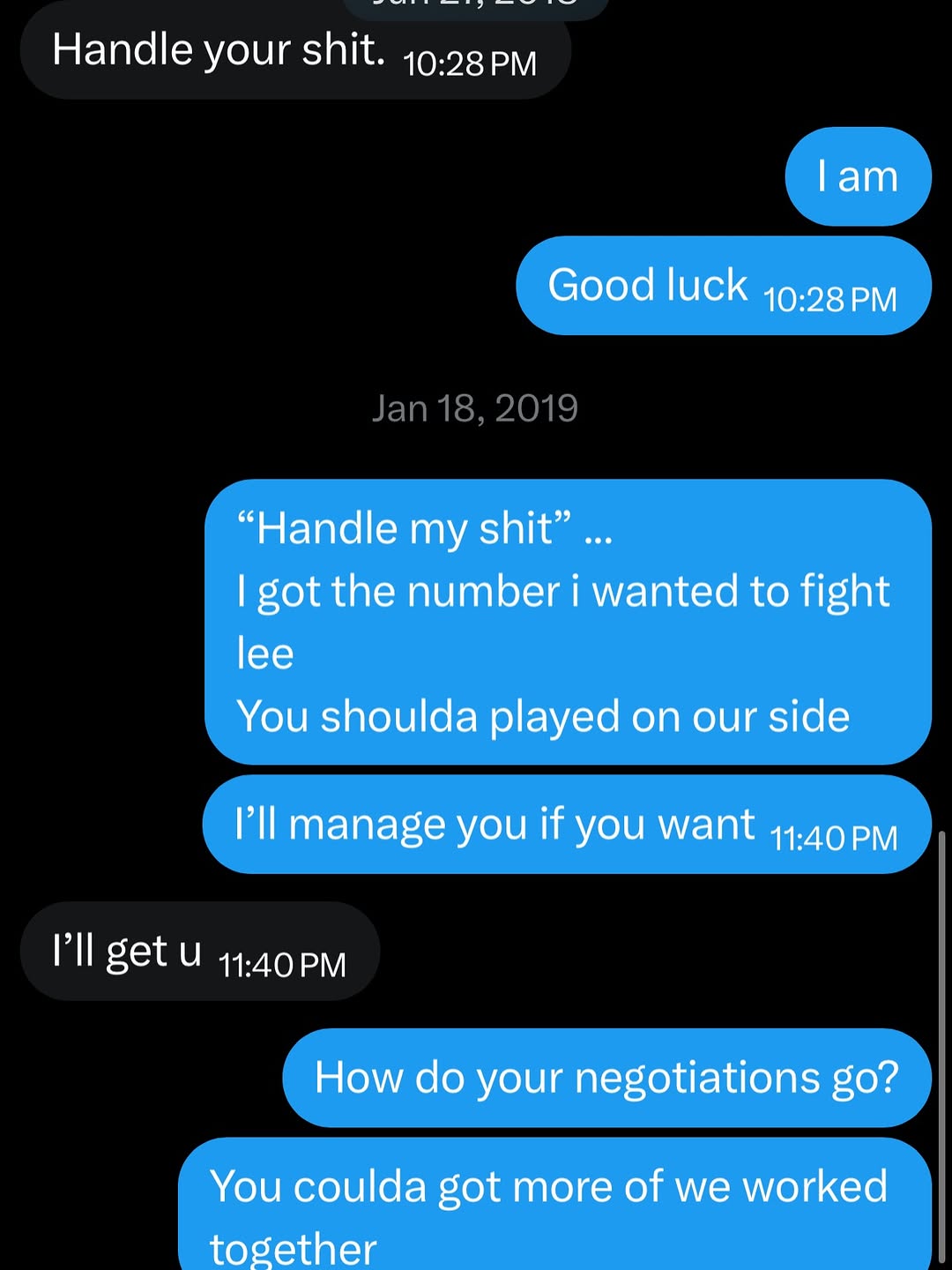
Months later, Iaquinta returned to the conversation after securing his desired number to compete against Kevin Lee. “Handle my s**t? I got the number I wanted to fight Lee. You should have played on our side. I’ll manage you if you want. I’ll get you.”
From Iaquinta’s perspective, stars working in unison was the only way to shift UFC pay structure. If two top tier lightweights refused to fight, it would create a genuine problem for the promotion. However, Iaquinta’s strategy required Gaethje to potentially breach his contract or damage his relationship with the UFC.
Gaethje viewed the situation differently. He understood that the UFC considers contenders replaceable. If he held out, the promotion would simply move forward with a different matchup, leaving both competitors without paychecks.
The situation mirrors the prisoner’s dilemma game theory concept. If both stars demanded more together, they both could win. But if one accepted less, the other who tried to negotiate would get replaced and lose everything.
In hindsight, Iaquinta believes Gaethje was wrong. But at the time, Gaethje’s career was ascending while Iaquinta’s relationship with the UFC was deteriorating. Gaethje chose the path of least resistance, which arguably worked for him individually, even if his current bonus compensation remains frustrating.
