
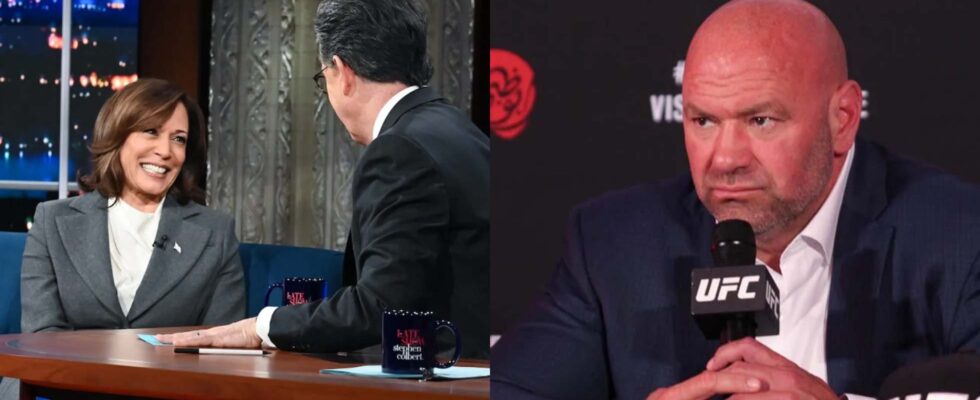
Dana White, the renowned UFC chief, has sparked controversy with his recent comments regarding Vice President Kamala Harris following her appearance on The Late Show with Stephen Colbert. White, who typically refrains from political discourse, took to social media platform X to express his concerns about Harris’s performance during the interview.
In a rare departure from his usual content, White shared a clip of Harris responding to a question about potential changes if she were to win the upcoming election. The UFC president’s critique was sharp and unambiguous, suggesting that Harris’s inability to articulate clear responses without aid should be a cause for alarm among voters.
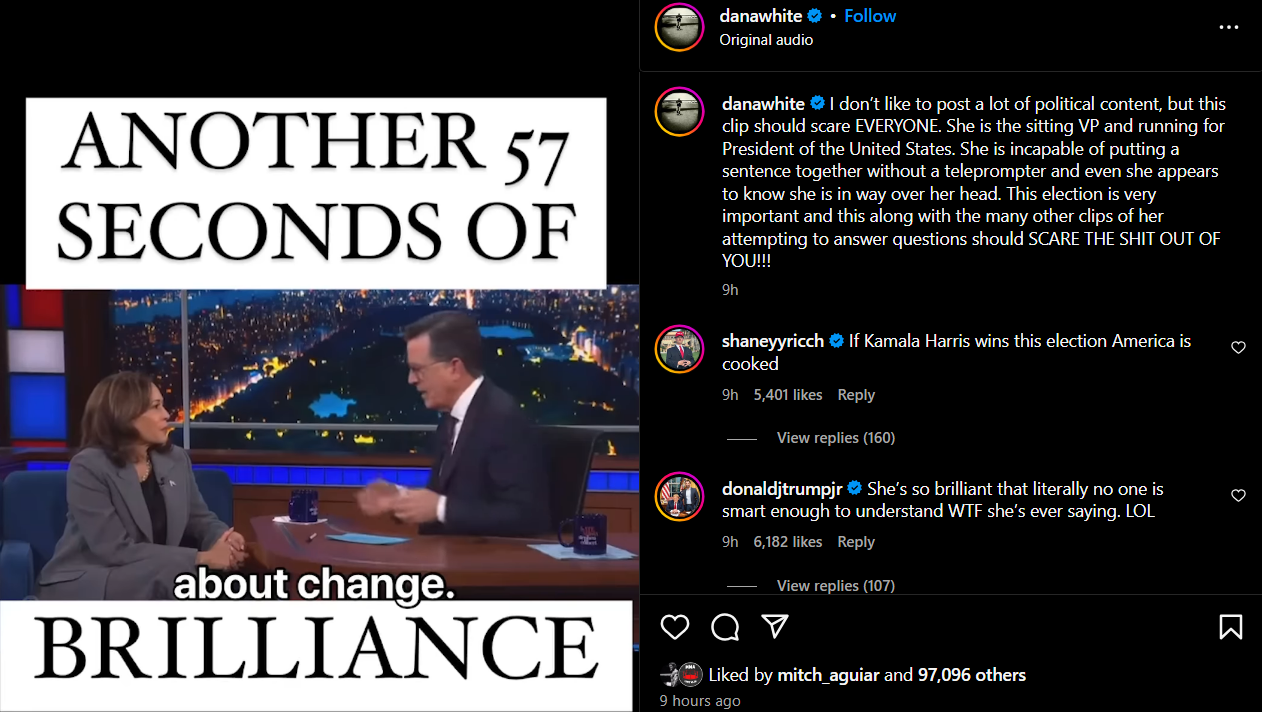
White’s comments have drawn attention not only for their content but also for the timing, coming just weeks before a crucial election. He emphasized the importance of the upcoming vote and urged followers to carefully consider the implications of Harris’s communication style.
The UFC chief’s relationship with former President Donald Trump is well-documented, with White having introduced Trump at the Republican National Convention in Wisconsin this past July. Their association dates back to the early days of UFC when Trump provided venues for events at a time when mixed martial arts faced significant public scrutiny.
White’s support for Trump has been consistent and vocal. In a recent interview, he praised the former president’s resilience and dedication to the country, describing Trump as someone who “loves America and cares about this country.”
The controversy surrounding White’s comments highlights the increasingly blurred lines between sports, entertainment, and politics in contemporary American discourse. As a prominent figure in the world of combat sports, White’s opinions carry weight beyond the octagon, potentially influencing public perception on political matters.
Critics argue that White’s comments may overstep the boundaries of his role as a sports executive, while supporters view his outspokenness as a refreshing departure from corporate neutrality on political issues.
