
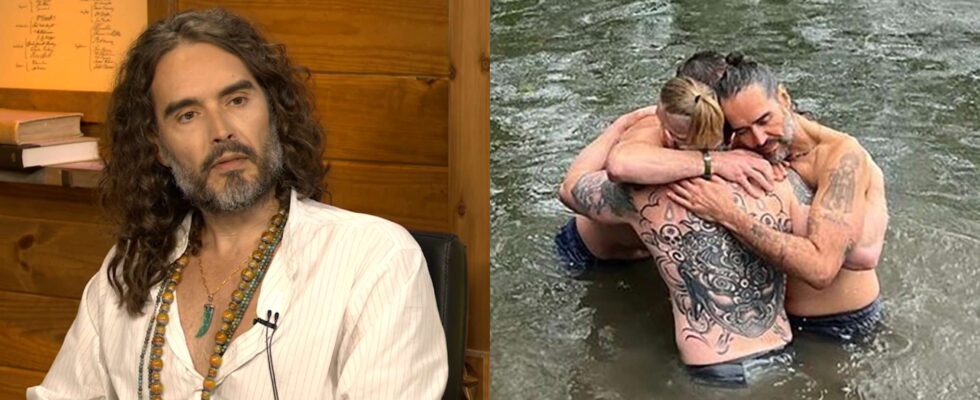
Russell Brand’s conviction on SA charges in 2024 brought renewed scrutiny to what critics call his calculated embrace of Christianity. During a Piers Morgan Uncensored debate featuring theologians, atheist activists, and commentators, the conversation exposed what many view as a troubling pattern: religious conversion as a shield against accountability.
Brand’s journey from atheism to Buddhism to born-again Christianity raised immediate red flags among panelists. Morgan noted he never bought the conversion, particularly its timing.
“It happened right after all the allegations came out,” Morgan stated. “I think it was a deliberate attempt to get the conservative right in America on his side, which was pretty successful and actually has continued to be post his conviction.”
The debate also showed a previous clip of Brand debating with Morgan where he was confronted about his spiritual trajectory. When Morgan presented facts about his previous belief systems, Brand became defensive.
Brand said, “They’re not basic facts. They’re information being tailored and collated in. [clears throat] Yeah. You are creating attempting to create using a collage of language.”
During an infamous moment, Brand searched laboriously for a Bible passage in court, eventually landing on Isaiah after Morgan suggested he meant “Isaiah, not Isaiah” with a Trump reference to two Corinthians.
Conservative commentator Milo Yiannopoulos, himself accused of “god grifting” for his fluid religious positioning, offered observations about Brand.
“There are people that one wishes kept their religion to themselves,” Yiannopoulos said. “Christian Science, Jehovah’s Witnesses, and I’m sorry to say Russell Brand. When I saw him on stage talking about God, I have to be honest, I think he should keep his faith private.”
Yiannopoulos elaborated on the phenomenon.
“I really don’t want to hear about religion from people who aren’t real priests, not somebody who’s just appointed themselves a pastor somewhere in Wyoming. Unless you’ve been in seminary, unless you have read the Bible in original languages, unless you have been part of a tradition of formal education in the priesthood, I find it very difficult to take these people seriously.”
The panel identified financial incentives fueling religious theatricality. With an estimated 350 to 400,000 churches in America and major evangelical ministries generating over five billion annually, the money is substantial.
Atheism activist Matt Deahunty connected this to broader manipulation tactics.
“They’re going to exploit and take advantage of things that are innate to humanity and pretend that those things are the product of Christianity,” he explained. “This is where we get the god grift.”
