

Looksmaxxing influencer Braden Peters (also known as Clavicular) is navigating a complex legal situation. His Massachusetts charges and a Miami civil lawsuit now intersect in ways that create substantial complications for his defense.
According to sources, Aleksandra Mendoza filed her civil case against Peters on April 28, 2026, months before charges became public. The original complaint centered on an incident allegedly occurring in Miami during November 2025.
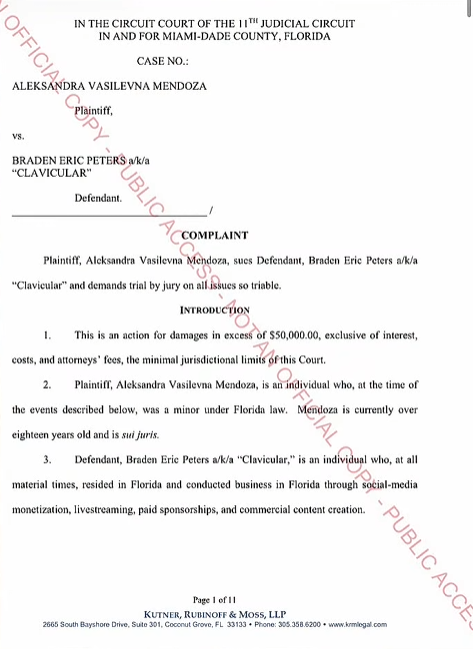
According to the filing, Mendoza met Peters and his group at a networking event in the Bricknell area. The complaint states that Peters invited her to a session, and the group eventually traveled from Miami to Delray Beach.
The lawsuit’s primary focus involves allegations that Peters performed unauthorized cosmetic injections during a broadcast. Mendoza claims Peters presented himself as having medical authority despite lacking physician credentials or Florida licensing. She alleges he injected something into her cheeks multiple times while broadcasting, and that he suggested methamphetamine had been added to the mixture. The complaint asserts she was seventeen at the time and did not provide valid consent.
The original filing included four counts: battery, intentional infliction of emotional distress, fraud, and unauthorized publication of her name and likeness. Peters contests all allegations.
In June 2026, Mendoza filed an amended complaint adding a fifth count of battery based on an alleged encounter at Peters’ family home in Cape Cod during May 2025. This addition alleges Peters had intercourse with her while she was intoxicated and unable to provide consent under Massachusetts law.
Peters’ attorneys immediately moved to dismiss several counts and separate the Massachusetts allegations from the Florida claims. The defense argued the incidents occurred months apart in different states, involving distinct facts and different state laws. They contended that presenting both matters to a single jury could create unfair prejudice, with the Massachusetts allegations potentially overwhelming the separate Florida claims.
The defense also challenged the fraud count for lacking sufficient detail and the emotional distress claim for not meeting Florida’s high legal standard for outrageous conduct. They argued the likeness claim failed because monetizing entertainment content does not constitute commercial endorsement.
On September 29, 2026, the judge issued a mixed ruling. The fraud count was dismissed without prejudice, giving Mendoza ten days to refile with greater specificity. However, the emotional distress and likeness claims survived. Critically, the judge reserved decision on whether to separate the Massachusetts-based count from the Florida claims.
Then another prosecution emerged. On September 8, 2026, Massachusetts authorities issued a complaint charging Peters with offenses arising from the same May 2025 encounter described in count five of the civil case.
According to defense filings, Mendoza reported the incident to police on June 4, 2026, approximately five weeks after filing her civil lawsuit, accompanied by her civil attorney.
This convergence creates what legal experts recognize as a Fifth Amendment dilemma. Peters was scheduled for deposition on October 1, 2026, where Mendoza’s attorneys could question him under oath for hours. However, anything he says about the Cape Cod encounter could potentially provide evidence for Massachusetts prosecutors. Conversely, if he invokes his Fifth Amendment right against self-incrimination, civil juries may draw adverse inferences from that silence, unlike criminal juries who cannot consider such refusals.
Peters’ attorneys filed for a stay of civil proceedings and a protective order to postpone the deposition. The defense argued he faces an impossible choice: either provide potentially incriminating testimony or allow his silence to damage his civil defense.
The deposition did not occur. Mendoza’s attorneys then filed for sanctions, arguing Peters’ counsel had over a week to seek relief but filed their protective order less than ninety minutes before the scheduled deposition. They are requesting reimbursement for court reporters, videographers, and attorney fees, plus an order compelling Peters to sit for deposition within ten days.
Peters now faces three immediate challenges: an active prosecution in Massachusetts, a Miami civil lawsuit alleging overlapping conduct, and the strategic puzzle of how to defend the civil case without compromising his defense. The civil judge must still decide whether to stay proceedings pending resolution and whether the Massachusetts-based allegations belong in the same lawsuit as the Florida injection claims.
If the stay is granted, Peters can defer civil proceedings until the criminal matter concludes. If denied, his attorneys must navigate Fifth Amendment issues question by question while attempting to mount a civil defense. The decision on separating count five from the other claims will significantly shape how both cases proceed and could determine whether a jury hears all allegations together or separately.
