
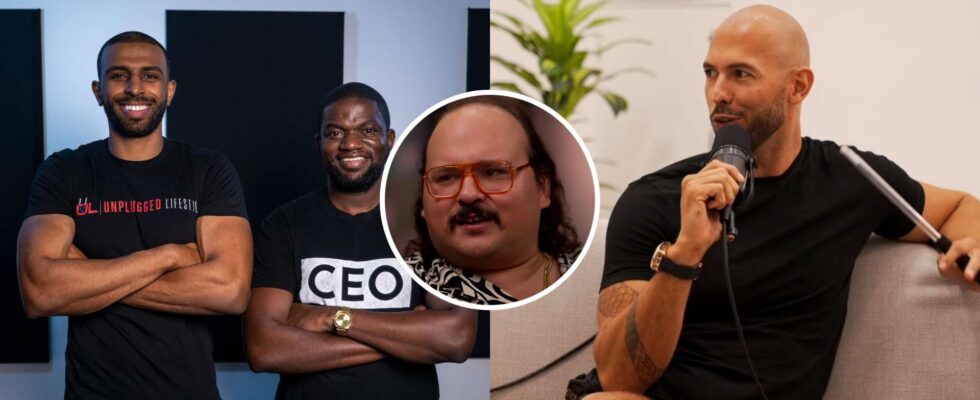
Comedian Stavros Halkias is speaking out against online figures who target impressionable young men with harmful messaging. In an extended interview on CBS Mornings, Halkias addressed the so-called manosphere and its effect on young men searching for identity and connection.
Asked why a generation of young men appears to be struggling with identity, loneliness, and misogyny, Halkias drew on his own adolescence to explain how easily vulnerable teenagers can be pulled toward toxic online communities.
“Obviously it’s a big problem, but I also completely understand it, right? Because like I used to be… I was like a 14-year-old little incel, right? That was me. I was nervous around girls. I couldn’t talk, you know? I think it’s natural to be kind of nervous around the opposite sex when you’re, you know,” he said.
He noted that he was fortunate not to have encountered predatory influencers pushing harmful ideas during that vulnerable stage of his life.
“I am lucky that there was no guy out there being like, ‘Hey, if you like, you know, do jiu-jitsu and are racist, girls will like you.’ You know what I mean? Like if you’re mean to girls and trick them, that’s how you earn their… Like I’d be like, ‘Yes, sir. Whatever it is. Oh, that’ll make girls like me. I’ll do whatever you say.'”
Halkias said he understands exactly how these podcasters and online personalities exploit young men’s insecurities for their own gain.
“It’s the most base human thing, right? They’re preying on like a very specific insecurity, underdeveloped brain. It’s what a little kid thinks is cool. Muscles, cars, cigar, you know what I mean?”
He also pointed to the erosion of real-world community and in-person socializing as a driving force behind young men turning to these online spaces in the first place.
“I think our society in general has gotten pretty like… everyone is kind of separate. There’s not that much community. There’s not that much you know we’re of a similar generation in terms of there was like kids playing. Like I think we’re the last generation of kids just kind of unsupervised playing having an actual social life, having like in-person connections, whereas now everything is kind of online.”
Halkias further explained that online algorithms reward outrage and conflict rather than genuine connection, which pushes young men toward confrontational content.
“Every algorithm is geared towards meanness, is geared toward anger. it’s not geared towards like connection. And I think these kids’ brains are wired towards like what gets you attention is being kind of like over-the-top confrontational.”
Halkias said building real confidence through personal growth, rather than following manipulative advice, changed his own life.
“Truly like what changed my life was finding something I was really interested in, stand up, working hard seeing myself do better at it, and that fostered real confidence.”
