
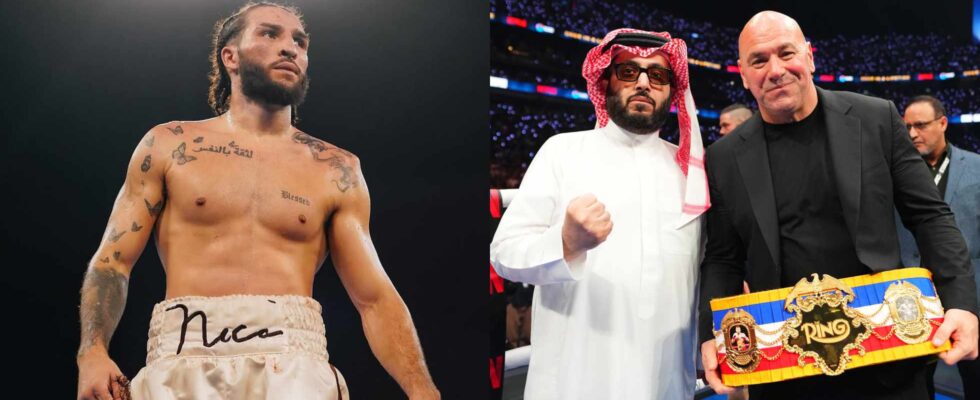
Nico Ali Walsh appeared on a podcast this week to answer accusations that he sold out the sport his grandfather helped define, and the conversation only added fuel to the argument he was trying to put out.
The boxer has taken heavy criticism online since Senators Ted Cruz and Jacky Rosen credited him with shaping the Senate version of the Ali Revival Act, a bill that would open the door for entities like Zuffa Boxing to operate as promoter, manager, and sanctioning body under one roof through what the legislation calls a Unified Boxing Organization, or UBO.
Critics argue the structure guts the original Ali Act’s protections by letting a single company control every stage of a boxer’s career.
Walsh pushed back on the sentiment, insisting he worked to soften the bill rather than help pass it.
“The original bill was the one that went through the House, right? So basically, the way I see it is the House bill and now the Senate bill,” he said. “So, the Original Revival Act was the the House bill and I didn’t like it. I completely disagreed with it before. You heard me. I was there in Washington testifying. I was completely against it.”
He said the legislation was headed for passage regardless of his involvement, framing his role as damage control rather than advocacy.
“This bill was going to get passed no matter what,” he said. “UBOs would be in boxing with or without Nico Ali Walsh existing in the universe. It was going to happen.”
He continued, “It was because of my pushing that changes were made. That’s the only difference.”
Walsh pointed to specific wins: promotional contracts capped at three years instead of the five or six he feared, a path to free agency afterward, and new transparency requirements for rankings. He also leaned on Oscar De La Hoya’s support, noting the two were the only people from boxing who showed up in Washington.
Where the interview undercut its own purpose was in Walsh’s tone toward the very fans he needed to convince. Rather than simply laying out the contract terms, he repeatedly dismissed critics as people who “don’t even read” and told them “you will thank me later,” a line that plays as dismissive rather than reassuring to people who see a UBO structure as a conflict of interest built into law.
He also acknowledged he has not been able to secure a match in eight months while lobbying on the bill, raising the question of what he personally gains from an arrangement he insists benefits everyone but himself.
Walsh compared the backlash to what his grandfather endured during Vietnam, a comparison that struck some viewers as overreach, given the stakes involved.
