
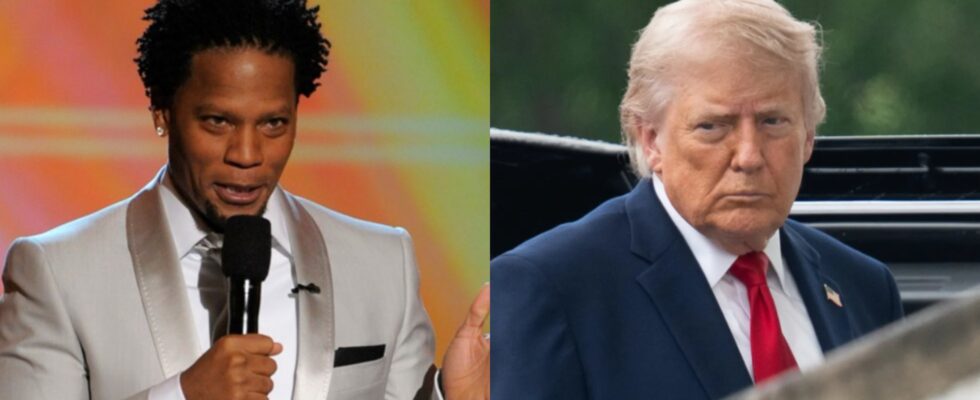
DL Hughley has never been comfortable being called just a comedian, and on the Chris Cuomo Project, he made clear why.
“It says more about what import society puts on levity than it does on people who are supposed to be professional storytellers,” Hughley said, noting that most Americans now get their information from satirists. “That says a lot about what we are as a society.”
That unease runs through Hughley’s larger diagnosis of the country under Donald Trump, a president he does not separate from the nation that elected him twice. “Everything you think about America, the good stuff is black people’s independence. All the dope stuff about us is us,” Hughley said. “But if you look at who is the most maligned and the most distressed and the most disliked, it is also us. This is America. The problem is now there is no obfuscating. We know exactly who we are.”
Hughley rejected the comparison some draw between Trump and Israeli Prime Minister Benjamin Netanyahu. “I’m right about him. But I think Trump is America. He embodies everything we are. On the bad side.”
He pointed to three moments he says exposed Trump’s character: promises to protect dreamers, to summon health care executives and force change, and to cap credit card interest rates at 10 percent.
Each time, Hughley said, “he was immediately approached by Stephen Miller, Mike Johnson, and it went away.” The reason, he argued, is that Trump only responds to one warning. “They said to him, if you do this, it will be bad for you. He doesn’t ever ask why.”
Hughley traced the country’s fracture to selfishness dressed up as grievance. “It means that he appealed to the very base selfishness that is inherited in everybody,” he said, describing how Haitians, Venezuelans, Cubans, Mexicans and Ethiopians each believed the blame would land on someone else. “Everybody thought that somebody else was responsible for their problem.”
Still, Hughley insisted his outlook is not despair. “Without a [ ], there can’t be a resurrection,” he said, describing the current moment as necessary reckoning rather than collapse. “What gives me optimism is I know America is very good at colloquialism. You got to hear rock bottom and it’s tough love. That’s what we are right now.”
He drew hope from language itself, noting how names like Zohran Mamdani are entering the mainstream conversation alongside shifting attitudes on health care and infrastructure.
“Maybe it’s not so bad that everybody gets a health care. Maybe it’s not so bad that everybody gets to eat,” he said, describing a public slowly reconsidering what it owes itself.
Hughley closed on generational stakes, noting his granddaughters were born with fewer rights than he had in 1964. “Great men plant trees, a shade of which they’ll never know,” he said. “We’ve forgotten that.”
