
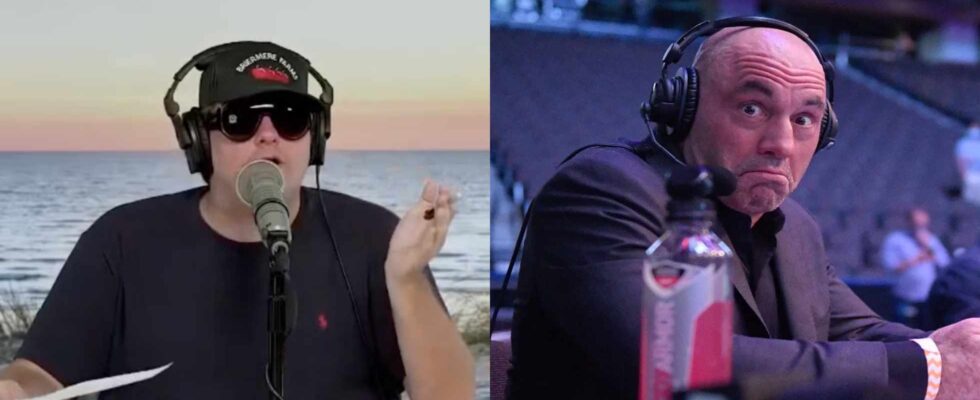
Tim Dillon believes cancel culture has essentially collapsed under its own weight. In a conversation with Chris Cuomo, the comedian laid out his theory on why movements built on ideological purity inevitably fail.
“I think everything’s allowed,” Dillon stated when asked about the current state of comedy. “I think people got very tired of being hyper judgmental. I think movements that are based on ideological purity are bound to fail because they’re exhausting.”
According to Dillon, the collapse came from exhaustion rather than revolution. “People get very tired of these litmus tests, the word police, people like that. Eventually movements that are based on that either become, you know, sects of a religion, they become an anti-establishment movement or they just peter out because people get bored and I think that’s where people were.”
The comedian pointed to the Tom Brady roast as a potential turning point, where audiences embraced edgy humor without backlash. But he also suggested global crises provided perspective.
“If we look around the world now, we have wars in the Ukraine, wars in the Middle East, India and Pakistan exchanging missiles. They’re both nuclear countries, right? Really to be upset only by words now, you have to be a special kind of disconnected.”
Dillon argued that both political sides have weaponized cancellation. He recalled the right doing it in the 1990s and during the Iraq War, then watched it emerge “around 2015 on the contemporary left as a tool in which to marginalize people that they disagreed with.”
But the real driver, he believes, was careerism. “I think it was employed by people to advance themselves. And I think that that was a huge feature and then it didn’t work because all these companies lost a lot of money, viewership dropped.”
Hollywood abandoned the approach when it stopped being profitable. “Hollywood, which famously doesn’t believe in much outside of success, was like, we tried this, it didn’t work,” Dillon explained. “The wind started to blow the other way and then immediately all those executives forgot they had ever championed any of this stuff because they got big mortgages and kids in private school.”
The result? “I think nuance is back. I think people realize that we’re all fallible, flawed human beings and that most things that most people believe live in that gray area between right and left.”
