

In a detailed video analysis, Renaissance Periodization co-founder Dr. Mike Israetel broke down the viral clips of popular fitness prankster Anatoly (Vladimir Shmondenko), concluding that the influencer frequently relies on lightened or prop plates to pull off his famous “janitor” stunts.
Anatoly has built a massive online following by dressing in disguise, often as a mild-mannered cleaner, and casually out-lifting seasoned gym-goers. However, Israetel’s breakdown highlights several physical, visual, and mechanical red flags that undermine the legitimacy of the viral feats.
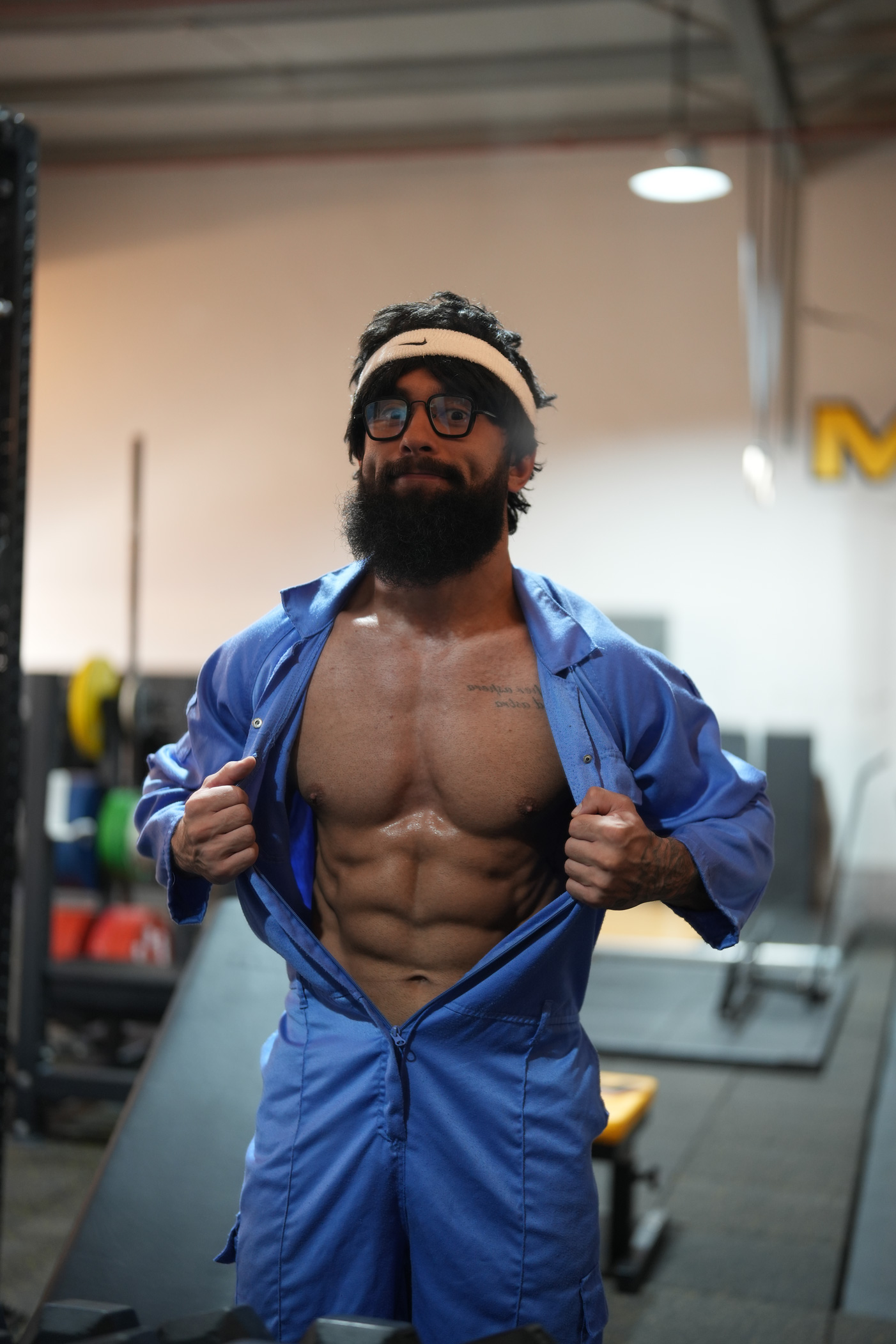
The primary evidence centers on the equipment itself. Israetel pointed out three or four specific bumper plates, distinctive for their dark gray color, odd proportions, and unique dimensions, that regularly reappear across multiple videos captured in different locations. Bumper plates are inherently ideal props because their thick profile gives the illusion of massive weight to casual viewers who makeup much of Anatoly’s audience.
The most glaring “giveaway,” according to Israetel, is the lack of barbell whip and bend:
Barbell Whip: Loading six standard 45 lb plates per side on a regular barbell creates significant, visible flex due to fundamental physics. In Anatoly’s videos, bars loaded with supposedly massive weight remain almost completely straight.
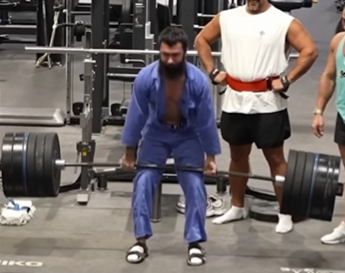
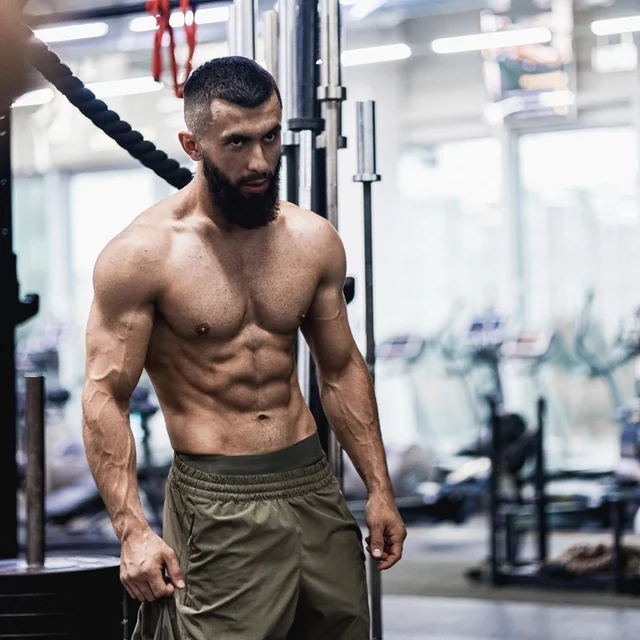
Direct Comparisons: Comparing a supposed “four-plate” one-arm deadlift by Anatoly to a five-plate lift performed by strongman Quinn Stott, Anatoly’s bar showed drastically less flex despite carrying only one fewer plate, indicating his plates weighed far less than advertised.
Plate Anatomy: Close-ups on Anatoly’s squat setups reveal that the inner plate and second-from-the-outside plate are visibly thinner than standard 45s. Israetel noted these are “almost certainly 25 lb plates, if not lighter,” pointing out that some equipment manufacturers produce wide-diameter 10 lb plates specifically styled to mimic heavier bumpers.
Israetel walked through several specific viral clips, separating physically improbable stunts from actual feats of strength:
The One-Arm Deadlift: Anatoly casually pulling four plates with one hand while holding a smartphone, showing no visible bracing or effort, was called out as physically implausible for the claimed weight.
The Easy Low-Row: A single-arm low-row supposedly set to 315 lbs performed without visible physical strain was labeled “exceedingly unlikely” to be genuine.
Self-Tipping the Hand: In one clip, a barbell was literally labeled with the words “fake weights” directly in the video, which Israetel highlighted as a curious strategy of an influencer winking at his own setup.
Single-Arm Mechanics: One-arm variations look visually surprising on camera, but proper body positioning lets the back bear the load while balance takes over, making it easier to pull off a visual “trick” with far less weight than it appears.
The critique noted that Anatoly is not weak, but rather that his prank videos exaggerate his capabilities beyond reality.
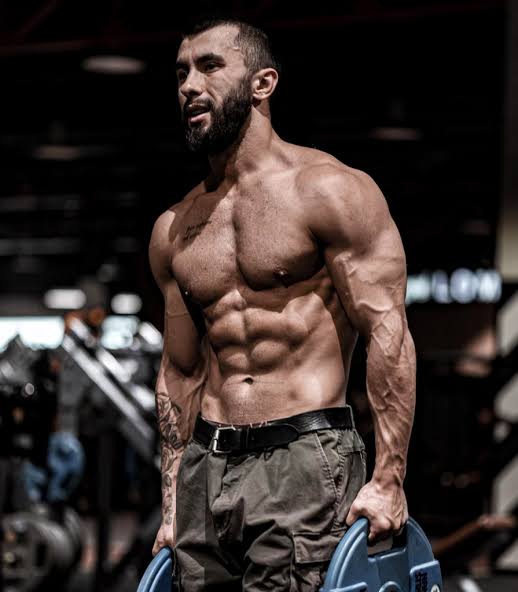
In clips showing a squat loaded to roughly 415 lbs and a deadlift featuring five plates plus chains, the barbell exhibited massive, genuine flex, and Anatoly demonstrated the real physical strain expected for those loads.
Referencing Anatoly’s legitimate powerlifting competition baseline, including a 330 lb bench press, 460 lb squat, and 640 lb deadlift, Israetel concluded that while Anatoly is an accomplished lifter for his size, his viral casual stunts rely heavily on lightened prop plates rather than true raw power, officially stamping the overall authenticity of the viral pranks as “fake out of 10.”
