
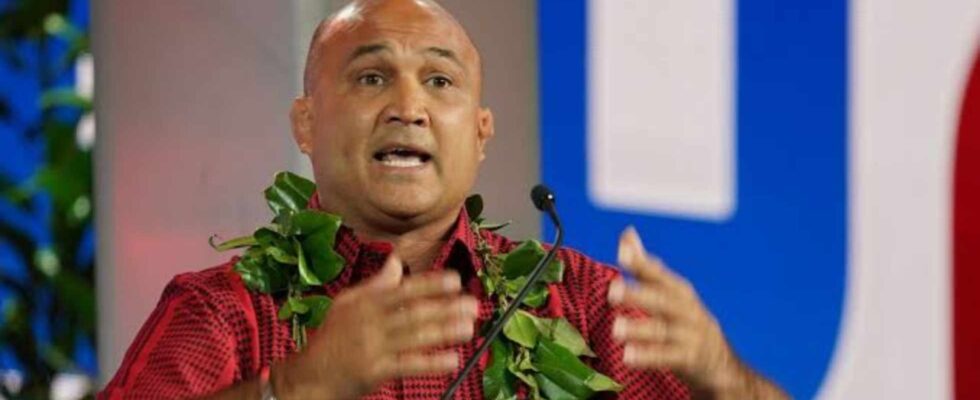
Penn stood in front of a battered tree, phone raised for a live check-in, and started the way he always does after a loss, by thanking people. The primary was over. His name would not appear on the November ballot. But before saying anything else about numbers or next steps, he wanted the record to show he was grateful.
“I just wanted to thank everybody,” Penn said in the video. “The primary is over. I didn’t get about the primary, but just keep working. I’m going to keep my name in there.”
According to sources, the final count in the District 5 race was not close. Heather Kimball took the seat outright with 59.9% of the vote. Ren Del Rosario finished second with 34.8%. Penn trailed the field with 5.2%, a result that puts a firm end to his second run for elected office in as many years, following an earlier campaign for governor.
Even so, he framed the turnout among his own supporters as something worth acknowledging rather than something to explain away. “I want to thank the 300 people they said voted for me,” he said. “It’s a lot of people, I say. Yeah, that’s a lot of people on Hummel Coast.”
Penn had entered the District 1 race earlier this year while a pending cr*minal case hung over his candidacy, a detail he never addressed directly in his campaign appearances, including a sit down with Nā Leo TV host Makana Waikiki. In that conversation, he talked at length about what drew him back into politics, describing the appeal less in terms of ambition and more in terms of curiosity about the mechanics of government.
“I really enjoy it. It’s just really fun. I get to meet a lot of people and you get to kind of look at the problems,” he said.
That same interview laid out the throughline of his platform, a conviction that Hawaii’s economic pressures explain nearly every other issue on the table. Homelessness, public safety worries around Puna and Hilo, and the departure of young residents all traced back, in his telling, to one root cause.
“Hawaii’s got one problem, it’s the highest cost of living in the nation, and everything else is a symptom,” he said.
His fix centered on land use. Penn wanted to see large scale farming return to the Hamakua Coast, turning the stretch between Wailuku River and Waipio Valley into a working agricultural belt growing mango, lychee, avocado and other crops at commercial volume, something closer to the plantation landscape he remembered from childhood.
“That could be Hawaii’s food basket. Hawaii’s refrigerator right there,” he said. He tied the idea directly to grocery bills, arguing that with roughly 90% of the state’s food currently shipped in from elsewhere, local production could meaningfully lower what families pay at checkout.
“Couple hundred bucks for a bag of groceries. I really want to try to help with that,” he said. He paired that with a push for hydroelectric development on the district’s rivers as a way to bring down electricity costs, the other expense he pointed to again and again.
Asked about young people leaving the islands, Penn circled back to affordability rather than opportunity. His view was that adding jobs or amenities does little if the basic cost of staying keeps climbing.
“You can put more on this side, but this is still here. So now it’s just more traffic, more crowds,” he said. When the conversation turned to the Hamakua Community Development Plan, he acknowledged he had not studied its details, though he said the region’s agricultural potential was something he thought about often.
Underpinning all of it, he said, was a personal code about honesty that he traced back to his father. “Don’t let the c*ncer of lying and stealing ever enter our family,” he said, describing it as the value guiding how he approached both the campaign and public life generally.
None of that was enough to move the needle in a district Kimball has now secured outright. Back at the tree, Penn seemed less interested in dissecting the loss than in delivering a rambling, symbolic postscript about the plant itself, which he said had been grafted onto an overgrowing coconut tree without his early notice. He described cutting it back, describing the process as though the tree had resisted before someone else stepped in near its canopy.
“This tree is a mascot for the coalition or whatever that everything that’s been happening to me,” he said, adding a warning for anyone who might find similar grafting in their own yard. “If the yard guys come and they start grafting banyan trees into your yard, you could be in some danger.”
He extended the metaphor to palm trees nearby, saying he had brought several down after concluding they had been tampered with in the same way, and reiterated the warning as a closing message to supporters.
“If you see this grafted onto any trees in your house, get rid of the hard guys and get ready for a battle,” he said.
On the practical side of the campaign’s end, Penn signaled no plan to step back from local politics, telling viewers to keep an eye on the incumbents now moving toward November. “As far as the politics and everything that goes, it’s gotta keep going,” he said. “Get the people comfortable that are in office and just keep being friendly because they can’t do nothing outside.”
Penn closed the video the way he opened it, addressing his home community directly. “Right on, Hilo,” he said, before adding a final aside to the wider island. “And then on Hawaii. Remember now. This is a mascot.”
With Kimball’s win certified and Del Rosario’s second place finish standing well ahead of him, Penn’s council bid ends with the same 5.2% that placed him last in the field, a number that will follow the former UFC lightweight and welterweight champion, a fighter who competed as low as 155 lbs (70 kg) during his title runs, into whatever he decides to run for next.
