
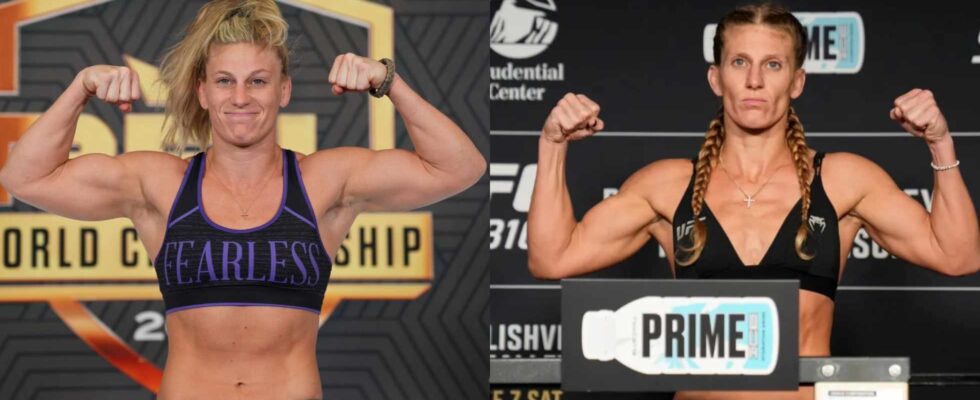
Kayla Harrison has looked unstoppable inside the cage on her march toward UFC gold, but according to someone who has walked the same painful road to bantamweight, the real toll is happening away from the cameras, on the scale.
Aspen Ladd shared the cage with Harrison back in 2023 under the PFL banner, when the two met at a catchweight of 150 lbs (68 kg). Now, watching her former opponent shrink all the way down to 135 lbs (61.2 kg) to chase a UFC title, Ladd says she recognizes the warning signs all too well.
The bantamweight limit is not a number Harrison has always lived at. She spent much of her PFL career competing closer to lightweight, at 155 lbs (70.3 kg), and made no secret of her reluctance to drop weight before signing with the UFC.
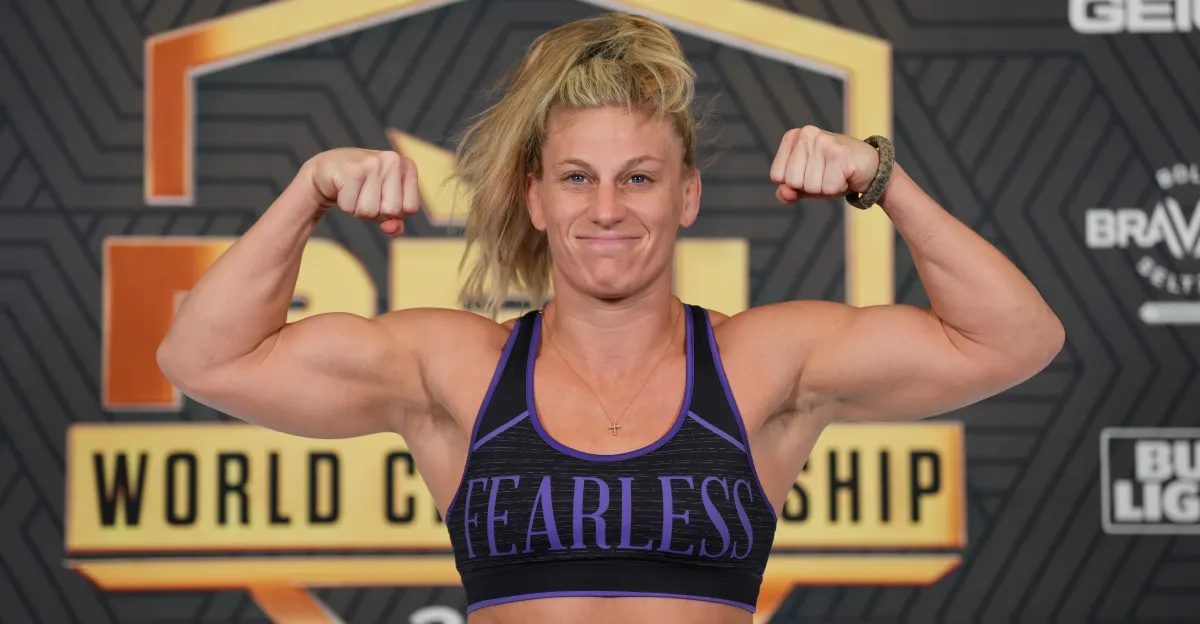
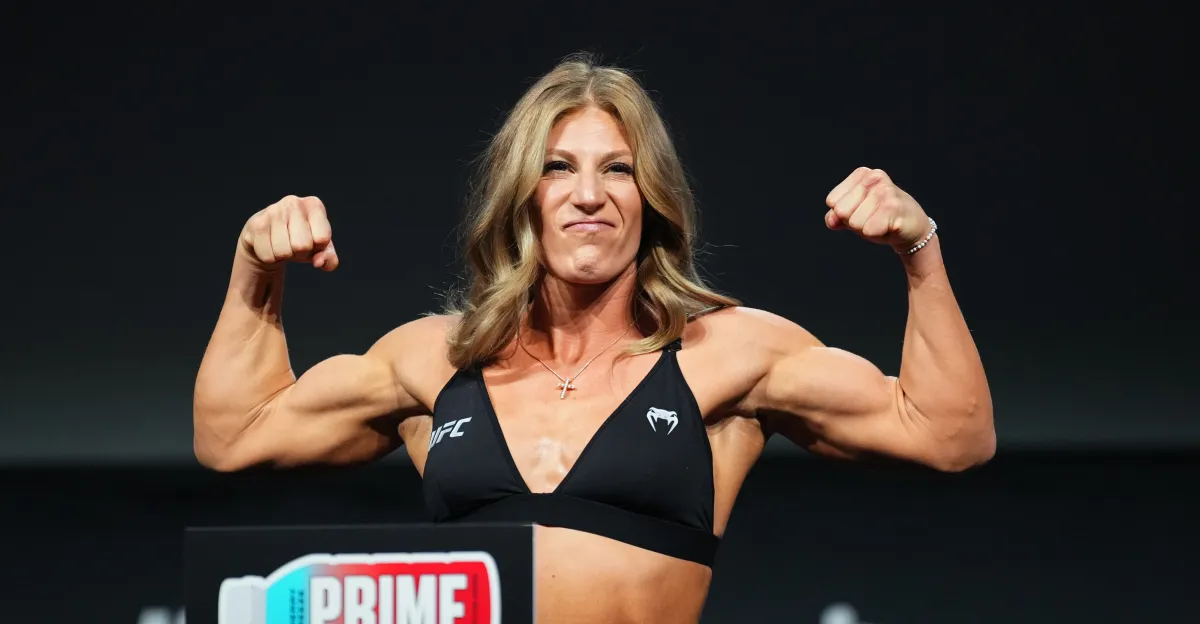
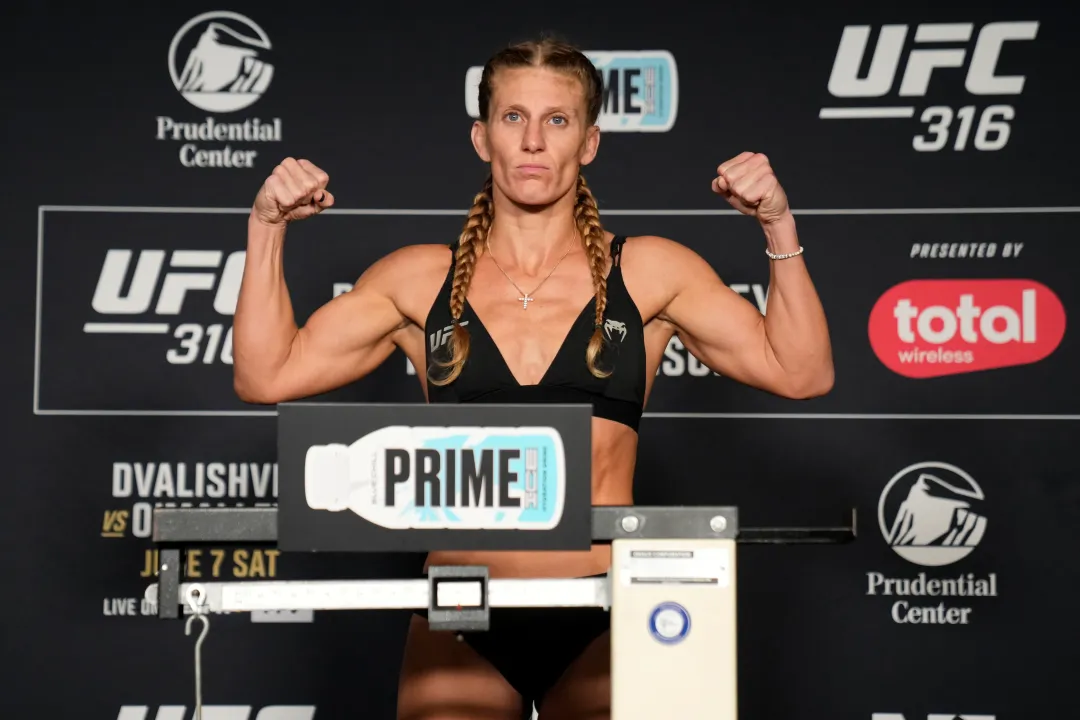
Since arriving in the promotion, she has hit the championship mark of 135 lbs once, when she won the belt, and made the non-title limit of 136 lbs (61.7 kg) on two other occasions.
It’s worth noting the promotion no longer even has a featherweight division for women, that class was scrapped once Amanda Nunes stepped away from the sport, which leaves bantamweight as the only path forward for an athlete of Harrison’s frame.
Ladd knows that path intimately. She missed the 135 lbs mark more than once during her own UFC run and had to completely rebuild her body composition just to survive at the weight. Speaking in an interview, she didn’t hold back on what she thinks that process is doing to Harrison.
“For me, it’s taken years to get my body to where it is now where I can cut down lower and be able to be okay and she’s even bigger than I am,” Ladd said. “Kayla is a very large woman so those cuts are taking years off her life. For her to do that? She won’t be doing that long. She’ll probably take that fig ht and who knows what comes after it but that is a major cut.”
It’s a pointed comment, and one that lines up uncomfortably well with something Harrison herself revealed after UFC 307 last October. She got past Ketlen Vieira that night by unanimous decision, moving to 18-1, but the performance was far from her sharpest, and she picked up the first cut of her professional career in the process.
Speaking afterwards, Harrison explained that her preparation had been anything but normal.
“You know, I don’t like to make excuses. I had to go to the hospital the week before I was like peeing blood and there was some stuff going on,” Harrison said.
She followed that up by acknowledging the match simply hadn’t gone the way she wanted. “I’m still learning. I’m still growing. I feel like there’s a lot of room for improvement for me. It definitely wasn’t my best night in the cage,” she said.
Despite the scare, Harrison has not shown any indication that she plans to abandon bantamweight or slow down her championship pursuit. If anything, she has been mapping out an ambitious run through the division.
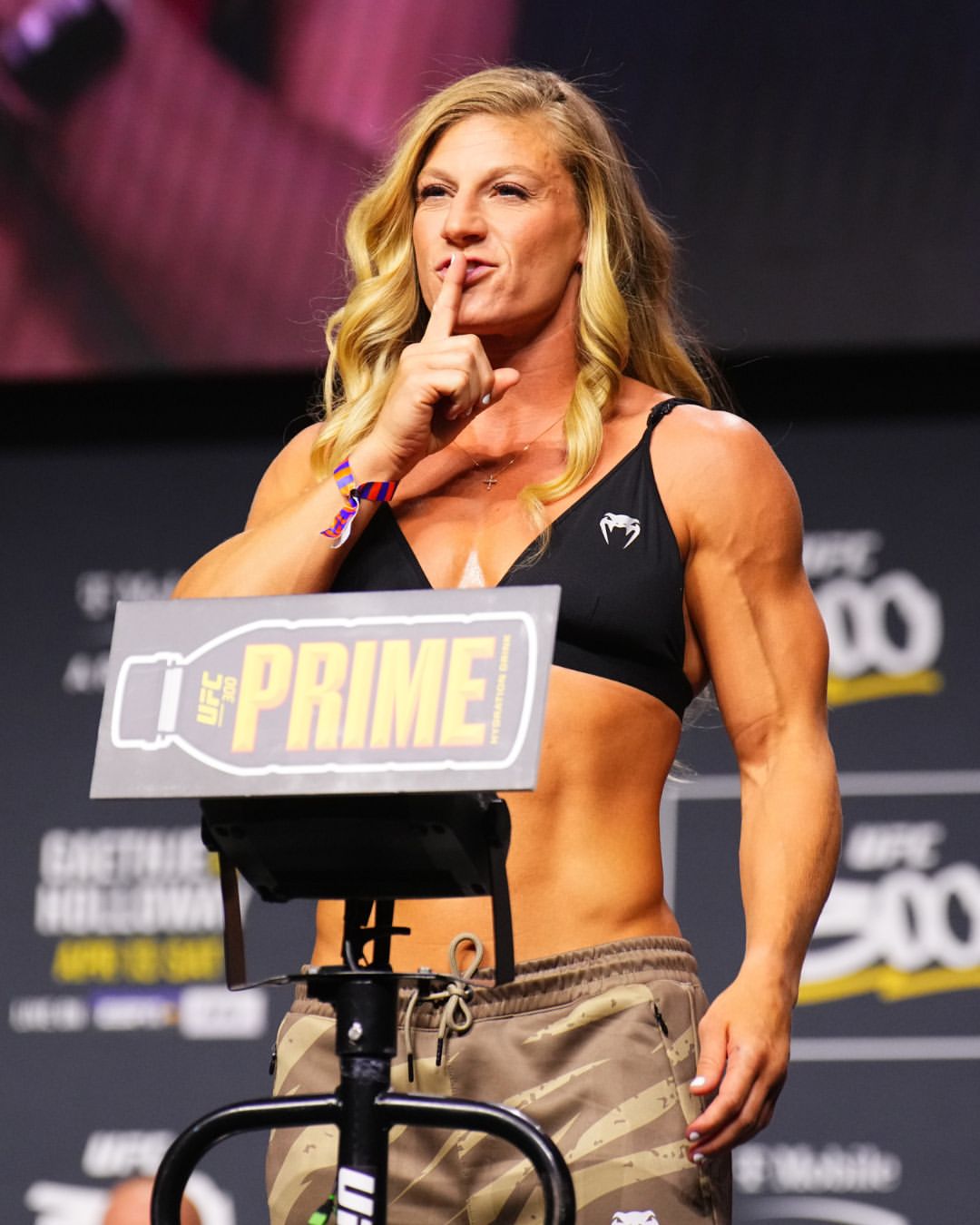
That kind of ambition is exactly what makes Ladd’s warning worth paying attention to. Harrison has proven she can hit the number when it matters most, but the question hanging over her career now isn’t whether she can make 135 lbs. It’s how many more times her body can absorb the process of getting there.
Harrison has also been unusually candid about just how intensive the process of making 135 lbs can become. In a breakdown of her championship weight cut, she revealed that the grind begins months before match night.
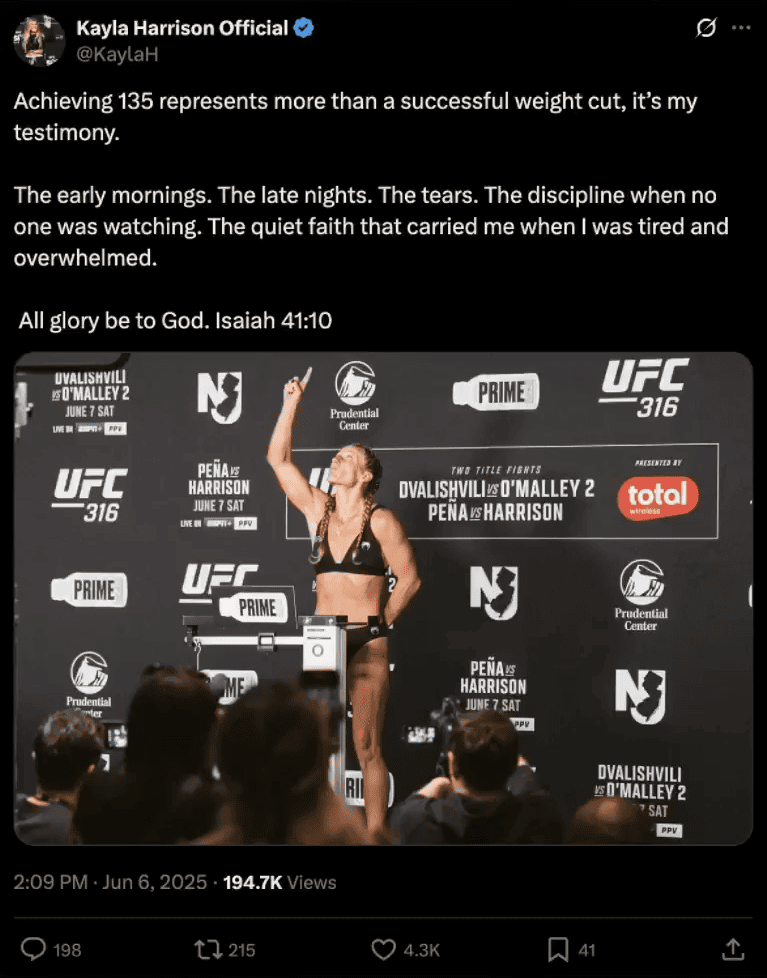
“For 15 weeks, I’m on a diet. I only eat what my chef gives to me,” Harrison said, adding that she starts walking six miles every day, or alternates between two hours of cycling and 90 minutes of swimming, beginning 14 weeks out. Sundays can mean eight miles of walking, all on top of two daily training sessions.
And the regimen only gets more punishing as the match approaches. Six weeks out, Harrison begins heat acclimation, while maintaining the strict diet and massive training volume.
“It’s not good… I don’t know really how else to explain it,” she admitted. “I don’t think that anyone can really understand that process unless they have gone through it.”
Harrison described the ordeal as “chosen suff3ring” that she believes will ultimately be worth it, but the sheer workload helps explain why Ladd sees the repeated cuts as potentially taking a serious toll.
