
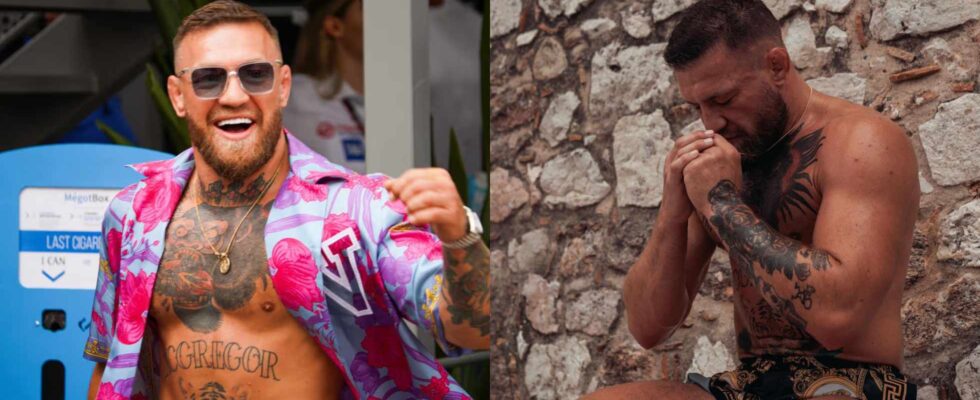
Conor McGregor has leaned heavily on religious language during his comeback run, and according to commentator Tim Whitaker in his recent video, that shift follows a familiar script used by public figures facing SA allegations.
Speaking ahead of his return match, McGregor told an interviewer, “It is everything in my life. I have mountain moving faith and I am more than a conqueror in Jesus. I am an heir of the royal family, an heir of the royal estate. All of God’s promises are yes and amen in Christ and apply to me. It is no longer I who lives, but Christ who lives in me. All glory to God.”
Whitaker, a creator who covers white evangelical culture, says the phrasing is not incidental.
“This is not just Christian language. This is evangelical language,” he said, noting that anyone raised in that world immediately recognizes the verbiage as distinctly evangelical rather than Catholic or mainline Protestant.
The context matters. In 2024, McGregor was found liable for SA in a civil trial in Ireland. He questioned the jury’s finding, and both of his appeals were rejected. A paramedic who examined the woman said that they had “not actually seen someone so bruised in a long time.” Despite the verdict, McGregor has continued to maintain his innocence.
Whitaker argues this pattern, credible allegations, denial, then a public conversion, follows what trauma researcher Jennifer Freyd termed DARVO: deny, attack, reverse v*ctim and offender. He contends white evangelical culture rewards this pattern rather than confronting it, pointing to how McGregor reacted after an injury ended his comeback fight early.
On social media, McGregor wrote, “I am a man in sh0ck at what has taken place. The devil is literally staring at me right in front of my face. I am not engaging. I will be at church tomorrow. I will overcome this. I will not be deterred. I will return.”
Whitaker says the statement notably assigns no personal responsibility, framing the setback as spiritual warfare rather than consequence. He draws parallels to other public figures, including Russell Brand, who converted publicly after facing multiple assault allegations, arguing both men gained larger platforms rather than facing accountability.
Whitaker’s claim is that white evangelical spaces prioritize professed faith and results over conduct, creating what he calls a safe harbor for powerful men accused of misconduct while their accusers face public scrutiny instead. He predicts McGregor will soon be featured on evangelical stages discussing his faith, while the woman at the center of the case is left to manage the aftermath largely out of public view.
