
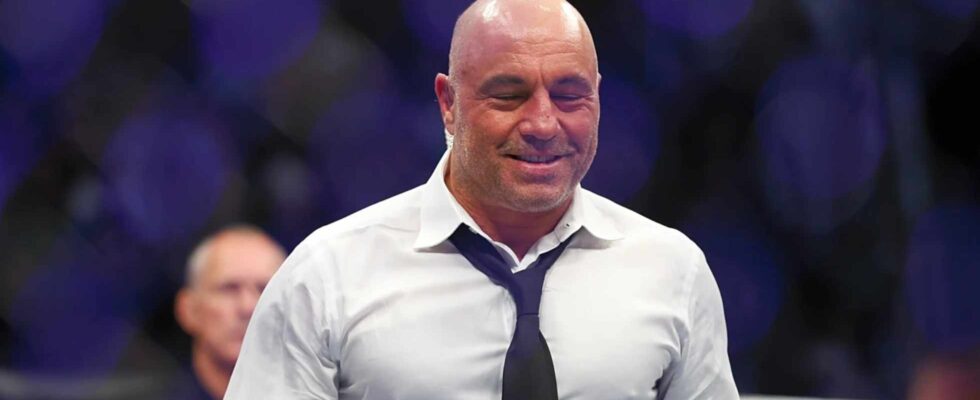
Joe Rogan appeared genuinely taken aback when he claimed he received no criticism for attending the UFC White House event this past June. During a podcast episode featuring comedians Shane Gillis, Mark Normand, and Ari Shaffir, Rogan seemed disconnected from the reality that many viewers and critics had indeed questioned his presence at the high-profile political gathering.
The conversation revealed a notable gap between Rogan’s perception and what actually transpired in the media. When the topic of the White House UFC event came up, Rogan stated, “I took zero heat for that event,” seemingly unaware of the numerous articles and social media discussions that followed his attendance.
Shane Gillis appeared to gently push back on this notion, suggesting that perhaps Rogan simply wasn’t seeing the criticism due to his carefully curated social media feeds.
Rogan himself admitted during the podcast that he has intentionally tailored his online experience over the past three months. “I’m not like I have done a very smart thing over the last 3 months where I almost never go on Twitter and I go on Instagram and my curation right now is nice,” he explained.
This confession may explain why he believes he escaped criticism, when in reality, he may have simply avoided seeing it.
The episode also highlighted how Rogan appeared uninformed about several recent political developments. When Gillis brought up a lawsuit regarding Truth Social offering early access to posts for $100,000 per month, Rogan seemed genuinely surprised.
“Wait a minute. What is this? Trump sued over Truth Social advance access sale,” Rogan said as he looked up the information in real time.
Throughout the conversation, Gillis seemed more aware of current events and media narratives than his host. At one point, Gillis offered what appeared to be a reality check, pointing out to Rogan that his opinions have become so influential that they are now regularly fact-checked and addressed in news articles.
“You’ve gotten so big that all of your opinions will be debunked,” Gillis told him. “When you say something, when you go, ‘This is what happened,’ literally the first article will come up and instead of naming you, it’ll be like, ‘Despite these crazy claims.’ It’s literally your claims.”
