
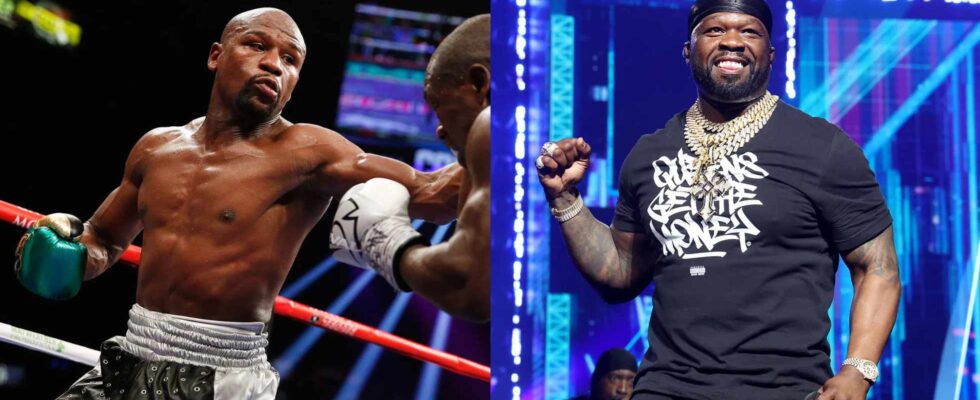
Floyd Mayweather Jr. built one of boxing’s most valuable careers, earning hundreds of millions of dollars from major bouts and promoting himself as a financial mastermind. Yet his current problems appear to support a warning made by 50 Cent more than a decade ago: Mayweather’s wealth depended heavily on returning to the ring, collecting a massive purse, and spending it before the next payday arrived.
Mayweather’s rise was remarkable. After leaving Top Rank and forming Mayweather Promotions, he gained more control over his earnings and transformed himself into “Money Mayweather.” His matches with Oscar De La Hoya, Manny Pacquiao, and Conor McGregor produced enormous paydays. The McGregor bout alone reportedly brought Mayweather about $300 million.
According to sources, Mayweather’s spending habits continued to grow alongside his earnings. Luxury cars, private aircraft, jewelry, watches, and lavish properties became central to his public image. At the same time, tax records and court filings showed repeated disputes involving unpaid taxes, jewelry balances, property payments, child support, and other obligations.
This was the pattern 50 Cent described after their business relationship fell apart. According to 50 Cent, Mayweather had asked for help developing a genuine promotional company. 50 Cent claimed he invested his own money, signed figh ters, and handled the legal setup, but Mayweather later refused to contribute his share.
“It’s kind of trapped in a regimen of fig ht, get the money, spend the money, fig ht. Fig ht, get the money, spend the money, fig ht,” 50 said. He argued that Mayweather needed businesses generating regular revenue instead of relying entirely on boxing appearances.
Mayweather’s later ventures have brought further scrutiny. His boxing fitness franchise faced financial losses and complaints from franchise owners. He also promoted cryptocurrency projects that later collapsed, resulting in regulatory penalties and legal claims.
In 2025, he faced additional lawsuits involving business agreements, alleged unpaid obligations, and the use of watches as collateral for loans.
Calling Mayweather completely broke may be too simple. His assets may still be worth substantial sums, but wealth tied up in property, jewelry, and luxury goods is different from having enough available cash to cover immediate bills. That distinction explains why someone who earned more than a billion dollars over his career could still face serious financial pressure.
50 Cent’s prediction was never that Mayweather would instantly lose everything. His point was that without disciplined financial management and reliable income outside boxing, even extraordinary earnings could eventually become a problem. Today, Mayweather’s legal and financial disputes make that warning appear increasingly accurate.
