
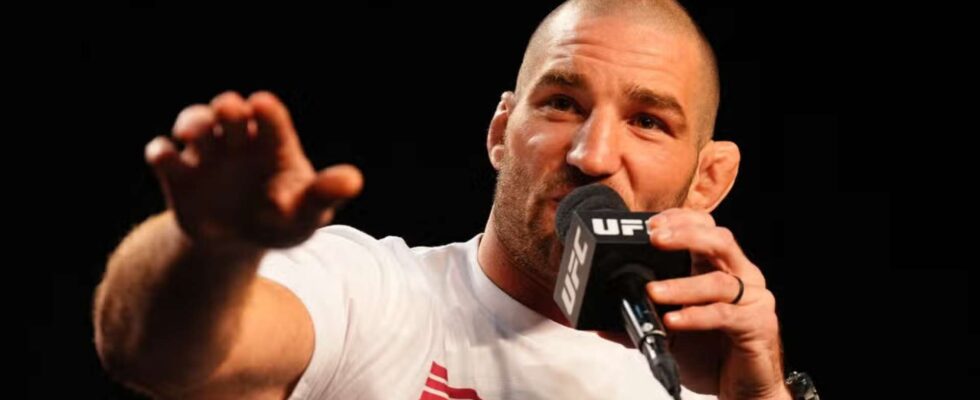
Sean Strickland has become one of the most polarizing figures in mixed martial arts, and he appears to have no interest in toning down the persona that got him there.
The UFC middleweight champion has rocketed up the rankings of the sport’s most valuable athletes over the past year, landing at number three on analyst Luke Thomas’s updated 2026 list and number four on Mike Bohn’s.
Just months earlier, in August 2025, Strickland did not appear on either analyst’s radar when they last evaluated the promotion’s commercial stars.
What changed? According to the analysts, Strickland has built something that cannot be manufactured: genuine fan reaction.
“He gets movement within the emotions of the fans,” Bohn said on a recent podcast episode. “Right now, in this moment, it feels like they have something with Sean Strickland that people care about. And whether that’s for better or worse, it could be very open for debate, but I feel like he’s a pretty marketable asset for them and has built kind of his own thing and his own fan base.”
Thomas pointed to the specific audience Strickland has cultivated through his outspoken approach. “The edgelord stuff that he does also attracts kind of the edgelord section of the fan base,” Thomas said. “Between that and his actual genuine achievements of what he’s doing, and there’s a little bit of political identarianism that goes in there too. All of those are working together to turn him into, like, is he a big name for fans? Yes.”
Strickland’s title victory over Khamzat Chimaev served as the validation moment that elevated him from sideshow to legitimate contender. Thomas called it “arguably the best win of his career at 35 years of age” and noted that Strickland surprised even his own supporters.
“There were supporters of him he proved wrong. Supporters who were like, just give us an angry match, just fight angry, but we don’t expect you to win. And then he goes out there and he freaking wins,” Thomas said.
Bohn acknowledged that opportunity played a role in Strickland’s rise, noting that the UFC’s need for American champions on domestic cards helped create the platform. “He wasn’t the deserving number one contender,” Bohn said. “They’re lacking American champions. There are events on American soil. They want to sell those tickets and get that interest and they put these guys in here and they do their part.”
Strickland’s public image previously took on an emotional appearance on Theo Von’s This Past Weekend podcast, where he opened up about his abusive childhood and the lasting effects of that trauma.
The UFC champion recalled falling asleep in class as a child because he would stay awake until the early hours of the morning at home, saying teachers dismissed him as “just a bad kid” without understanding what he was going through. He also reflected on the moment he “stopped believing in God,” prompting Von to pause the conversation as Strickland processed the memories.
The candid interview contrasted sharply with the brash persona Strickland typically presents. After the episode gained widespread attention, however, Strickland leaned back into that image by joking about the reaction from fans.
“Some people don’t think I’m racist, s3xist, bigoted and I want to clear up that I’m all of those things motherf*cker. I cried on one podcast, now you guys think I’m a p**sy? F*ck you guys,” Strickland said.
With a potential rematch against Chimaev and other top middleweight contenders on the horizon, Strickland has positioned himself as a draw the promotion cannot ignore. A year ago, his name barely registered in discussions about the UFC’s most important athletes. Now he ranks among the first mentioned when analysts assess who matters most in the organization.
