
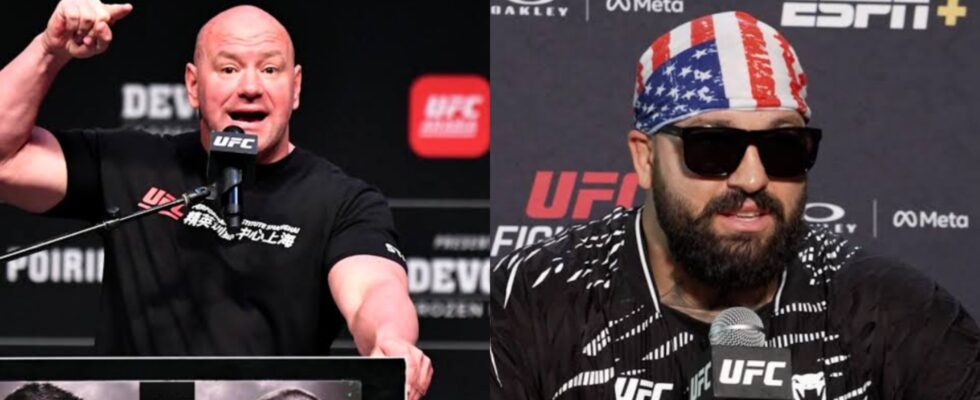
When UFC heavyweight Josh Hokit called Michelle Obama a man during his post-bout interview at the White House event, the moment drew immediate and widespread attention. Dana White, appearing on the Pivot podcast with Ryan Clark, addressed the incident directly, calling the remark “gross” and “inappropriate.”
But in a recent video, media analyst Luke Thomas argued that White’s words fall far short of any real condemnation.
On the podcast, White cited Obama’s standing and said: “Former First Lady of the United States, number one. Number two, a wife, a mother. It’s just… it’s gross. Right? Inappropriate. The timing of it and everything… obviously not the opinion of the UFC and not my opinion or anybody else that competed on that card.”
Thomas noted, however, that the political response told a different story. Vice President J.D. Vance said the reaction to Hokit’s comments was blown out of proportion. White House spokesperson Stephen Chung, a former UFC employee, responded to questions about the incident by only praising Hokit’s performance and his toughness in the match.
Trump himself posted on Truth Social naming all of the night’s winners, including Hokit, calling it “unbelievable,” with no condemnation attached. Representative Brandon Gill, who attended the event, supported the remarks. Fox News host Greg Gutfeld defended them. Dan Bongino said he found them funny.
Thomas also pointed out that Trump had previously posted a Truth Social video depicting the Obamas as apes, adding considerable context to White’s assurances of universal disapproval within the organization.
Thomas challenged the notion that UFC opposition to the comment should be taken as obvious, given that the organization spent considerable energy helping return to power the political movement Hokit’s remarks align with closely.
“Why would the UFC be against this?” Thomas asked on his program.
He went on to argue that the UFC’s free speech policy has little to do with any principled stand on expression. Its real function, Thomas contends, is to ensure the organization never has to discipline athletes for anything, speech or conduct, so that programming can continue without interruption.
“It’s a principled commitment to money,” Thomas said. “It’s a principled commitment to content delivery.”
Thomas also observed that this freedom runs in only one direction. Athletes who privately complain to media about pay and working conditions never voice those criticisms publicly. The speech this policy produces is not broadly free. It is, in Thomas’s view, a specific kind tied to the culture the UFC has deliberately built over time.
Whether White personally found the comment distasteful may be true on some level. But as Thomas put it, the UFC helped plant the tree, and what happened on the White House lawn is simply the fruit it bears.
