
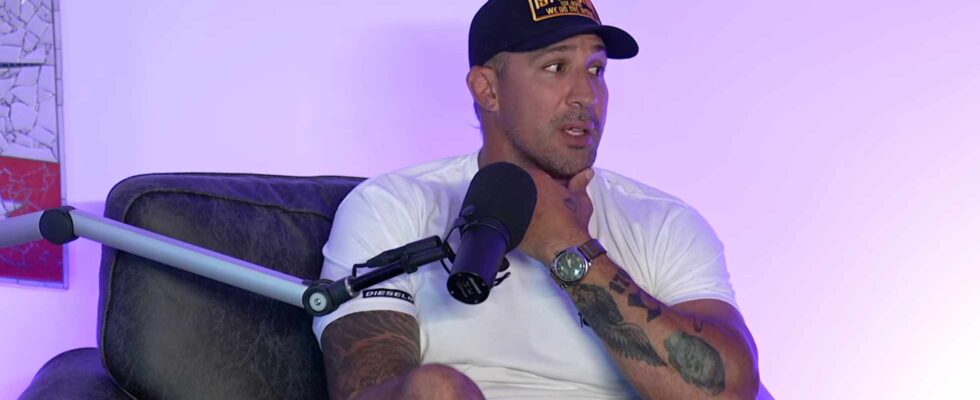
Brendan Schaub has quietly re-signed with Podcast One, but a public financial filing tells a different story than the one the former UFC heavyweight has been sharing with his audience.
According to an FA Form 8K filing submitted to the government, Schaub signed his new deal on June 3rd, 2026. The agreement is worth $1.1 million plus an additional $75,000, with Podcast One retaining the right to pay up to $350,000 of that total in company stock.
Schaub has described the arrangement as a multi-year deal, and if it runs for three years, the contract represents a notable step down from his 2023 agreement with the same network, which was valued at $1.6 million.
On a recent live broadcast, Schaub told viewers, “I signed the biggest deal I’ve ever signed in podcasting with them a few months ago. Multiple year deal.” When pressed again, he reiterated, “Got the deal done two months ago, my man. Biggest deal of my career in podcasting.”
The filing, however, places the signing date at June of this year, not several months prior as claimed.
The financial picture behind the new contract adds further weight to those concerns. Schaub reportedly pays co-host Bryan Callen roughly $25,000 per month, totaling approximately $300,000 annually.
That obligation alone consumes a significant portion of his yearly earnings under the revised terms. He also carries financial commitments tied to other productions, including payments to performers on his Golden Hour show, which he appears to have recently stepped back from.
The reduced deal value may help explain Schaub’s recent pivot to live audience broadcasting as a separate revenue source outside of the Podcast One arrangement, allowing him to keep additional income for himself rather than directing it through shared projects.
Podcast One also signed Adam Carolla around the same period, with Carolla’s name appearing alongside Schaub’s across several of the same legal documents reviewed in the filing.
Notably, neither Podcast One nor Schaub made any public announcement regarding the new contract. The details only became available because publicly traded companies are legally required to disclose material agreements through filings like the Form 8K.
