
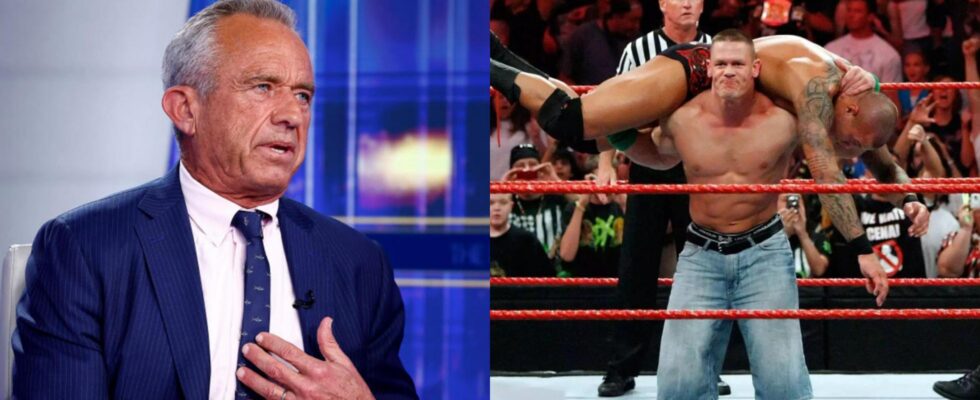
Robert F. Kennedy Jr. has never been shy about his admiration for professional wrestling, and a recent conversation with WWE Chief Content Officer Paul “Triple H” Levesque made that enthusiasm abundantly clear.
The two men sat down to discuss one of Kennedy’s signature policy priorities as Health and Human Services Secretary: bringing back a version of the Presidential Fitness Test for American schoolchildren.
Kennedy has been vocal about the state of children’s health in the United States.
“We literally have the sickest population in the world,” he said. “Our children are sicker, have a higher chronic disease burden than any country in the world.”
For Kennedy, structured physical fitness programs in schools are not a relic of the past but a genuine public health necessity.
When asked whether scrapping the original Presidential Fitness Test was the right call, Kennedy was unequivocal.
“I think it was a huge mistake to get rid of it,” he said, pointing to measurable declines in youth health as evidence that the country lost something important when the program faded away.
The conversation took an unexpected turn when Triple H, the architect of some of WWE’s most celebrated storylines and talent development programs, offered a perspective on resilience that Kennedy appeared to receive with genuine enthusiasm.
Kennedy, who has long been an open admirer of professional wrestling, seemed to treat the performers’ journeys as a real-world template for what a revamped fitness initiative could teach young people.
“All of these guys have failed,” he said. “Every one of them has lost matches, and the trick is how do you persuade yourself to stand back up and compete again?”
It was a message squarely aimed at one of the loudest criticisms ever leveled at the original Presidential Fitness Test: that publicly ranking children by their physical performance left those who struggled feeling humiliated rather than motivated.
Kennedy acknowledged the critique directly. The earlier version of the test, which was phased out in the early 2010s, was widely seen as demoralizing for kids who were not naturally athletic. The challenge for any updated program, he suggested, is designing something that builds genuine confidence rather than sorting children into winners and losers.
