
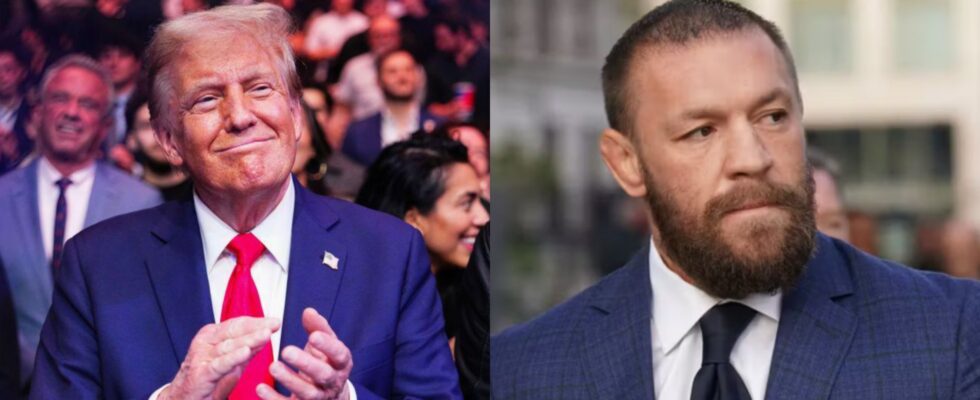
MMA analyst Luke Thomas used a recent live broadcast to articulate something he has been circling for a while: that combat sports functions as a uniquely effective reputation-laundering machine, and that his continued involvement in covering it raises genuine ethical questions.
The comments came during a wide-ranging Q&A after a viewer asked whether Thomas might eventually step away from MMA because of the sport’s association with right-wing politics and the Trump administration. While acknowledging that concern, Thomas said the politics themselves were not his primary issue.
“It is that one, it was this ongoing thing that’s being used to launder the Trump administration,” he said. “And I just find that the ethical proximity to that is very difficult for me to accept.”
From there, Thomas broadened the discussion, arguing that the issue extends far beyond the UFC or any single political movement. In his view, the problem is built into combat sports itself.
“We talk about sportwashing as a thing,” he said. “Like, oh, you know, World Cup. You can just use the World Cup. You don’t have to go to combat sports. You can go to World Cup. There’s obviously a lot of sportwashing that happens there.”
“But combat sports almost by itself, without anything else, is sportwashing.”
Thomas then explained why he believes the sport is particularly attractive to wealthy and powerful figures looking to reshape their public image.
“If you’re very, very rich and powerful, but you’ve got a bad reputation, the very smartest thing you can do is to become a combat sports fan, or just pretend to, because they’ll launder everything you do,” he said.
“They just don’t care. No one cares. Absolutely nobody will ever care. It doesn’t matter if it’s r*pe, it doesn’t matter if it’s robbery. It can even be m*rder depending on how powerful you are. They don’t care and they never will care.”
As an example, Thomas pointed to Greg Hardy, whose signing generated significant backlash because of his past DV case. Even so, Thomas argued Hardy was more of an exception than the rule.
“There’s like a million Greg Hardys in MMA and most people don’t say anything about that,” he said.
According to Thomas, that reflects a deeper reality about the industry.
“It is inherently designed to pull from a world that makes that not merely possible, but a central feature of how it works,” he said.
The frustration Thomas expressed wasn’t only moral, it was also professional. Reflecting on years spent covering issues such as athlete pay, regulatory shortcomings, and industry practices, he questioned whether any of that reporting had made a meaningful difference.
“There is no amount of media that I can give that will ever matter,” he said. “I’ve been doing it all this time, and look what it amounted to. Nothing. It amounted to absolutely nothing.”
Although Thomas stopped short of announcing that he was leaving MMA media, his comments suggested he is seriously reconsidering his role within the sport.
“If you have an enterprise that lifts these ideas and these practices and is a moral black hole because that’s what it’s designed to be,” he said, “what are you doing if you’re contributing to the elevation of that?”
