
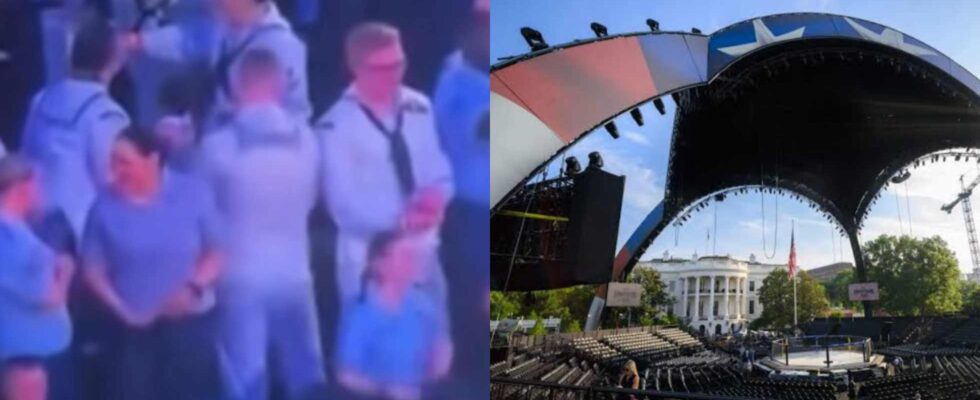
The South Lawn of the White House played host to an unusual moment, when a Navy veteran was caught on camera twerking to “YMCA.” It happened during the UFC’s marquee June 14 event, staged in a custom-built octagon at the invitation of President Donald Trump and UFC CEO Dana White.
The clip spread quickly, and the veterans over at the Anti Hero Podcast were not about to let it go without comment.
“You turned your butt around and you’re dancing,” one host said, barely containing his disbelief.
Another replied, “You can’t twerk to YMCA at the UFC 250.”
Another host said, “I guarantee you that dude’s chain of command destroyed him this morning. Destroyed him.”
The hosts, veterans themselves, seemed less offended by the dancing and more baffled by the setting and the timing. The White House event was a serious milestone for the sport, and the moment came packaged with the full weight of an administration that had coordinated the entire production.
“We’re gonna send you to the UFC Freedom 250 and you twerking on camera when the whole military thinks we’re all gay anyways,” another host added.
The White House card marked the first major live event under Paramount’s seven-year, $7.7 billion media rights agreement with the promotion.
Paramount subsequently announced that the event averaged 8.2 million viewers across the United States and Latin America combined, with Nielsen independently confirming 7 million domestic viewers and an additional 1.2 million tuning in from Latin America. Close to 17 million people watched at least a minute of the broadcast, and Paramount called it the most-watched live event in the platform’s history.
That scale was enough to draw skepticism from commentators unfamiliar with how open-access broadcasting on a major platform differs from the traditional pay-per-view model, where a blockbuster event might generate somewhere between 1.5 and 2 million purchases.
The White House setting, combined with free access for subscribers of a platform with a massive user base, created conditions that simply do not have a historical parallel in UFC distribution history. Paramount, as a publicly traded company, made these claims with full awareness of the legal consequences that come with misrepresenting figures to investors and shareholders.
