
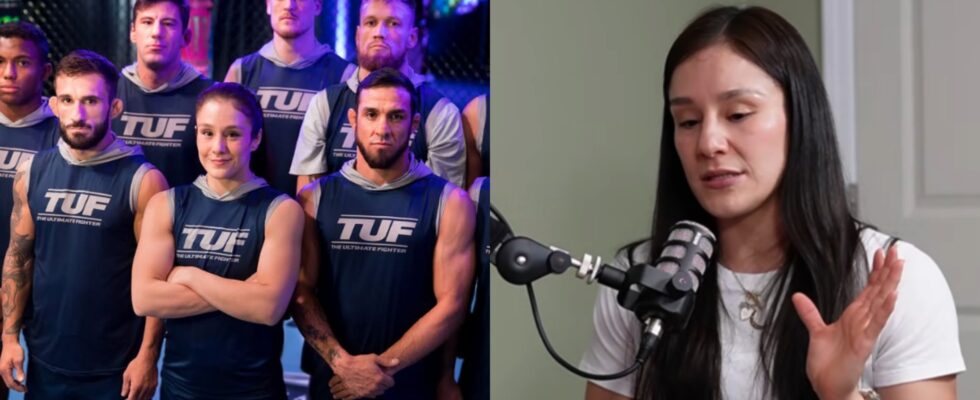
UFC flyweight Alexa Grasso recently appeared on the the Un Café Conmigo podcast, where she opened up about her experience coaching on TUF and the sexism she has faced throughout her career.
Grasso described her time as a TUF coach as one of the most emotionally taxing stretches of her professional life, specifically because of how the male athletes on her team responded to having a woman in charge.
“It was a very difficult few weeks. I was crying because I didn’t want to anymore,” she said. “They come almost all undefeated from their regions, like champions of their regions. That’s a massive ego, isn’t it? Full testosterone and they put a little girl to teach you. Everyone looked at me like, ‘What are you going to teach me?'”
According to Grasso, the resistance wasn’t subtle, it was direct and consistent. “It made me very sad because they didn’t listen to me,” she said. “I would ask them to do something and they all said no. And I was saying to Diego, ‘Okay, put this on for them.’ And Diego would put them on as I said, and they would listen to him. And I said, ‘You notice, you notice.’”
In response, Grasso decided to completely change her approach. Instead of giving instructions, she shifted the responsibility back onto the athletes. “You’re professionals, you already know what you have to do,” she told them. “Tell me what you want to train and we’re here to help you. Whatever you want to do, I’m not going to tell you what to do because you have your own style, your own way of training. You tell me what you need from me and I’ll help you.”
The adjustment proved effective. Every athlete on her team won, and the atmosphere gradually improved. “In the end they were calling me coach and I was crying,” she said. “In the end they liked me.”
Still, the experience left a lasting impact. “Going there and nobody paying attention to you and being told to get lost feels horrible,” she said, reflecting on how it shaped her understanding of being dismissed.
Speaking about the treatment of women in MMA, Grasso pointed to the kind of criticism female fighters often face, particularly regarding age and societal expectations. “The social burden sometimes placed on us as women is like, no, you go home and raise your kids,” she said. “Leave me alone, don’t let it bother you that I’m competing in my thirties, it doesn’t matter.”
Despite those challenges, Grasso emphasized that her mission has remained the same. “My goal has always been to inspire women,” she said. “I want them all to learn to defend themselves, to be strong. You can do anything you want,”
[Editor’s Note: Quotes have been translated and edited for clarity.]
