
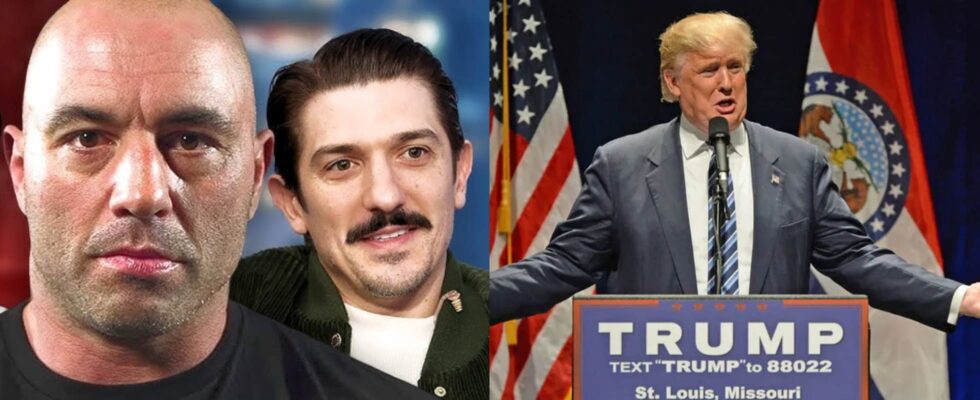
MMA analyst Luke Thomas addressed the growing overlap between comedy podcasting culture and political influence during a recent live session.
“A podcaster calling up the president to get FDA authority granted, I don’t think the process should work like that,” Thomas said, referencing Joe Rogan’s appearance at a White House press conference to advocate for psychedelic research. “There should be normal channels of this and it should not be given favoritism to whoever the president likes or dislikes, just as a general rule.”
Thomas acknowledged that Rogan’s stated goals, specifically expanded research into psychedelics for veterans, could represent a genuinely noble pursuit. But he argued that the mechanism by which Rogan operates inside political circles eliminates any capacity to function as an independent voice.
“In order to maintain that connection, in order to maintain these efforts that the administration is now giving favor to, it requires a bit of being all-in on Trump generally,” Thomas explained. “You have to be separated from the administration in order to be, you know, truly without compromise from it.”
Thomas was specific about what that compromise looks like in practice. He described a pattern where podcasters who maintain access to political power cannot push back meaningfully, even when they appear to gesture toward it.
He said, “When the next time he offers like, oh yeah, I think it’s real bad that ICE is warehousing little kids, thousands of little kids across the country, oh, he’s finally turning on Trump. No, he’s not. He can’t. He’d have to fully abandon all of this.”
The conversation extended beyond Rogan to how bro-oriented entertainment culture, including MMA media, created conditions for these dynamics to take root. Thomas described how the fanbase shifted through different broadcast eras, landing in its current form.
“This one is broier. This one is a little dumber. This one is a lot of angry dudes who have a right-leaning worldview, a lot less women, that kind of thing.”
He traced this cultural shift to deliberate choices made by the sport’s leadership, arguing that MMA’s rise to White House-level prominence came at a cost.
“It got pretty f**king mainstream,” he said. “The last turn of the screw that elevated its position quite literally within the federal government, because that’s what we’re talking about here, is by taking a partisan turn.”
For Thomas, the core problem is not that any individual podcaster holds a political opinion. It is that access-based media, where a podcaster’s reach depends on maintaining warmth with political figures, creates a situation where the entertainer and the politician need each other.
