
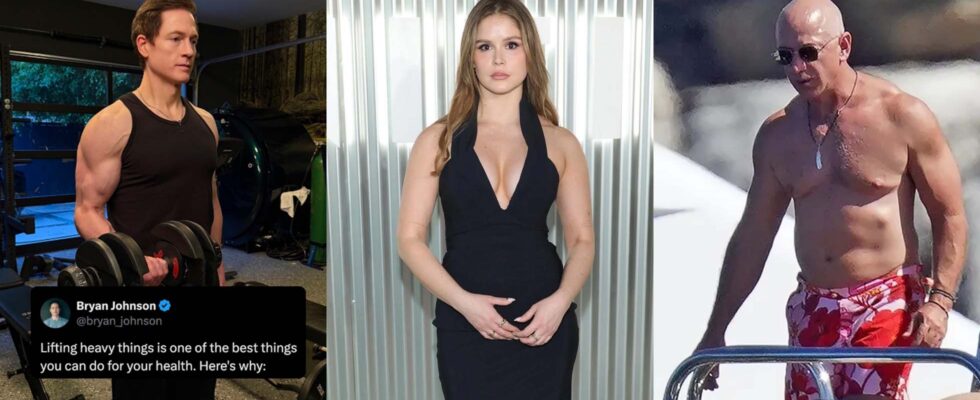
On a recent episode of Lovett or Leave It, Kara Swisher highlighted a cultural double standard she has observed for years, particularly within Silicon Valley.
“They call it body hacking. When it’s a woman, it’s body dysmorphia. When it’s a man, it’s body hacking. And it’s true.”
She described how this mindset was already present in early tech circles, where conversations about physical optimization were common.
“It had started before, early in Silicon Valley, where you’d be at a dinner and they’d tell you their entire regimen of body hacking or whatever.”
According to Swisher, that culture evolved over time into more intense forms of self-modification and financial backing of related industries.
“Then there was intermittent fasting, and then it just went on and on about their bodies, and then they actually started to transform their bodies and then invest in a lot of these companies, some of which are really interesting, some of which are ridiculous.”
She pointed to Jeff Bezos as a visible example of that transformation trend.
“Look at Bezos. I mean, he’s having the longest midlife crisis I’ve ever seen. He’s very beefy.”
When asked whether that kind of change could come from training alone, she expressed doubt.
“You can’t get that beefy from lifting weights. I just you can’t, not with his body.”
She also referenced common speculation surrounding enhancement methods.
“HGH, human growth hormone, testosterone clearly. A lot of men are doing a lot more testosterone injections, and possibly HGH, ster*ids maybe.”
Her broader argument focused less on the methods themselves and more on how society interprets them. The same behavior is framed differently depending on who is engaging in it. In her view, women who fixate on their bodies are often treated as having a medical issue, while men pursuing similar goals are framed as innovators.
She contrasted that skepticism with areas of science she considers genuinely promising, including GLP-1s, mRNA research, CRISPR, and AI-assisted development, while maintaining that the cultural imbalance she described remains unchanged.
