

Dr. Mike Israetel, exercise sports science professor and competitive bodybuilder behind RP Strength, recently broke down UFC lightweight Paddy Pimblett’s weight cut. In his recent YouTube video, Israetel explained the caloric strategy that drives the Liverpool star from over 200lbs down to 155lbs.
Pimblett begins his camp at around 190lbs. According to Dr. Israetel, Paddy falls into a category of athletes who genuinely love food, and restricting that consistently throughout the year would introduce a level of stress that interferes with convat development.
“There are other folks, Paddy’s likely one of them, that really like to eat food,” Dr. Israetel explained. “And so I think he just kind of eats food and kind of eats a bit of all, cause that’s what living life is all about. And finds himself above 200lbs way outside of camp and he has to struggle to get back down, which sucks.”
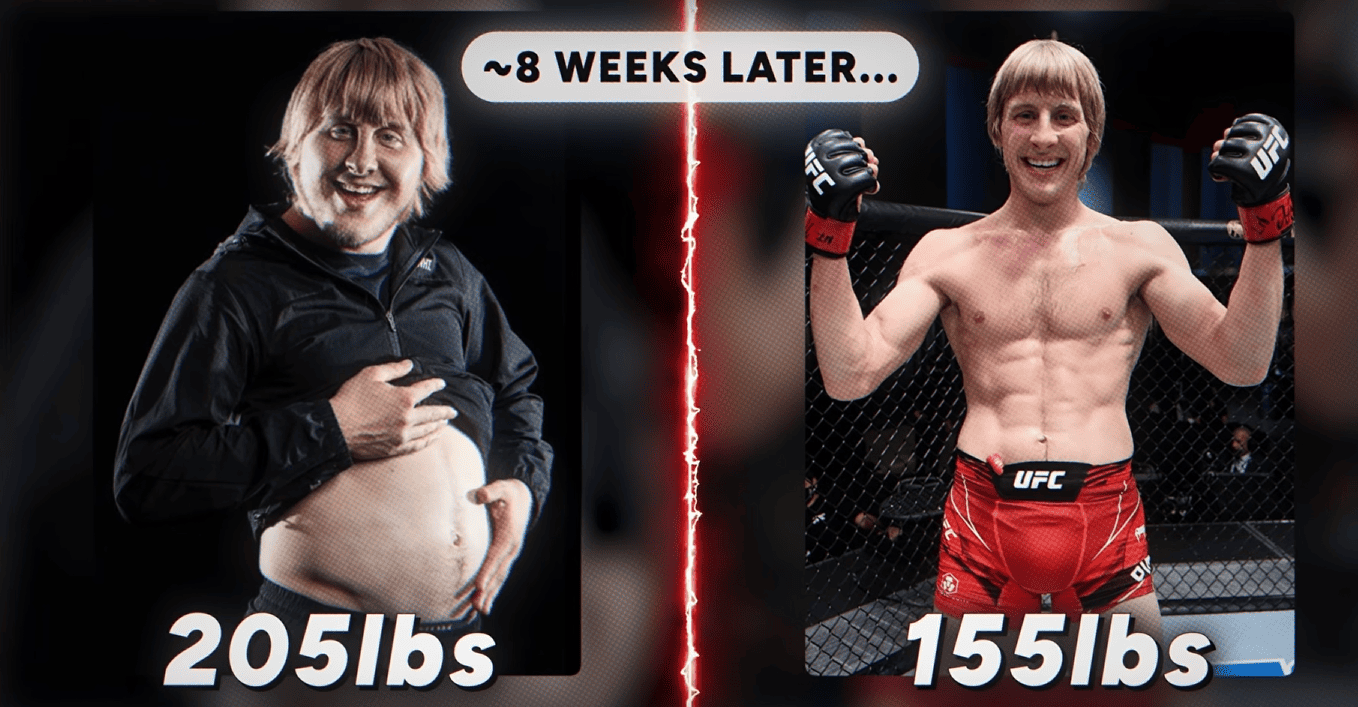
The numbers behind Pimblett’s cut are straightforward. Consuming around 2,000 calories per day while burning approximately 3,000 through the demands of MMA training, he operates at a 1,000 calorie daily deficit.
Dr. Israetel noted that this translates to a predictable rate of tissue loss. He stated, “He’s probably at a 1,000 calorie deficit, which sucks. It does mean he can expect to lose roughly about 2lbs of tissue per week. And so if he does that for 6 or 7 weeks, well, there you go. He’s in striking distance of 155.”
Of the full 50lbs shed between his off-season weight and weigh-in, Dr. Israetel was clear that not all of it is fat or muscle. A significant portion, potentially 15lbs or more, is body water eliminated during fight week through carbohydrate restriction, hot baths, and reduced fluid retention.
Cutting carbohydrates plays a particularly important mechanical role: for every gram of glycogen stored in muscle, the body holds approximately three grams of water alongside it. Eliminating carbs in the final days causes the body to shed that stored water rapidly.
At 174.9lbs with 48 hours before weigh-in, Pimblett still needed to drop roughly 20lbs, with the final phase relying on water manipulation rather than continued dieting.
Dr. Israetel advised that water cuts up to approximately 7% of body weight, done under proper supervision, carry manageable risk. Beyond that threshold, the possibility of health complications, including electrolyte disruption and loss of consciousness, becomes realistic.
Despite the grind of eating 2,000 calories daily while enduring elite-level training, Pimblett’s composure throughout the process drew genuine admiration from Dr. Israetel.
“Meticulous, calm, and enjoying the process,” he said, adding that Pimblett’s ability to be serious when it counts while staying lighthearted otherwise is a quality worth respecting.
