

During episode #2444 of The Joe Rogan Experience with guest Andrew Wilson, Rogan cited statistics indicating that conservative men report mental health diagnoses at significantly lower rates than their liberal counterparts.
“The least mentally ill in terms of numbers is conservative men,” Rogan stated during the conversation, referencing data that has circulated through various media outlets.
According to sources, the specific numbers Rogan mentioned align with research analyzed by Zach Goldberg from a 2020 Pew Research Center survey. According to the data discussed in the episode, young liberal women reported mental health diagnoses at 56%, compared to 28% for moderate women and 27% for conservative women.
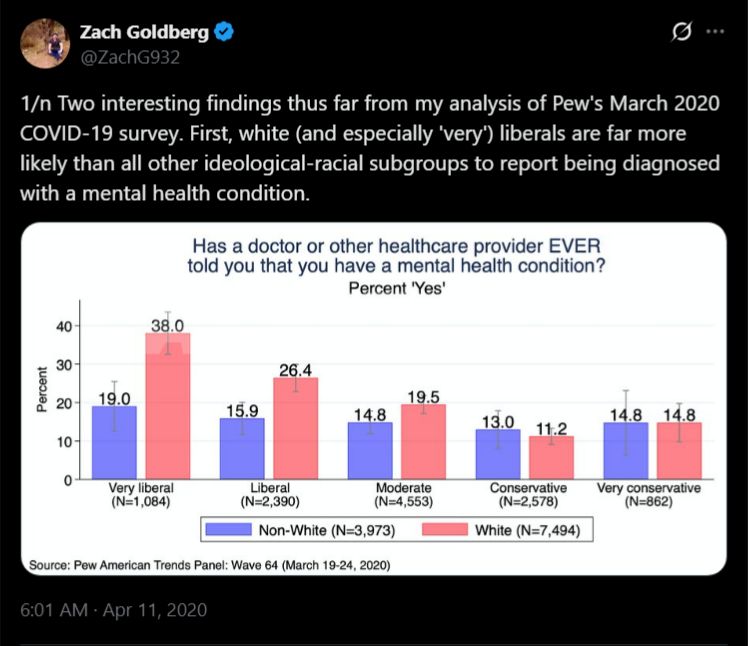
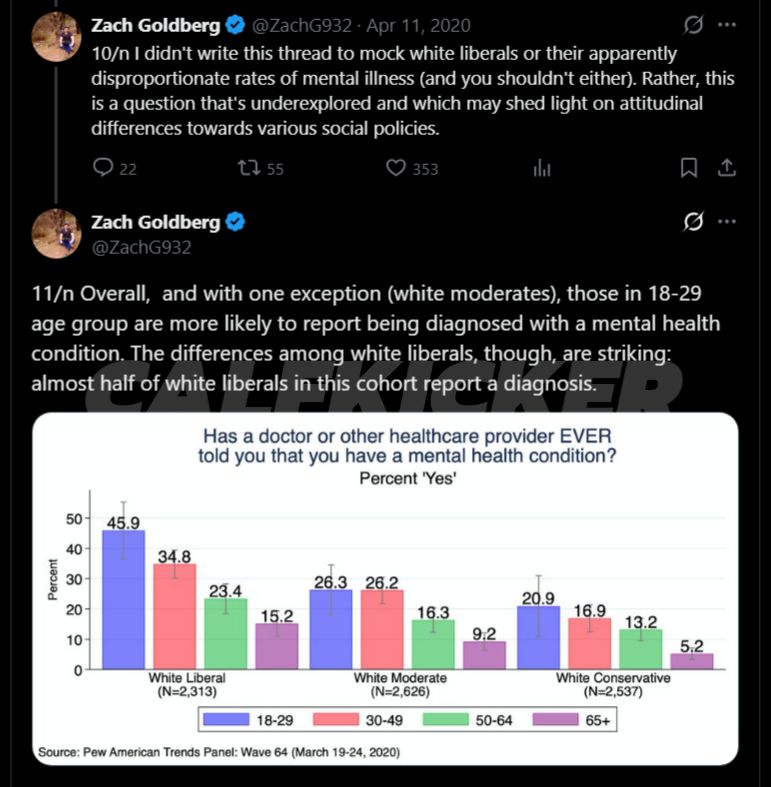
Among men, the disparity was equally notable: 34% of liberal men, 22% of moderate men, and just 16% of conservative men reported having received a mental health diagnosis.
Wilson and Rogan explored possible explanations for these disparities. Wilson suggested that conservative communities benefit from stronger social bonds and religious frameworks that provide natural support systems.
“When you’re talking especially about the voodoo that is psychology… I think that men often, especially conservative men, get as much out of their close relationships with friends and family as they would going to a psychologist,” Wilson said.
Rogan agreed, noting his observations from attending church. “If there was a pill that could make you as nice as the people that I go to church with, everybody would be on it,” he said, describing the kindness and community spirit he witnessed among churchgoers.
The conversation touched on how religious foundationalism and Christian ethics might contribute to better mental health outcomes. Wilson argued that having a framework centered on community rather than individualism leads to healthier mindsets.
“The reduction doesn’t come down to me,” Wilson explained about Christian philosophy. “That’s why those interactions seem so much better because they are because people are thinking about you.”
They also discussed how conservative values emphasizing personal responsibility, discipline, and work ethic might serve as protective factors for mental health. The self-reported nature of the data was acknowledged, with some critics suggesting that stigma around mental health treatment in conservative communities might lead to underreporting.
However, both Rogan and Wilson argued this couldn’t fully explain the substantial gap in the numbers.
The statistics referenced appear to trace back to Pew Research Center data that asked respondents whether a medical professional had ever diagnosed them with a mental health condition.
However, experts note this data reflects self-reported past diagnoses rather than current clinical mental illness, and establishing causation between political ideology and mental health remains complex.
