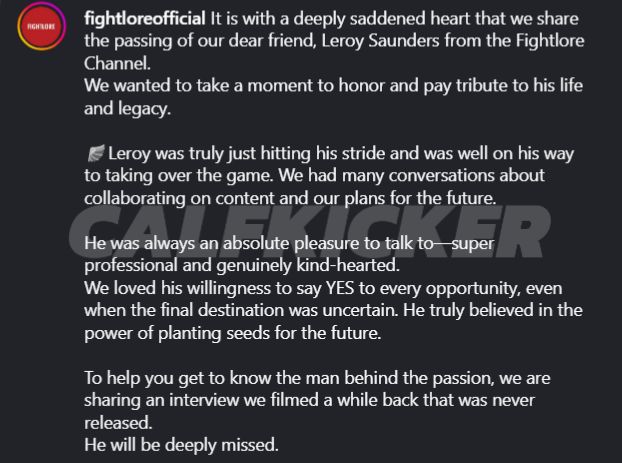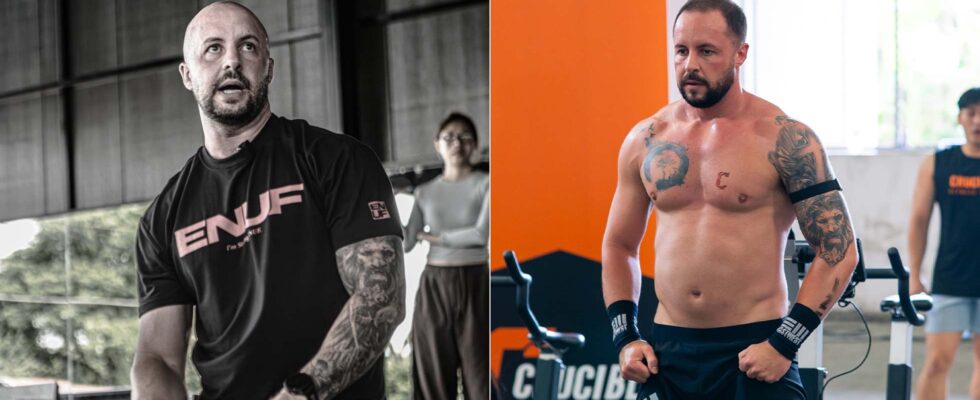
Leroy Saunders spent nearly two decades building a life around discipline, first as a combat sports athlete, then as the man who made athletes stronger. That life ended on August 16, 2026, at the Queen Sirikit National Convention Center in Bangkok, where the 41-year-old strength coach lost consciousness while competing in the BYD HYROX Bangkok event and could not be revived.
Leroy Saunders, who was born in South Africa and had made Bangkok his home, was one of the region’s most recognizable fitness figures. He owned IAOT CrossFit in the city and founded a conditioning program built specifically for Muay Thai competitors, boxers and mixed martial arts athletes. According to reporting from the Bangkok Post, event staff and medical personnel performed CPR and administered emergency care on site after he went down. He was rushed to a nearby hospital, but doctors were unable to save him.
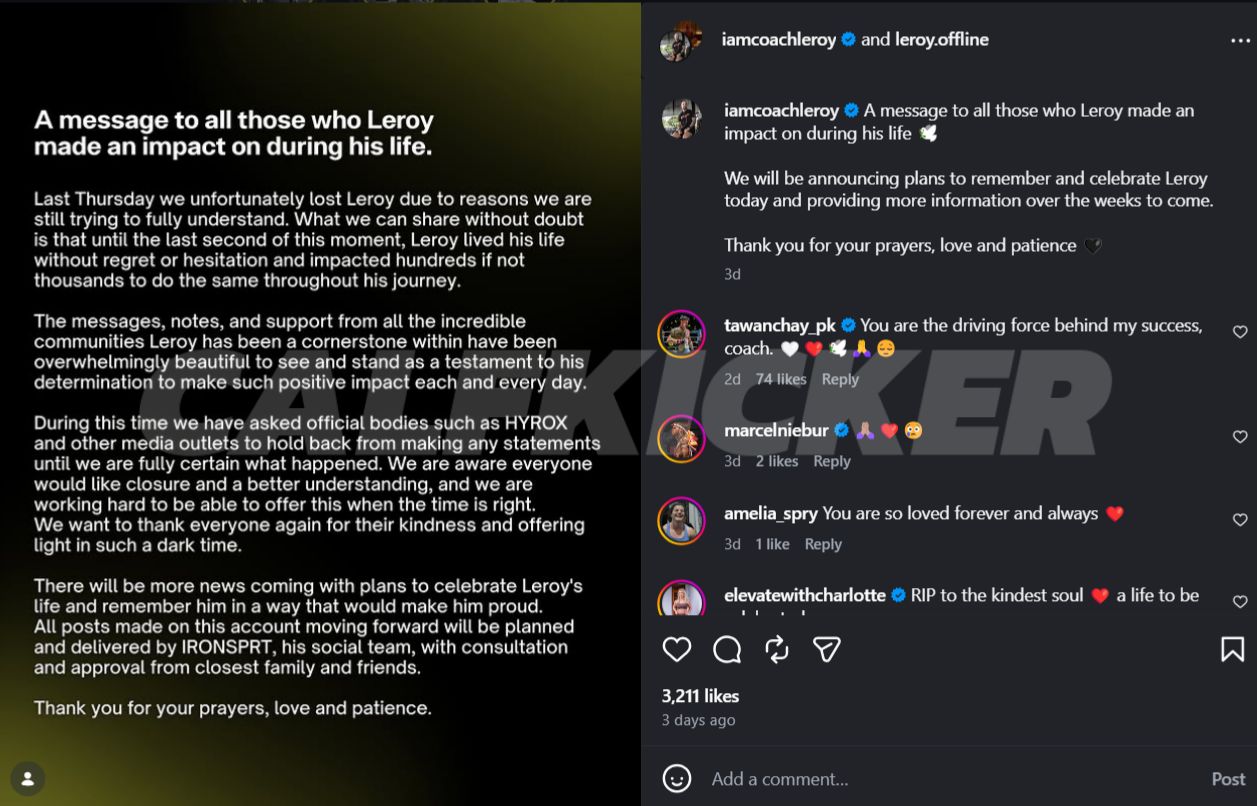
His family and team shared the news publicly two days later, on August 18, in a statement posted to his personal Instagram account.
“Until the last second of this moment, Leroy lived his life without regret or hesitation,”
The family described him as a mentor whose influence reached hundreds, if not thousands, of people over the course of his career and thanked the fitness community in Bangkok and beyond for the wave of support that followed. The family has been careful not to get ahead of the facts. They said they were
“still working to fully understand the exact circumstances surrounding his death,”
and asked media outlets and HYROX organizers to hold off on speculation until complete medical information is available. Details about a memorial service, they added, will be shared when they are ready to share them.
The timing has made the loss harder for many who knew him to process. Just days before the competition, Saunders sat down for an interview in which he talked openly about the philosophy that had shaped his coaching career, tracing it back to his own years competing in Muay Thai and K1, including a stint representing his country at the WTKA World Championships. That experience, he said, exposed a weakness he later built his entire coaching approach around.
“I was good, I was fast, but I was weak, there was something missing,”
He spent the rest of his career trying to close that gap for other athletes. That approach earned him a reputation for going against the grain of typical gym wisdom. He believed combat athletes were often pushed into more strength and conditioning work than they actually needed.
“Generally, a pro , for instance, will only need about two to three properly balanced structured sessions every week,”
“They don’t need more than that. You don’t need to be doing S&C every day. This should be a complimentary to whatever else you’re doing in the gym, to be your pad work, your sparring.”
He was just as firm about timing, explaining that he pulled combat athletes off strength work entirely in the final stretch before a bout.
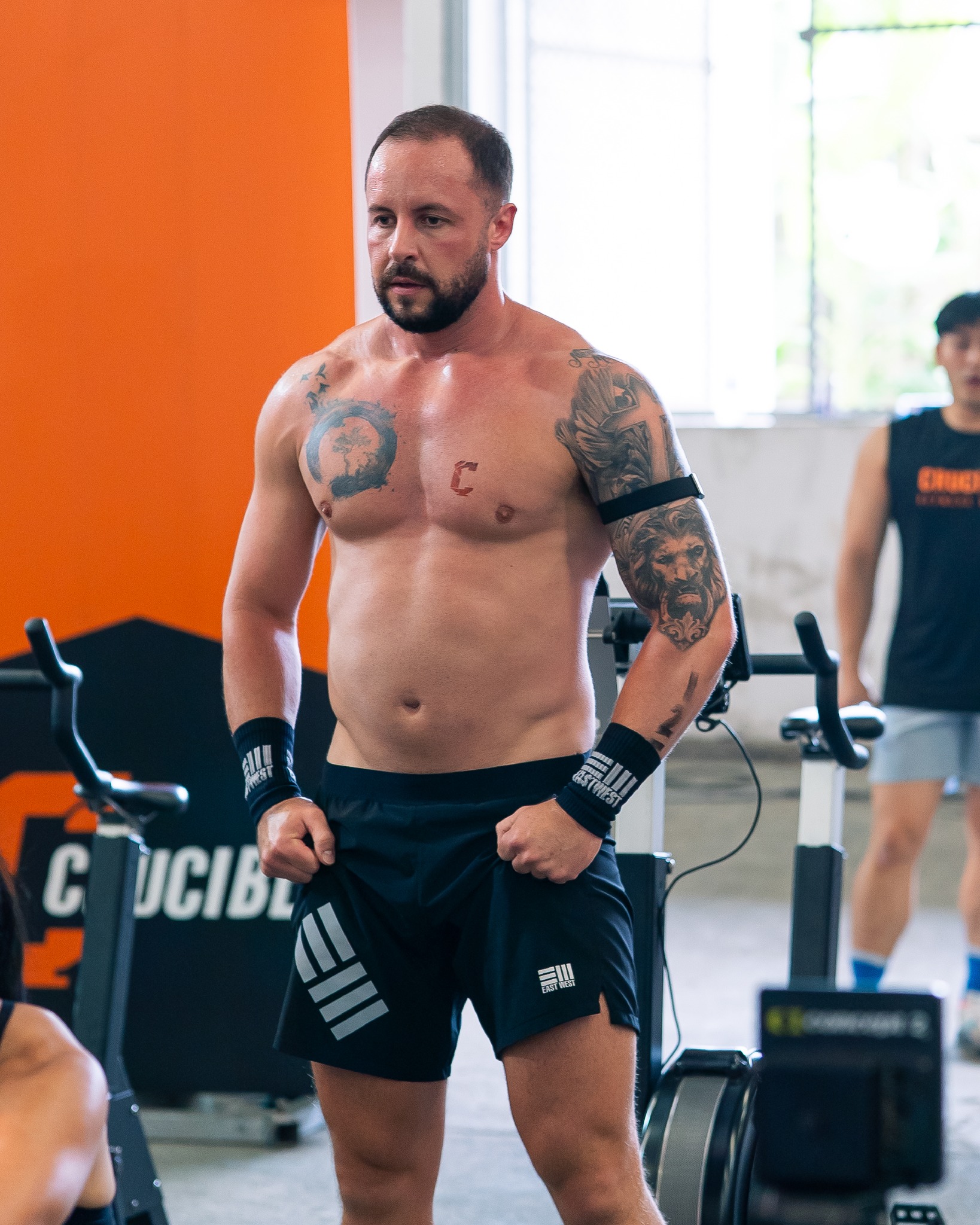
“About two weeks out, we stop S&C,”
He said this allowed athletes to focus purely on their combat training without added strain. He was equally direct about what he thought combat athletes should avoid altogether.
“First thing is don’t do bodybuilding,”
“It’s a great sport, these are great athletes, but it’s not going to be good for what you’re doing.”
Appearance, in his view, was beside the point.
“The aesthetics, how you look, should be the last thing you worry about. It should be your performance and how you feel every day.”
Even his approach to nutrition rejected rigid rules, including his stance that an occasional donut was nothing to stress over. Among the athletes he worked with, his relationship with Muay Thai standout Tawanchai stood out. The two were connected through a mutual friend at the gym roughly a year before Saunders’ passing and he described tailoring a program specifically to the athlete’s needs, crediting the results to more than raw talent.
“Talent takes work, it’s not something that just happens,”
“He’s one of the most talented because he works damn hard at what he does.”
He also spoke warmly of Tawanchai’s attitude in the gym, noting his consistent effort and the fact that he was simply good company to train.
Saunders had competed in HYROX himself in the past, finishing the Doubles category in a time of 1 hour, 17 minutes and 51 seconds. The event that claimed his life is built to test the outer limits of endurance and functional strength, blending eight 1 kilometer runs with eight demanding work stations, including a 1 kilometer SkiErg, 164 feet (50 m) sled pushes and pulls, 262 feet (80 m) burpee broad jumps, 1 kilometer of rowing, 656 feet (200 m) of farmers carries, 328 feet (100 m) of sandbag lunges and a finishing set of 100 weighted wall balls. A typical race takes competitors 60 to 90 minutes to complete, with heart rates pushed to their limits throughout.
The Bangkok event, which ran from August 13 through August 16, had been expected to draw thousands of athletes and spectators as HYROX continues its expansion into one of the most popular mass-participation fitness formats worldwide, sitting somewhere between a traditional marathon and a CrossFit competition. In the days since his passing, tributes have poured in from trainers, combat athletes and gym members across the region and beyond, remembering a coach known as much for his work ethic as for his willingness to challenge convention.
Saunders often spoke of pushing athletes into what he called the
“dark space,”
the point in a hard training session where the body wants to quit.
“That’s where you need to push deeper,”
For those who trained under him, that mindset has become part of how they are choosing to remember him now.